Interview Notes: The Interview Section Explained
The Interview section in Custody Note is where you record what happened in the police interview: the structure of questioning, the client's approach, and any issues arising during the interview itself.
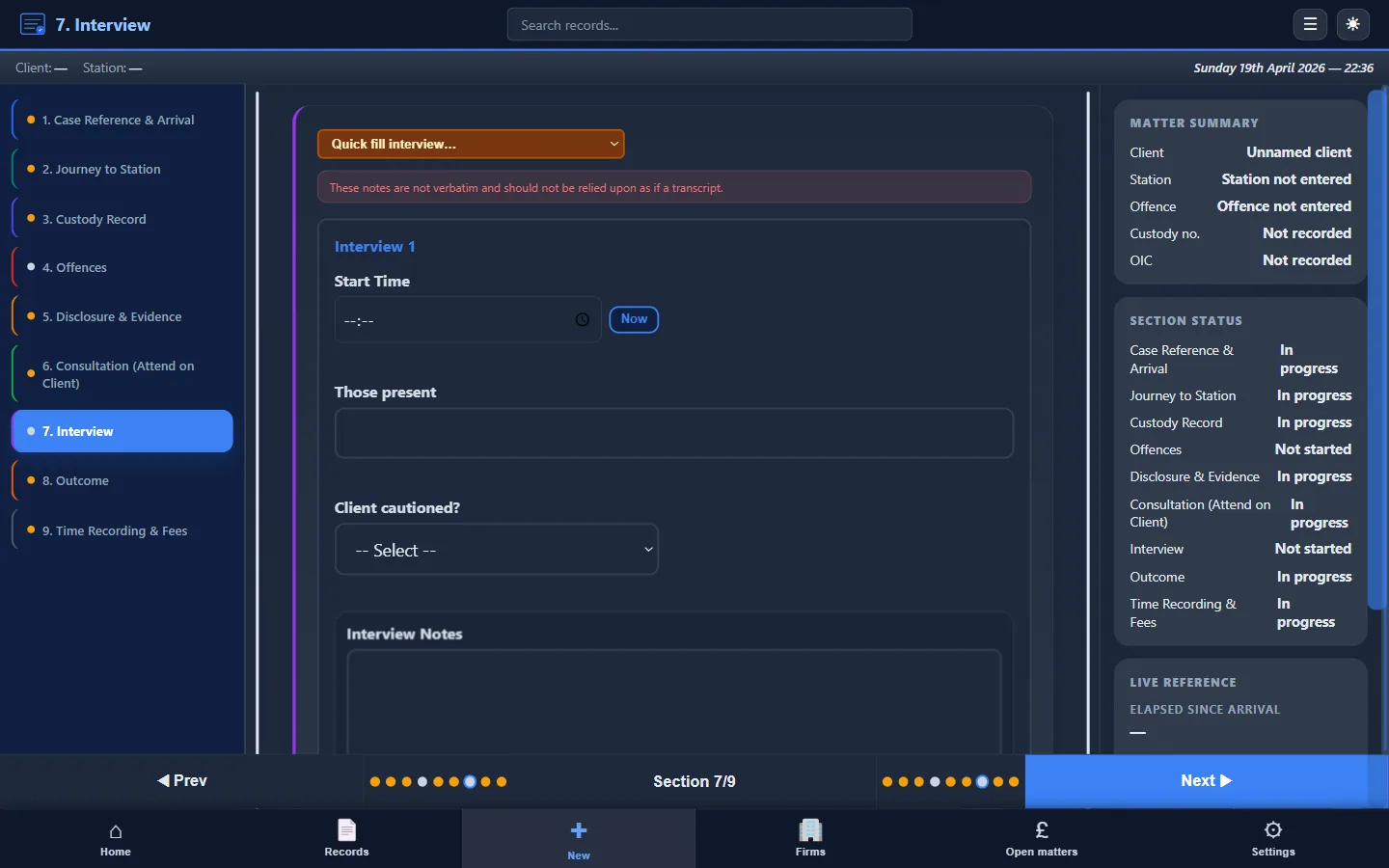
The police interview is usually the central event of a custody suite attendance. The Interview section in Custody Note captures the key parts of what happened, before, during, and at the conclusion of the recorded interview.
Before the Interview Begins
The Interview section opens with fields for the pre-interview stage:
- Interview start time: time of entering the interview room
- Interviewing officers: names and ranks of officers conducting the interview
- Whether a prepared statement was given: and if so, a note of its contents (or a reference to a separate document)
- The caution given: which version of the caution was administered
During the Interview
Custody Note doesn't transcribe the interview. That's what the audio recording is for. The Interview section is for recording your notes on the conduct of the interview: the approach taken, the general subjects covered, any interruptions you made, and any issues that arose.
Fields in this section include:
- Client's approach: no comment, answers given, mixed approach, or prepared statement only
- Subjects covered by officers: the general areas of questioning
- Representations made: any interventions you made during the interview, and the basis for them
- Issues arising: anything that may require follow-up: oppressive questioning, failure to caution properly, new disclosure mid-interview
The No Comment Interview
Where a client exercises the right to silence, the Interview section records the client's no comment answers as a category rather than requiring verbatim transcription. A note that records "client gave no comment answers throughout on legal advice" is sufficient as a record. The audio recording holds the detail.
Where a mixed approach was taken (answering some questions but not others) the Interview section includes space to note which topics were addressed and which were declined, to the extent this is useful for the file.
After the Interview
The Interview section closes with fields for the end of the interview: time of conclusion, whether a further interview was notified, and any post-interview consultation that took place before the custody decision was made.
Note: This article is intended as general information for criminal defence practitioners in England and Wales. It doesn't constitute legal advice. Solicitors and accredited representatives should exercise their own professional judgment in each case. Law and practice may change; always verify current requirements with primary sources.