The Anatomy of a Custody Attendance Note: A Template You Can Reuse
A good attendance note is not a free-form account of what happened — it follows a predictable structure that an LAA caseworker can read in seconds. Here is the template, section by section, that every custody attendance should follow.
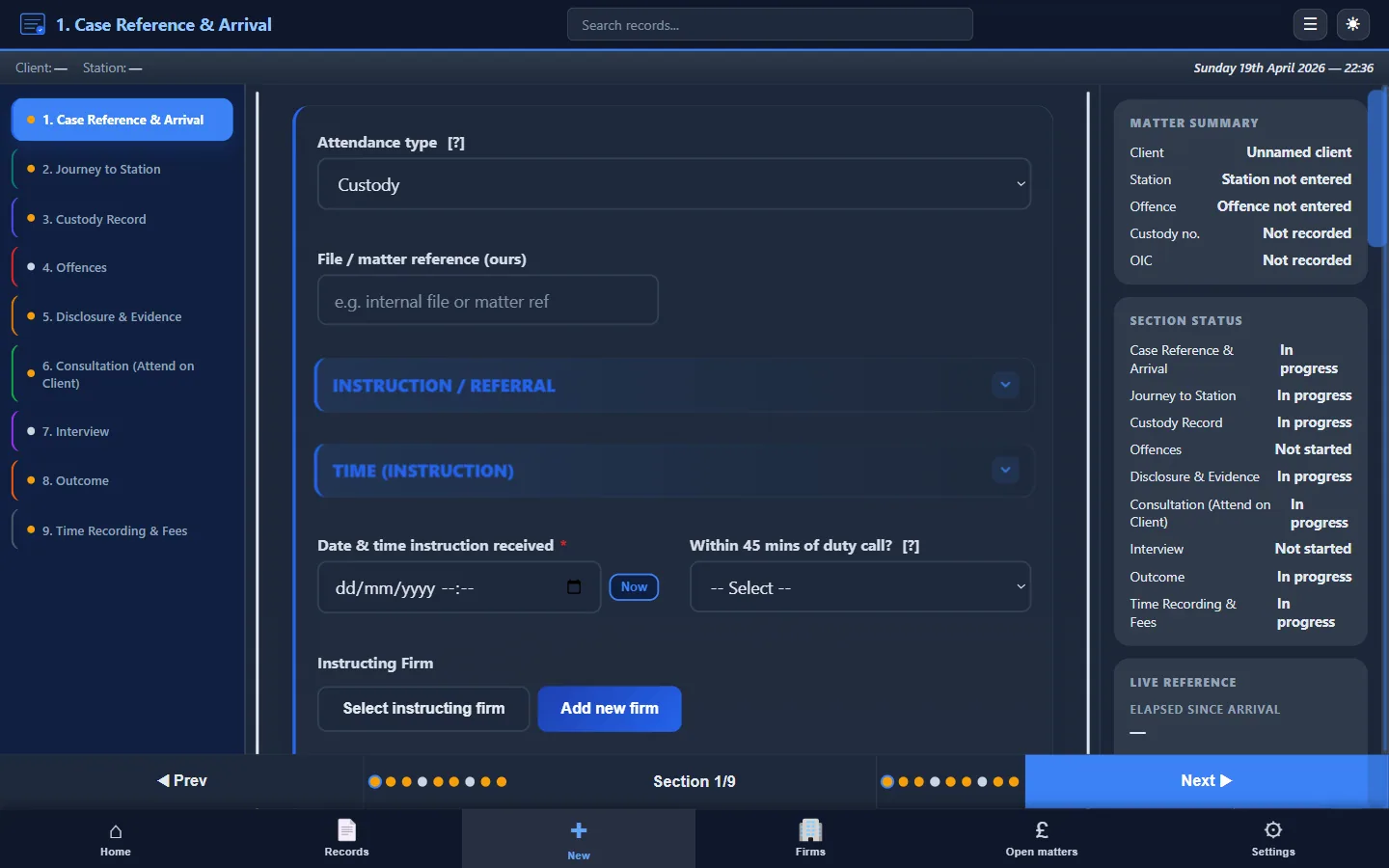
The single most common reason an attendance note is hard to read — and hard to bill from — is that it has no consistent structure. Every representative ends up reinventing the layout under pressure at 3am, and the result is a wall of prose that buries the time entries and the key decisions. The fix is to work from a fixed template every time. This guide sets out that template, section by section, so you can reuse it on every matter.
If you want the reasoning behind why each of these elements matters, read what makes a good attendance note first — this guide focuses on the structure itself.
1. The Header
Open with the identifying details that anchor the entire record: your name and accreditation, the client's name, the custody suite, the custody number, the matter reference (UFN), the instructing firm, and the date. These are the fields an auditor checks first, so they belong at the top where they cannot be missed. In Custody Note, this is captured automatically in Section 1.
2. Disclosure
Record what the officer disclosed and when. Note the disclosure officer, whether they were the OIC, the time disclosure was given, and a narrative of the evidence as it was put to you. Do not summarise it away — the level of disclosure is frequently the foundation of the advice you give, so it must be recorded contemporaneously and in enough detail to justify that advice later.
3. Consultation
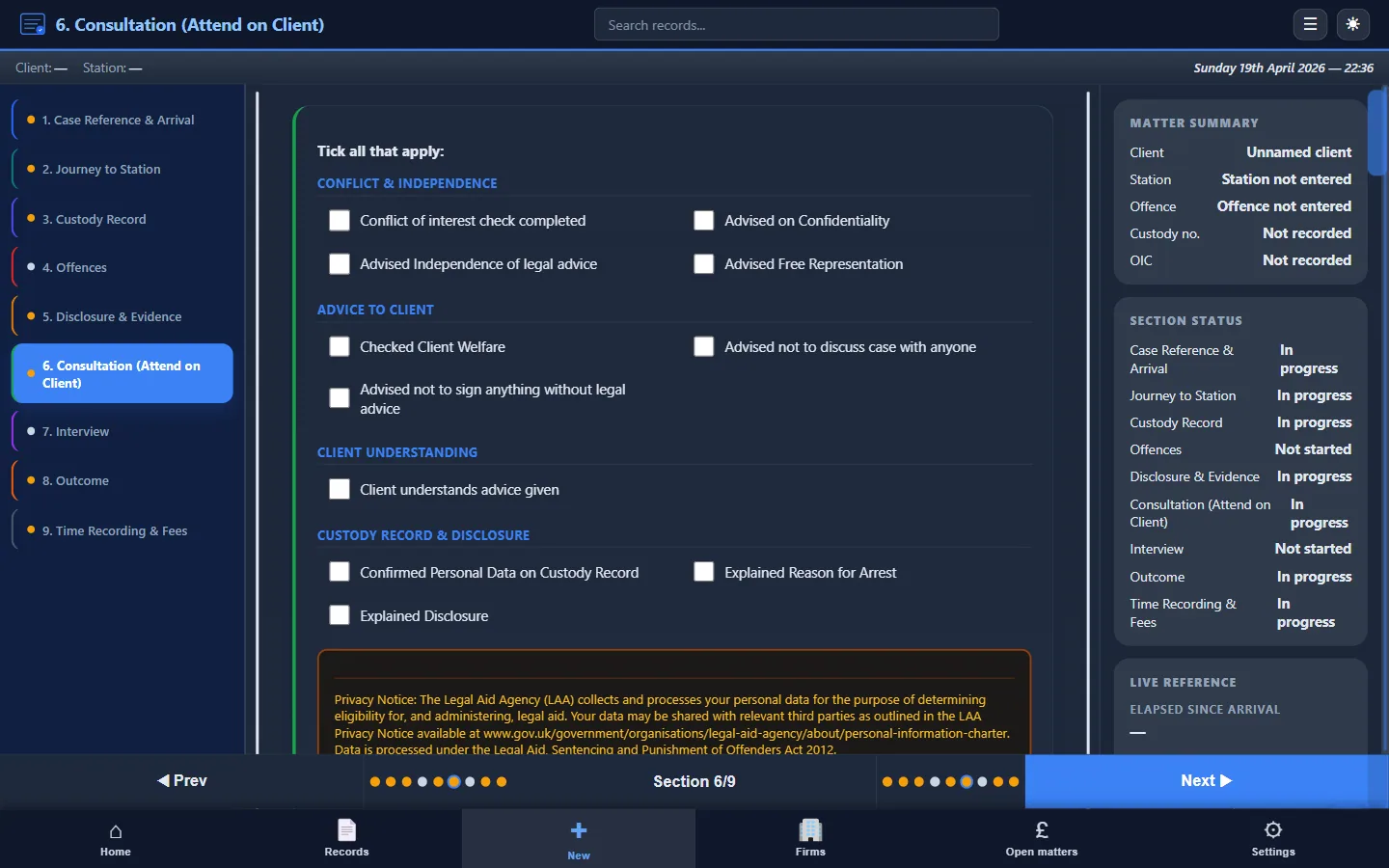
The consultation section records that the consultation happened, what advice you gave at a level that does not breach privilege, and that the client understood it. Capture the time the consultation started and finished, whether you advised on the right to free legal advice, and any issues of fitness or vulnerability. The content of the advice is privileged; the fact and structure of the consultation are not.
4. Interview
Note the start and end time of each interview, who was present, that the client was cautioned, and a contemporaneous account of the key exchanges. Be explicit that the note is not a verbatim transcript — it is a record of the material points. If there were breaks, multiple interviews, or a change of officer, each gets its own time-stamped entry.
5. Outcome
Record the disposal: charge, bail, release under investigation, no further action, or whatever decision was reached, together with any next date, next location, and follow-up actions. This is the section that tells the reader how the matter ended without them having to infer it from the interview notes.
6. Time Recording
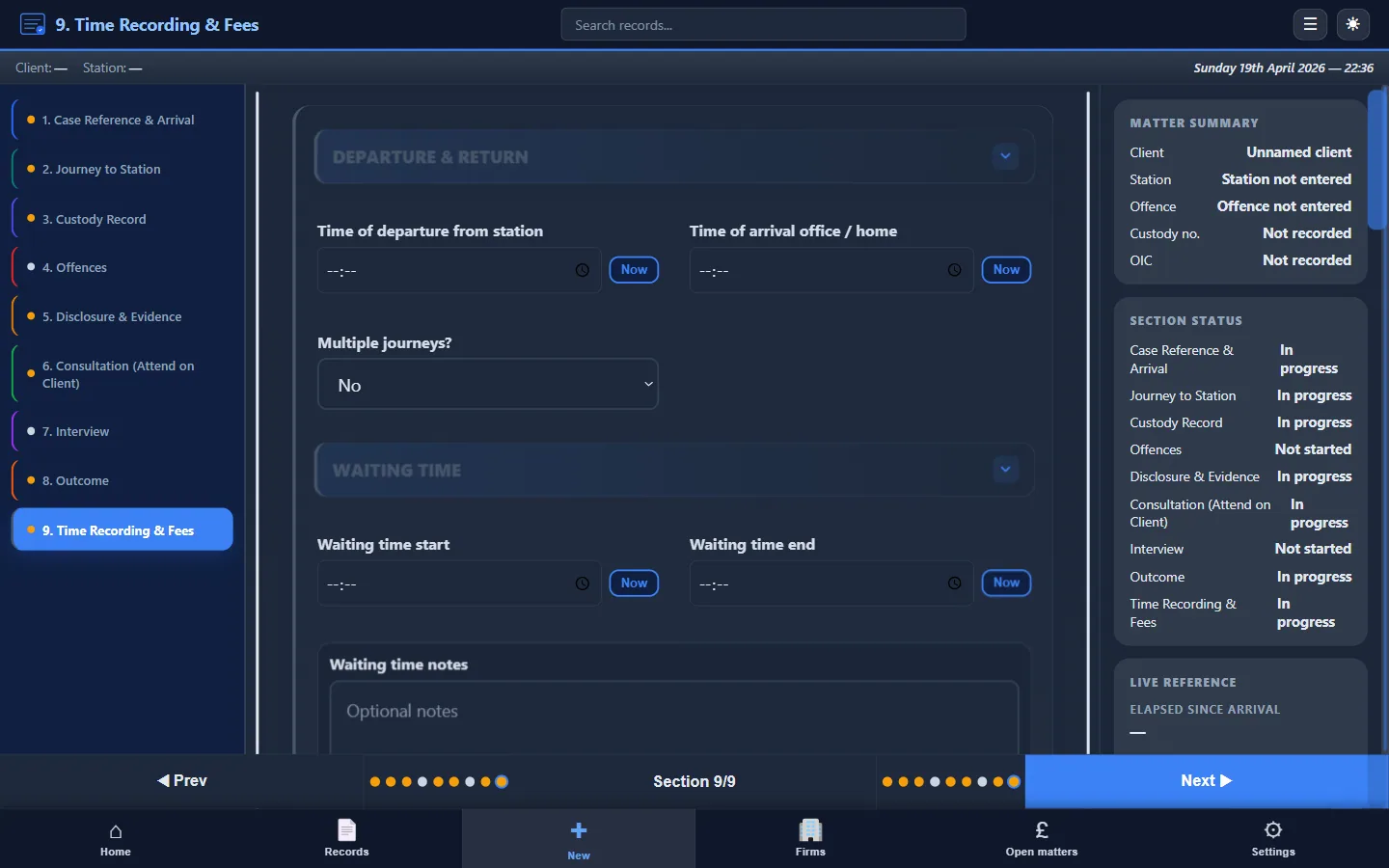
Every billable element gets a time entry: time of instruction, arrival, consultation, disclosure review, interview attendance, waiting time, and departure. This is what converts the note into a defensible claim. A note that records the work but not the time is only half a note.
Why the Template Matters
An auditor reading a note in this order can verify a claim in under a minute, because they know exactly where to find each element. A representative who completes notes in this order is far less likely to omit a billable item or a key piece of advice. The structure does the remembering for you. For the audit-failure angle, see why attendance notes fail LAA audit.
This structured approach is not unique to any one tool — it reflects the expectations set out by the bodies that support police station representatives, including the resources published by policestationrepuk.org, which sets out the professional standards accredited representatives are held to. Adopting a consistent template is simply the practical way to meet those standards on every matter.
Using the Template in Practice
You can apply this template with pen and paper, in a Word document, or in dedicated software. The advantage of dedicated software is that the structure is enforced for you — Custody Note presents these sections as a fixed nine-section workflow so the template is never something you have to remember to set up. You can download free to see the full structure in action, or review the pricing if you are ready to roll it out across a firm.
Custody Note is structured attendance-note software for criminal defence solicitors and accredited police station representatives. It is a tool to help you produce well-organised notes and is not a substitute for professional judgment or legal advice. You remain responsible for the accuracy and completeness of every note you produce.
Note: This article is intended as general information for criminal defence practitioners in England and Wales. It does not constitute legal advice. Solicitors and accredited representatives should exercise their own professional judgment in each case. Law and practice may change; always verify current requirements with primary sources.