An LAA Audit-Proof Attendance Note: The Checklist
When the Legal Aid Agency queries a police station claim, the attendance note is the only evidence that counts. Use this checklist to make sure every note you produce would survive an audit.
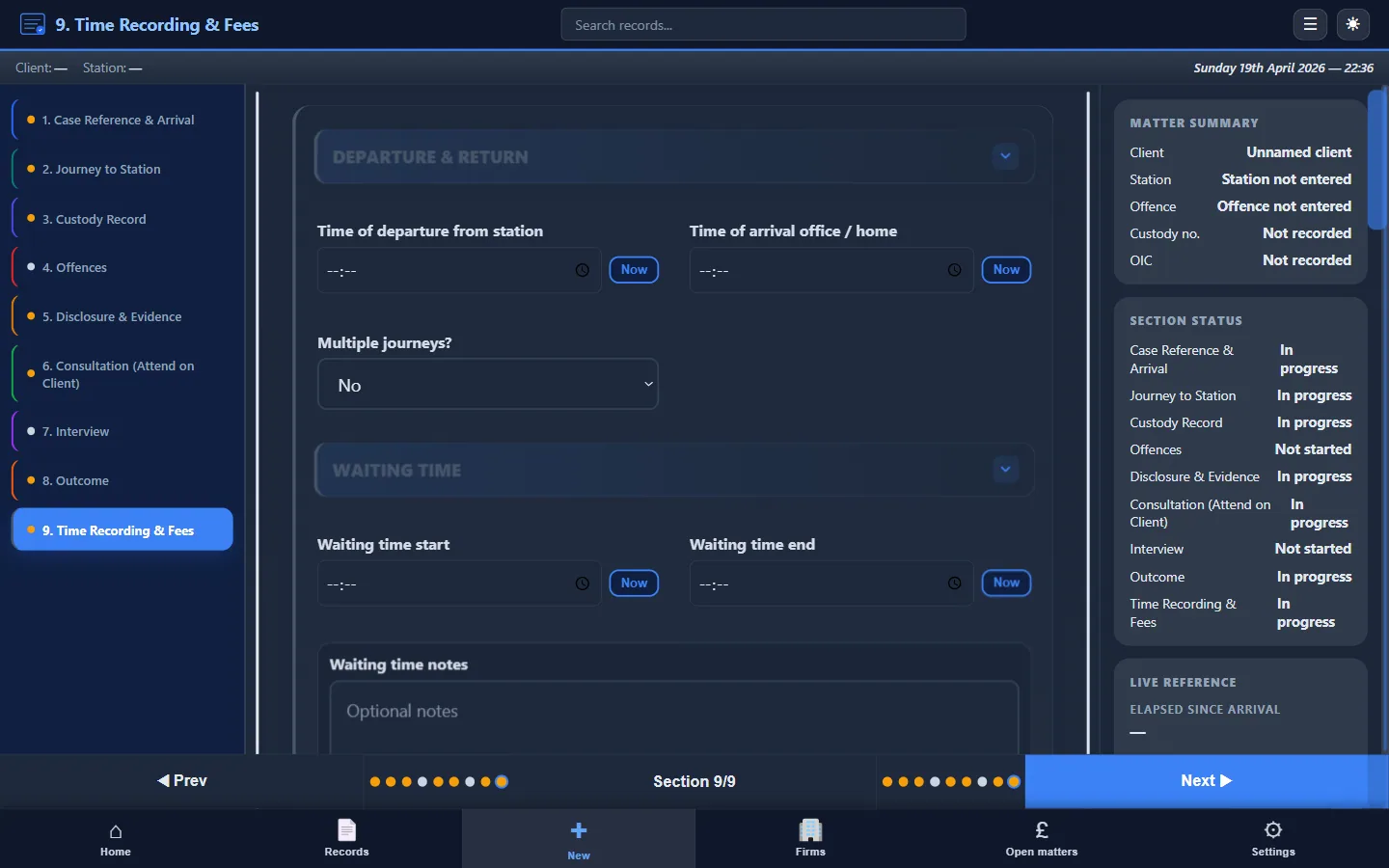
The Legal Aid Agency does not assess a claim against your memory of the attendance — it assesses it against the attendance note. If the note does not record a billable element, that element effectively did not happen as far as the claim is concerned. This checklist sets out exactly what an audit-proof note needs to contain. If you want to understand the common failure modes first, read why attendance notes fail LAA audit.
Identifying Details
- Client name, custody number, and police station recorded
- Matter reference (UFN) present and consistent with the claim form
- Instructing firm and fee earner identified
- Your name and accreditation status recorded
The 45-Minute Test
- Time of instruction from the DSCC recorded to the minute
- Time of first contact with the client recorded
- Whether first contact was within 45 minutes of the duty call clearly stated
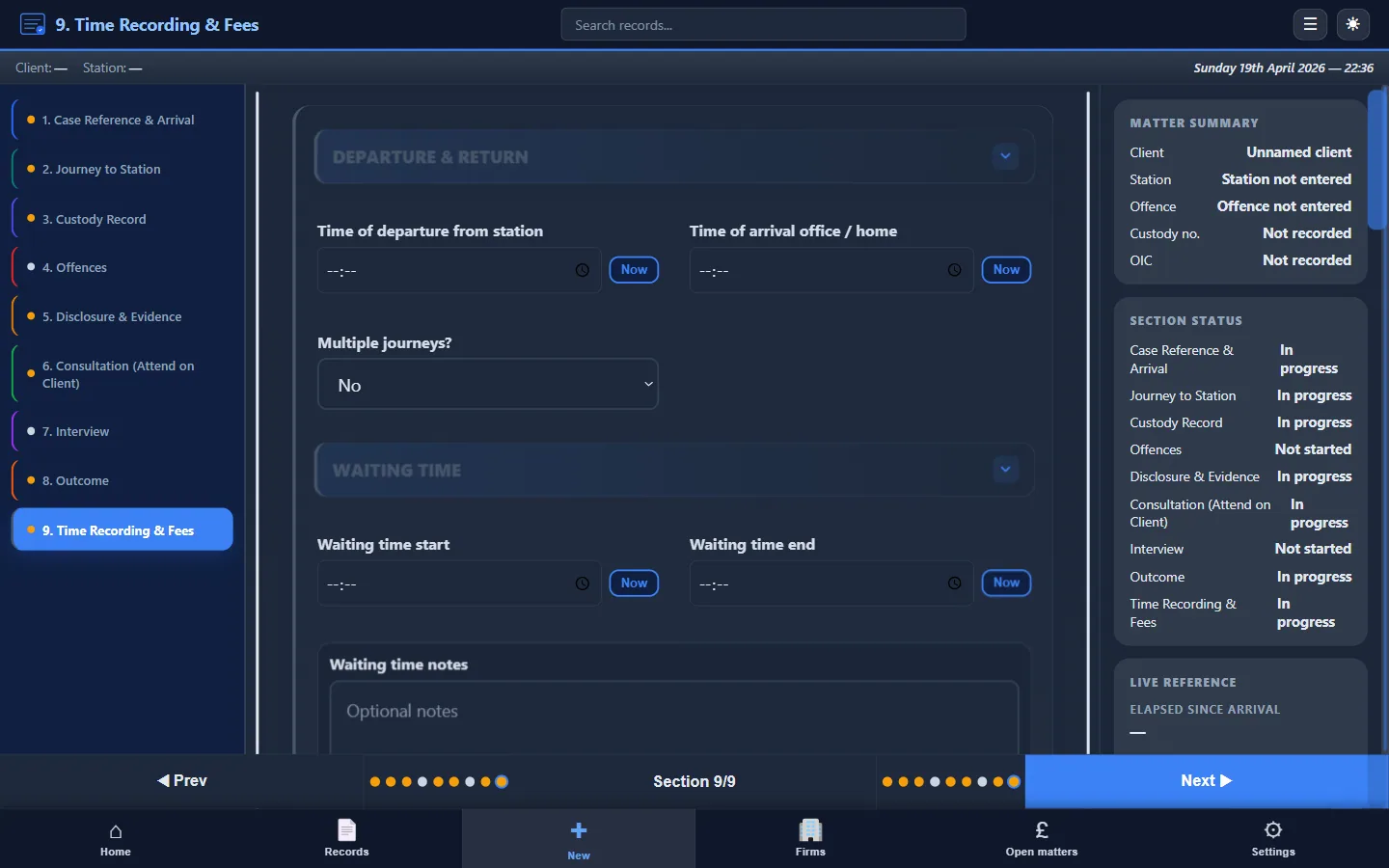
Time Recording
- Arrival time at the custody suite
- Duration of consultation with the client
- Time spent reviewing disclosure
- Interview start and end times for each interview
- Any waiting time, with a note of the reason
- Departure time and travel time, with mileage where claimed
Substantive Record
- Disclosure given, by whom, and at what level
- Advice given recorded at a non-privileged level
- Interview account and caution confirmed
- Outcome and any next steps
Billing Reconciliation
Before you submit, reconcile the note against the claim. Every time entry on the claim should map to a recorded element in the note, and every recorded element should be reflected in the claim. A mismatch between the two is the single most common reason a claim is reduced on audit.

Make the Checklist Automatic
The reliable way to pass this checklist on every matter is to use a note structure that prompts for each element rather than relying on memory. Custody Note builds these prompts into its workflow, so the audit-critical items are captured as you go. You can download free to see how the structure holds up against this checklist.
Custody Note is structured attendance-note and billing-support software for criminal defence practitioners. It helps you record and reconcile the information an LAA claim depends on, but it does not submit claims for you and is not a substitute for your own professional judgment. You remain responsible for the accuracy of every claim you make.
Note: This article is intended as general information for criminal defence practitioners in England and Wales. It does not constitute legal advice. Solicitors and accredited representatives should exercise their own professional judgment in each case. Law and practice may change; always verify current requirements with primary sources.