Recording the Outcome in Custody Note
Once the interview is complete, the custody sergeant will make a decision about the client's future. The Outcome section in Custody Note captures that decision and the circumstances surrounding it.
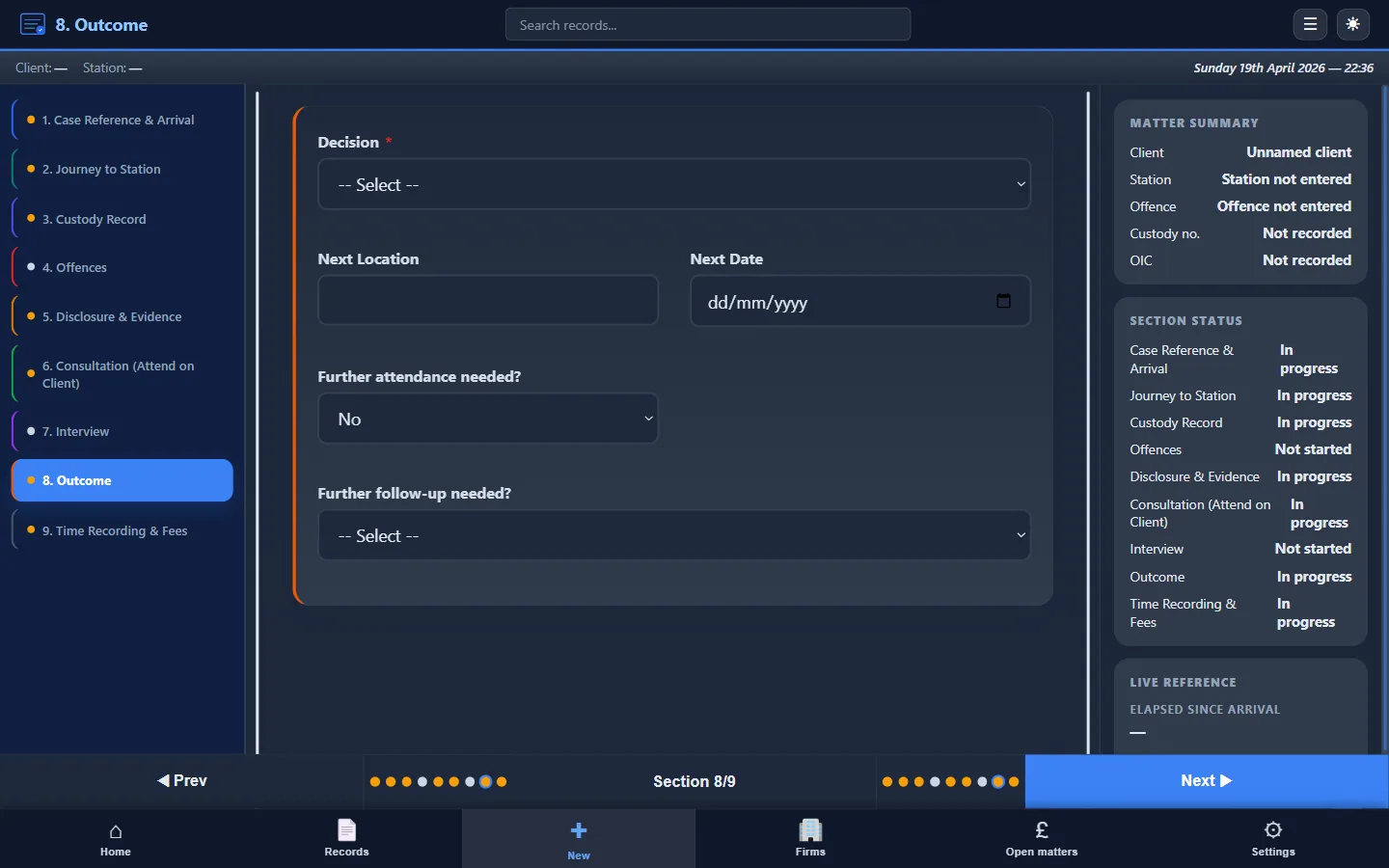
The Outcome section is the final substantive section of the attendance note. It records what happened at the end of the custody process: the disposal decision, any charges, bail conditions, and the time at which you left the station.
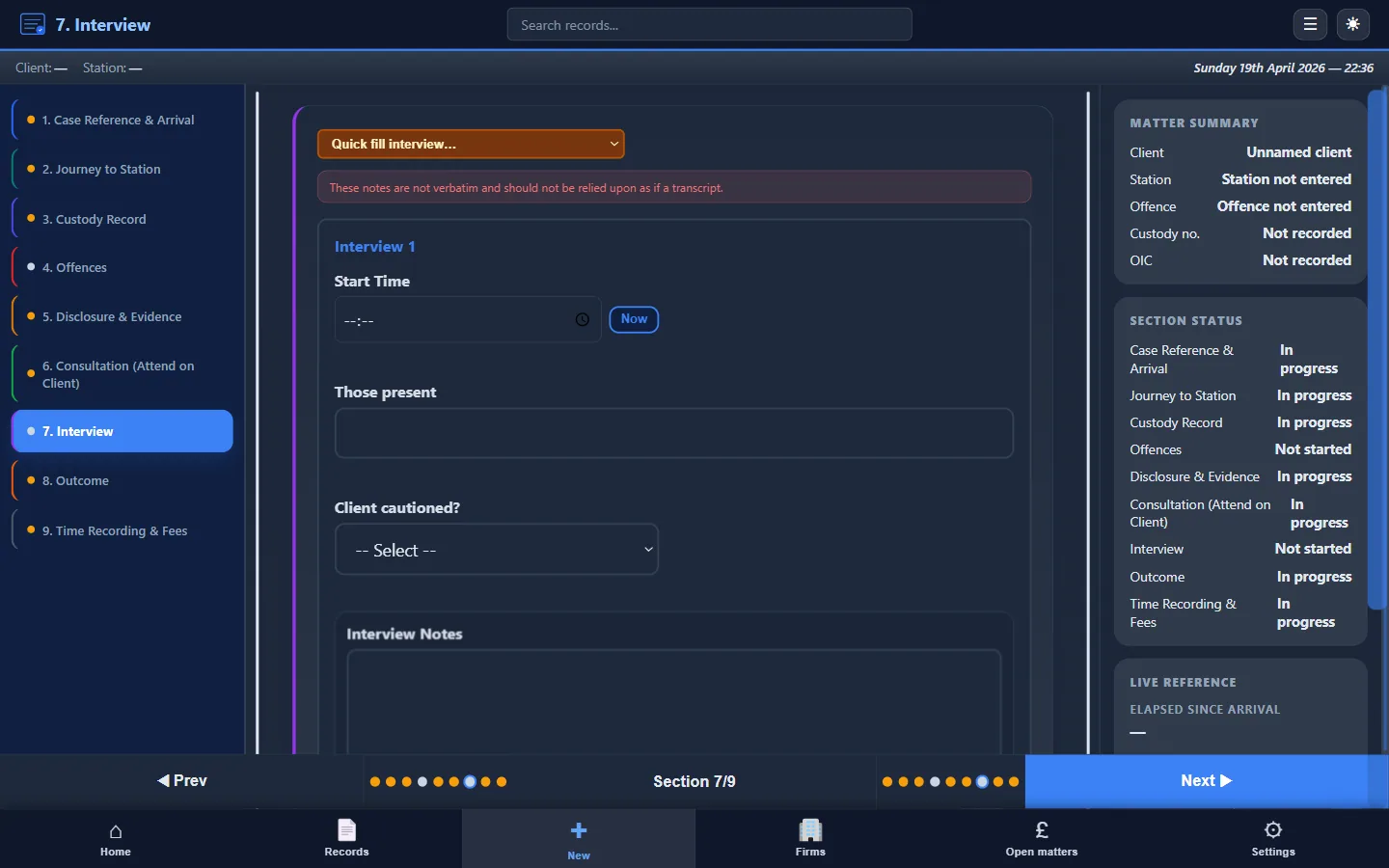
Types of Outcome
Custody Note provides structured options for the most common disposal outcomes in police station practice:
- Released under investigation (RUI): released without bail pending further investigation
- Released on bail: conditional or unconditional bail pending further action
- Charged and bailed: charged with one or more offences and bailed to appear at court
- Charged and remanded: charged and held in custody to appear before a court, typically the next sitting
- No further action (NFA): matter concluded without charge
- Caution administered: simple or conditional caution given
- Voluntary bail: bail under pre-PACE legacy arrangements (rare but still encountered)
Selecting the relevant outcome populates the section with the appropriate sub-fields for that disposal type.
Charges and Bail Conditions
Where the client is charged, the Outcome section prompts for the charge or charges as read to the client, and a note of how the charge was put. Where bail is granted, there are fields for bail conditions: address conditions, exclusion zones, reporting conditions, and any surrender of passport or other terms.
Recording bail conditions contemporaneously is important because your client may struggle to remember the detail of what they were told, particularly if they have been in custody for a significant period.
Departure Time
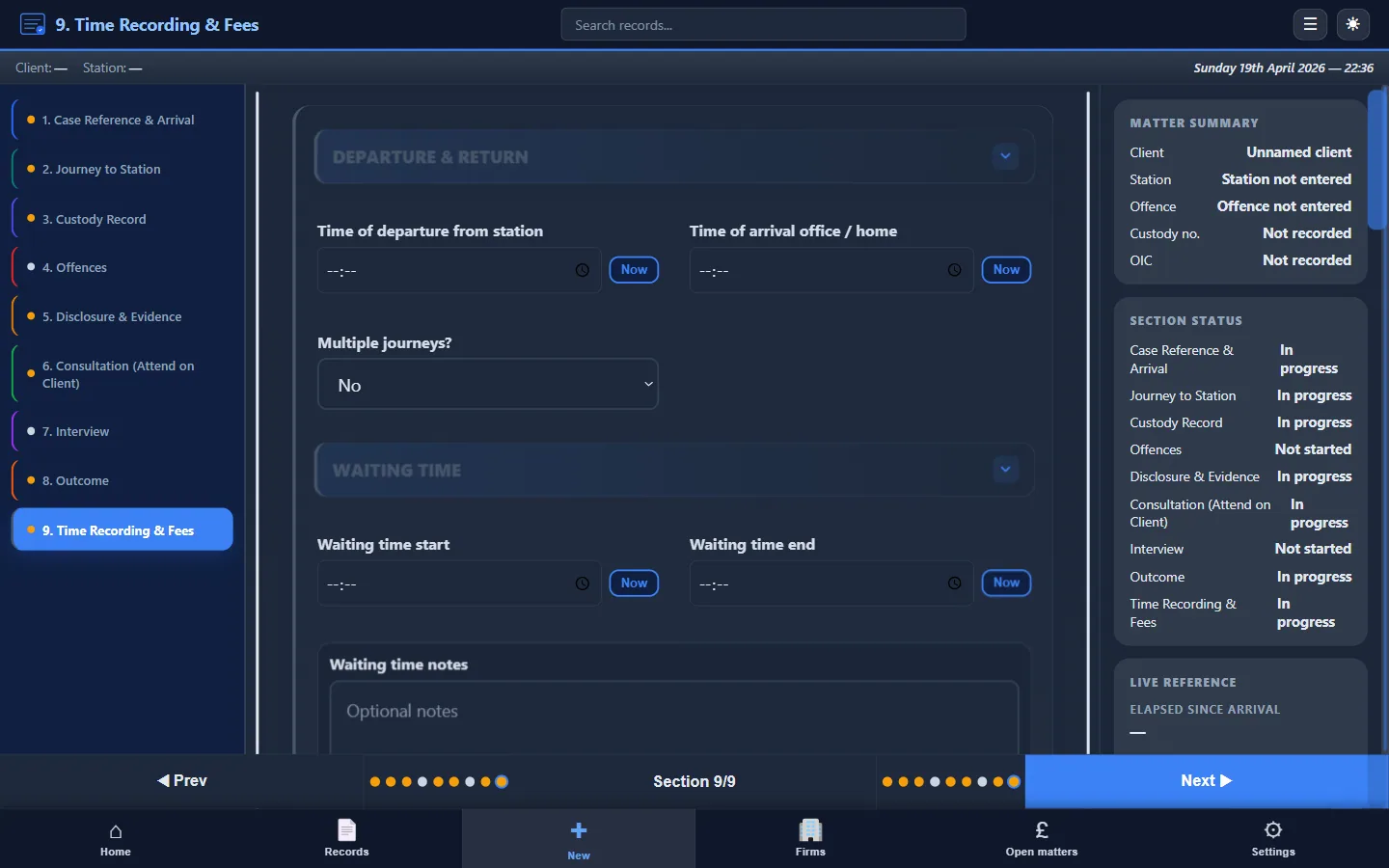
The Outcome section records your departure time from the custody suite. Together with the arrival time in the Reference section, this gives the total duration of the attendance. This information feeds directly into the Time Recording & Fees section and into the LAA billing claim.
Follow-Up Actions
The Outcome section includes a free-text field for any follow-up actions arising from the attendance: calling the client the next day, obtaining further disclosure, making a bail variation application, or any undertaking given to the client during the course of the attendance. This field is visible in the records list view and helps ensure that nothing is missed when you return to the file the following morning.
Note: This article is intended as general information for criminal defence practitioners in England and Wales. It doesn't constitute legal advice. Solicitors and accredited representatives should exercise their own professional judgment in each case. Law and practice may change; always verify current requirements with primary sources.