The Reference Section: Client and Case Details
The Reference section is the first section in every Custody Note attendance. It captures the identifying information that anchors the entire record: client details, the custody suite, instructing firm, and the alleged offences.
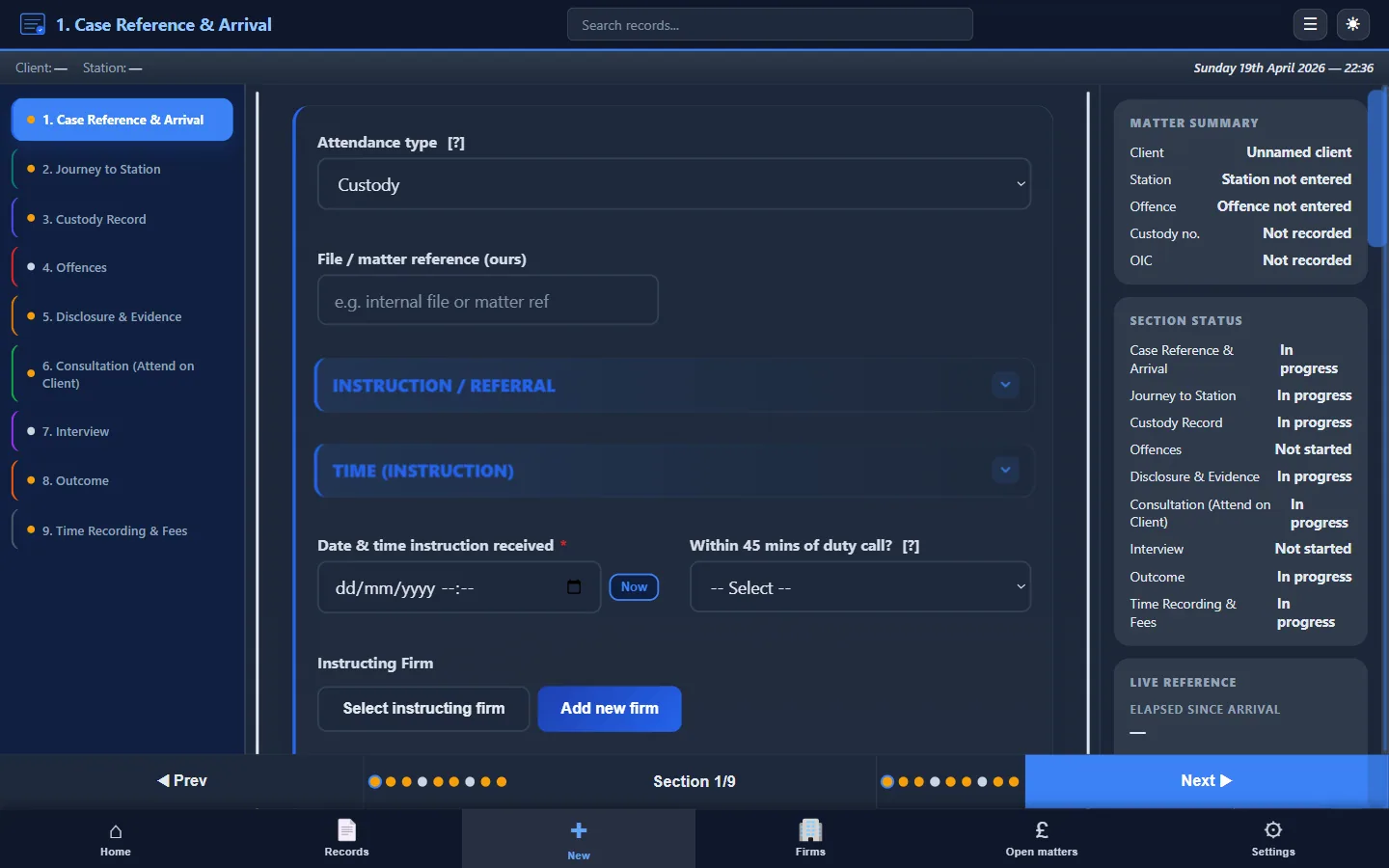
Every attendance note in Custody Note begins with the Case Reference & Arrival section. This is where you capture the information that identifies the attendance and the client: the data points you'll return to when billing, when advising counsel, and when responding to any LAA query about the note.

What the Reference Section Captures
The Case Reference & Arrival section is divided into clearly labelled fields:
- Attendance type (Own Client, Duty, or Agent) determines the LAA fee category
- Instructing firm: autocompletes from the firms you act for
- Client details: full name, date of birth, and contact details where recorded
- Custody reference: the unique reference assigned by the custody sergeant on arrival
- Custody suite: the police station and custody suite location
- Time of instruction: when you received the call from the DSCC or client
- Arrival time: your time of arrival at the custody suite
Why These Fields Matter
The custody reference number is the key linking your attendance note to the official custody record. If a billing dispute arises, the LAA will expect your note to be traceable to a specific detention record. Having the custody reference, the client's date of birth, and the custody suite name in the Reference section means that traceability is built in from the start.
Offences as Structured Records
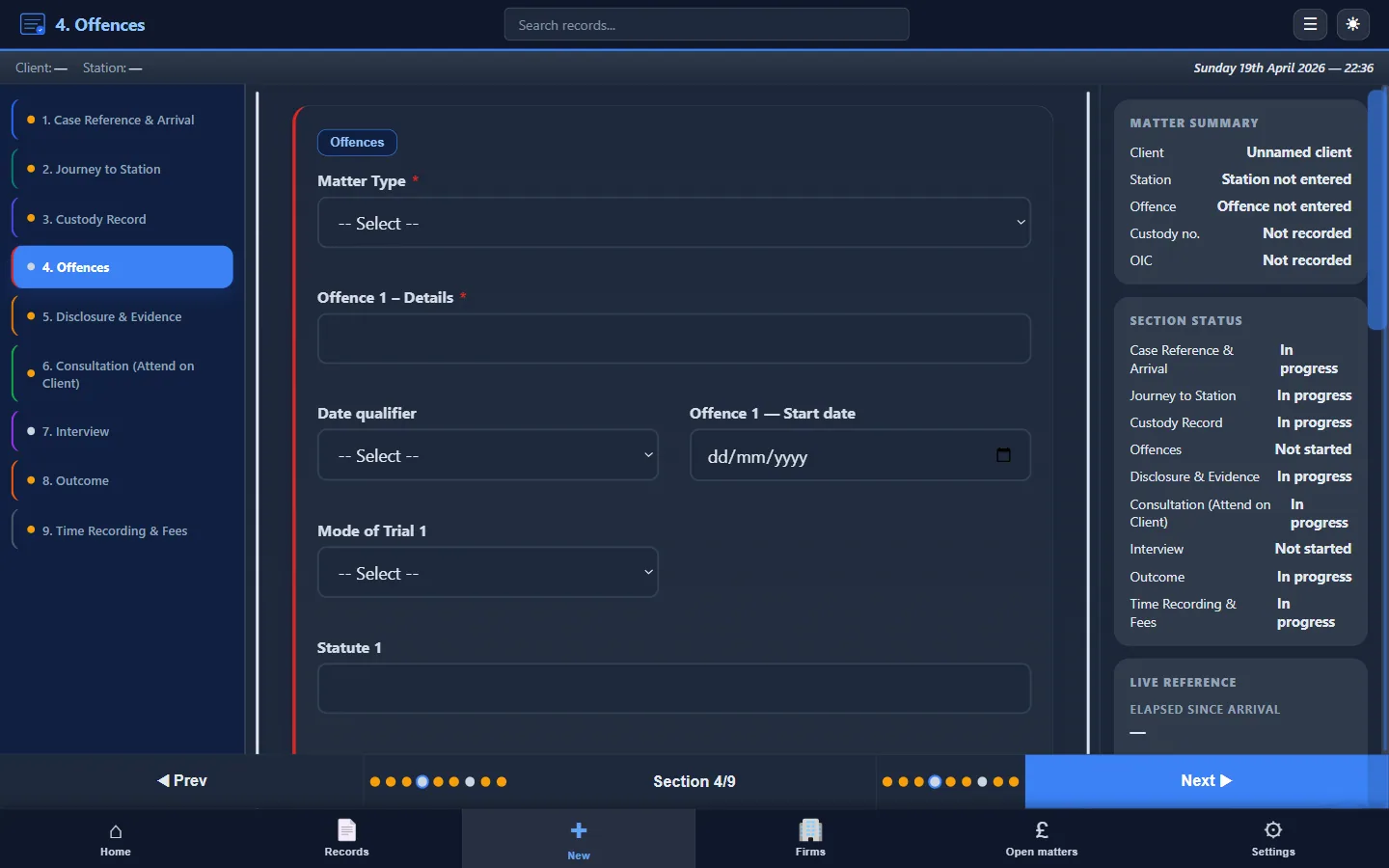
Alleged offences live in their own section, where each matter under investigation is recorded as a separate entry. This is distinct from any final charges, which are recorded in the Outcome section. Where the allegation changes during the attendance, for example, if a further matter is revealed in interview, you can update the offences section and the change flows through to the completed note.
Time Fields and Billing
The time of instruction and arrival time fields feed directly into the billing picture. The difference between instruction and arrival represents travel and waiting time, which is a claimable element under the police station scheme. Recording both times accurately at the outset, rather than reconstructing them later, is one of the most practically valuable habits any representative can develop, and the Time Recording & Fees section pulls these times through automatically.
Note: This article is intended as general information for criminal defence practitioners in England and Wales. It doesn't constitute legal advice. Solicitors and accredited representatives should exercise their own professional judgment in each case. Law and practice may change; always verify current requirements with primary sources.