Common Mistakes in Custody Records
The custody record is an official document maintained throughout a suspect's detention. Mistakes, whether through carelessness or procedural failure, can have significant implications for a case. Here is what representatives should look for on arrival.
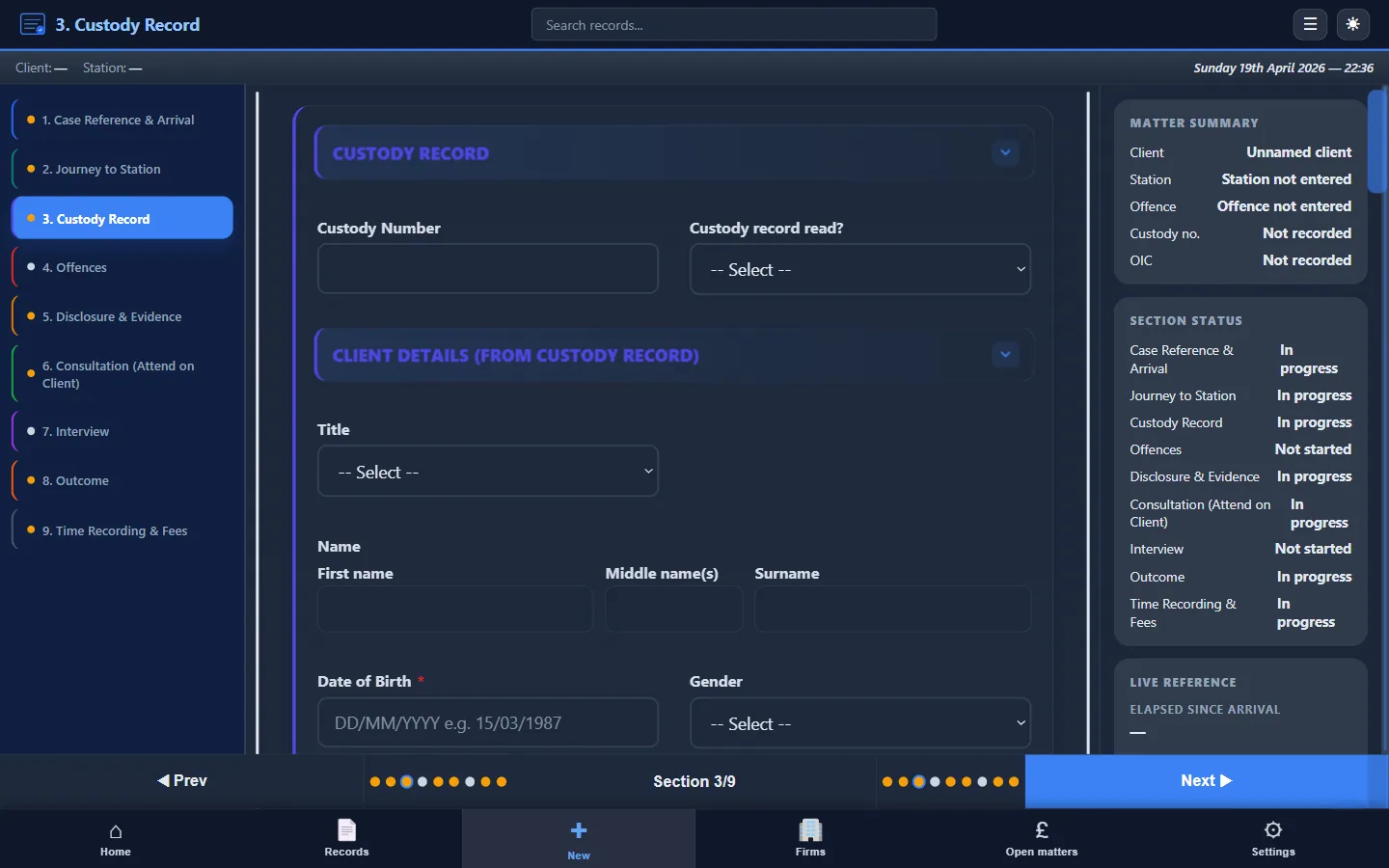
The custody record is an official document opened by the custody sergeant when a person is brought into detention. It must be maintained throughout the detention and is available for inspection by the suspect's legal representative at any time. In practice, reviewing the custody record on arrival is one of the first, and most important, tasks for any representative attending a police station.
What the Custody Record Contains
A properly maintained custody record will include:
- The time and reason for arrest, or the basis for voluntary attendance
- The time of arrival at the custody suite
- The grounds for continued detention
- Notifications given to the suspect regarding their rights
- Any decision to delay rights, and the authority for this
- Requests for legal advice and the response
- Medication and medical information
- Review times and the rank of the reviewing officer
- Interview start and end times, and the signatories to each interview
- Property and clothing records
Inaccurate Times
Times of arrival, review, and interview are sometimes entered incorrectly. In some cases, discrepancies arise from genuine administrative error; in others, they may have a less innocent explanation. Representatives should compare custody record times against the audio recording of interviews, which will have an independent timestamp.
Time discrepancies can become significant if the question of how long someone was detained without review, or whether the custody clock was running correctly, becomes an issue at trial or in a bail application.
Failure to Record Rights Notifications
PACE requires the custody sergeant to inform detained persons of their rights and to record that this has been done. The record should show whether the suspect was told of their right to legal advice, whether they requested it, and if not, why not.
Gaps in the rights section of the custody record may indicate that rights weren't properly communicated, or simply that the record was poorly maintained. Either way, they are worth noting and raising with the custody sergeant if material.
Missing Medical Notes
Where a suspect requests medication, appears unwell, or raises any medical concern, this should be recorded in the custody record and a healthcare professional should be called. Failure to record medical requests, particularly for medication, is a common oversight that can have serious consequences if the suspect's health deteriorates during detention.
Representatives should ask the custody sergeant directly whether the client has made any medical requests, and confirm that these are on the record. Where the client appears unfit for interview, the representative's own note should record this assessment and its basis.
Inadequate Detention Reviews
PACE and Code C require a custody officer to review the grounds for detention periodically. The initial review must take place within six hours of the decision to detain and subsequently at nine-hourly intervals. Reviews must be carried out by an inspector or above.
If review times are missing, if reviews were carried out by an officer of insufficient rank, or if the custody record doesn't reflect the grounds considered on review, these are potential procedural failures. In some circumstances, they may support an argument that continued detention was unlawful.
Signature Gaps
Several sections of the custody record require signatures, from the detained person, the custody officer, and sometimes the interviewing officers. Missing signatures can indicate that proper procedures weren't followed. For example, the detained person is asked to sign the record after their rights are communicated. If this signature is absent and the suspect later denies being informed of their rights, the custody record provides no corroboration of the officer's account.
Practical Steps for Representatives
On arrival, the representative should:
- Ask to see the custody record before consulting with the client
- Note the time of arrest and arrival, and calculate whether the custody clock gives adequate time for a proper consultation before any interview
- Check whether rights have been notified and whether the client requested legal advice at the outset
- Review any medical entries and confirm the client's current condition with the custody sergeant
- Note any irregularities in their own attendance note for later reference
A custody record that's incomplete or inaccurate isn't just an administrative matter. It's a document that may be used in court, and its reliability will be assessed accordingly.
Note: This article is intended as general information for criminal defence practitioners in England and Wales. It doesn't constitute legal advice. Solicitors and accredited representatives should exercise their own professional judgment in each case. Law and practice may change; always verify current requirements with primary sources.