The Consultation Section: Recording Your Advice
The consultation with your client is the most legally sensitive part of any police station attendance. Custody Note's Consultation section gives you a structured way to record the advice given without compromising privilege.
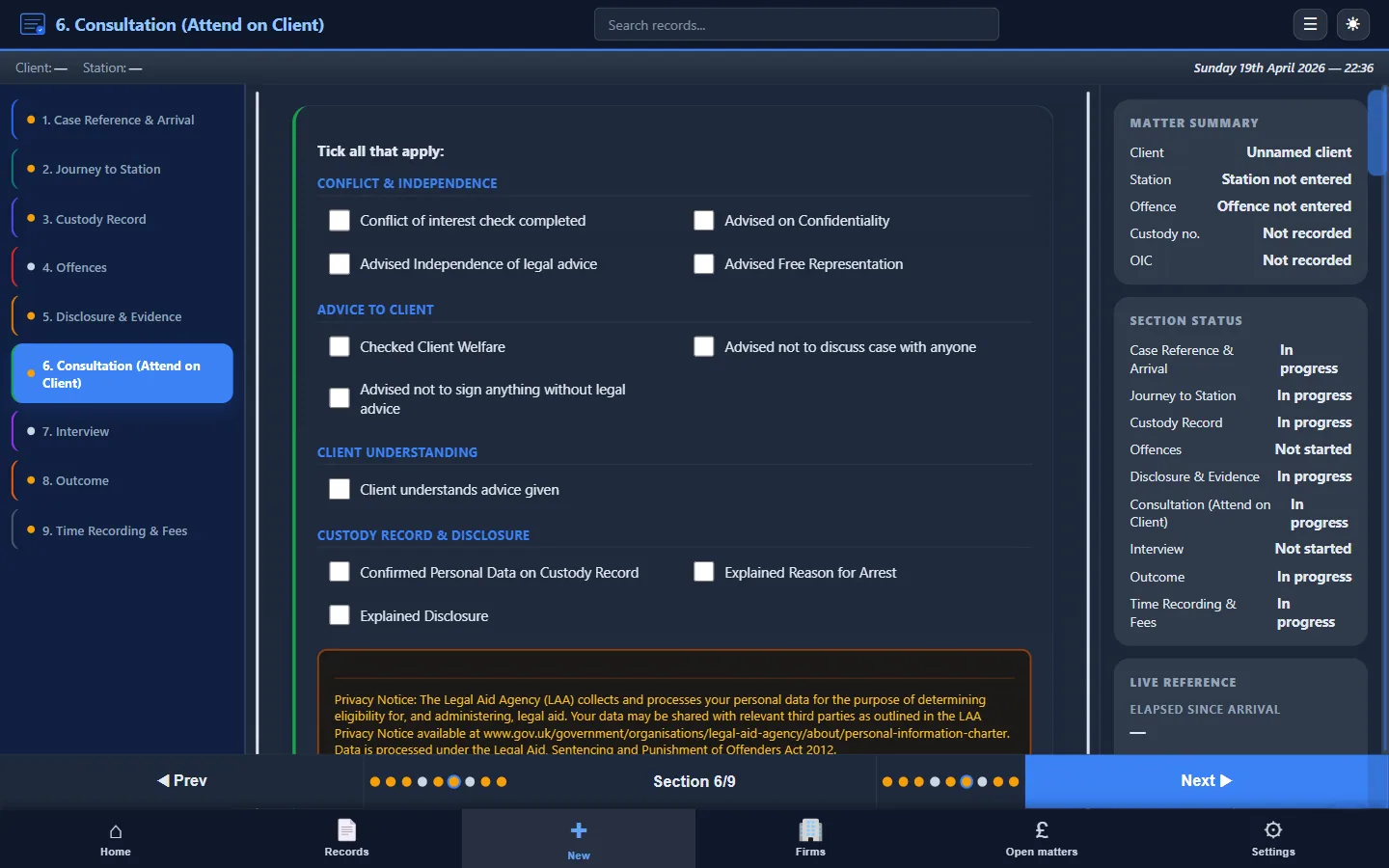
Legal professional privilege means that the content of a legal consultation is confidential between solicitor (or accredited representative) and client. Your attendance note records that the consultation took place and, in general terms, what was covered and decided, without disclosing the privileged substance of the advice itself.
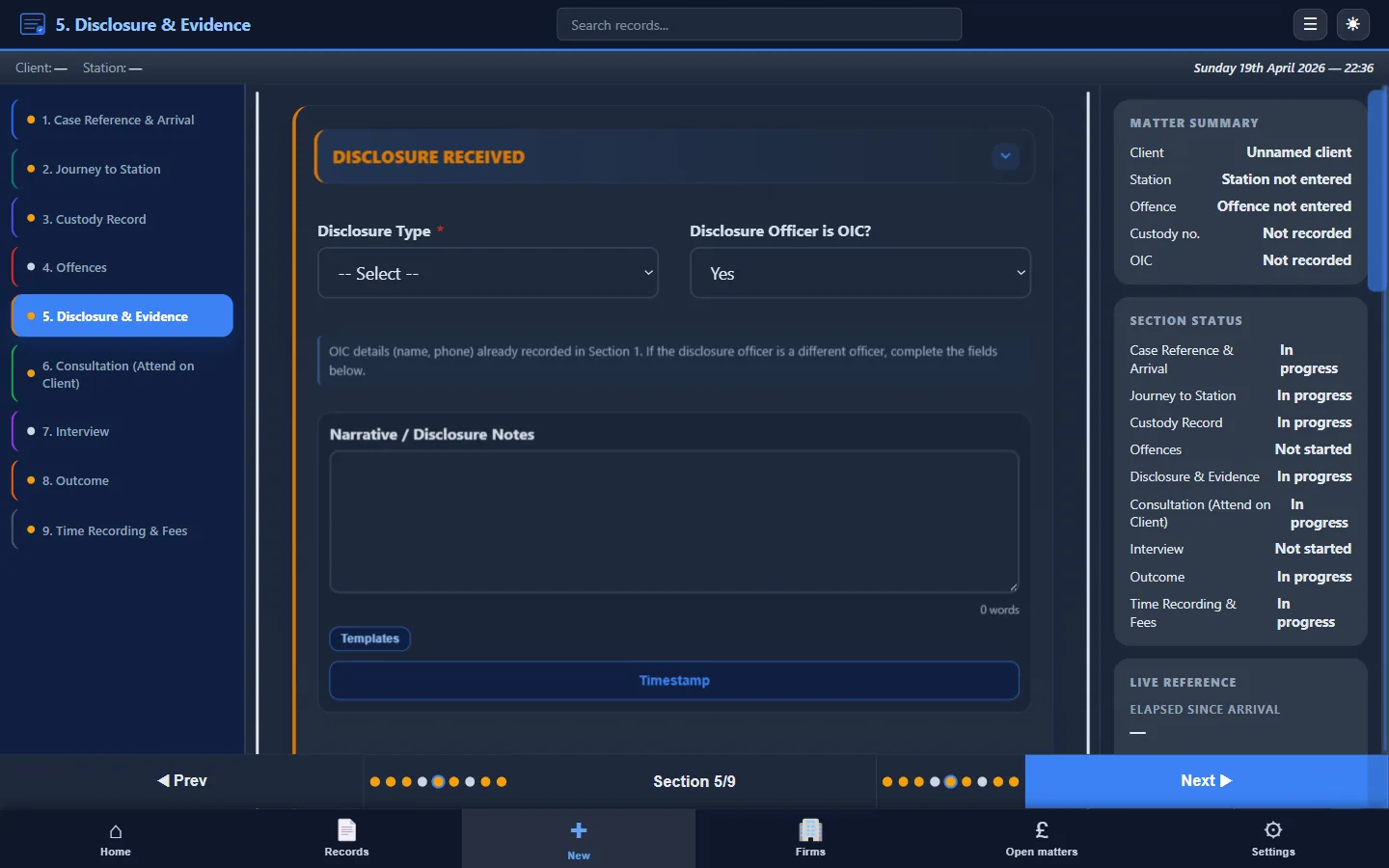
What to Record in the Consultation Section
The Consultation section in Custody Note is structured to capture:
- Start and end time of the consultation: essential for billing
- A summary of matters discussed, in general terms: the allegations, the client's position, the evidence disclosed
- Advice given on interview: whether you advised comment, no comment, or a prepared statement, and the general basis for that advice
- The client's instructions: what the client decided to do and whether they understood and agreed with your advice
- Fitness to be interviewed: your assessment of whether the client is in a fit state to be interviewed, and any concerns raised
Privilege and the Attendance Note
The guidance from professional bodies is that the attendance note should record what happened, not reproduce the advice in detail. You can record "advised no comment on the basis of inadequate disclosure" without recording the specific advice you gave about the evidence, the client's account, or their defence strategy. The note records decisions, not confidences.
Where a client waives privilege, for example, in a later wasted costs application or complaint, a more detailed note may be relevant. Custody Note doesn't prevent you from recording more detail where appropriate; the structured fields provide a minimum framework, not a maximum.
Time Recording in the Consultation Section
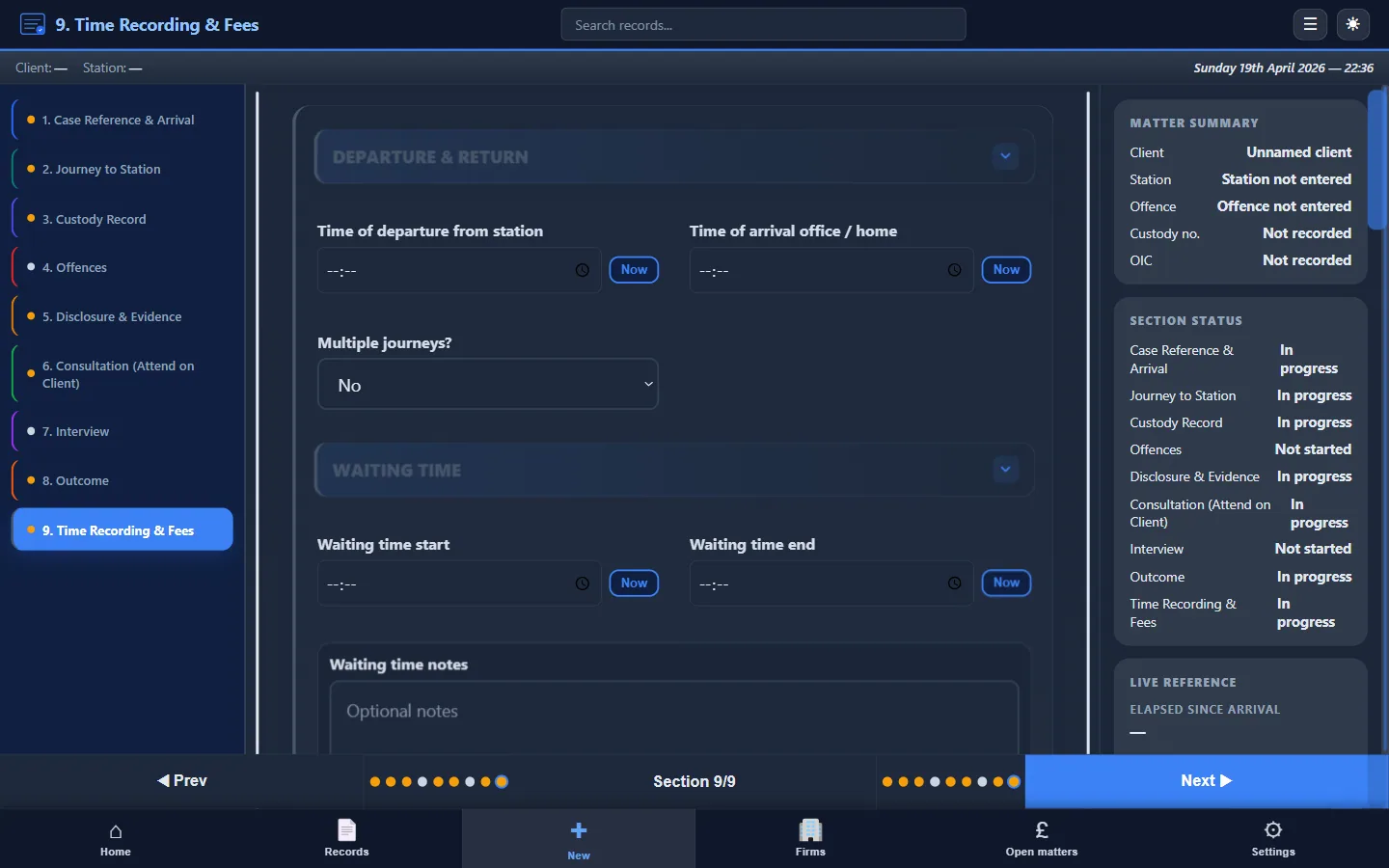
The Consultation section is one of the key time-recording sections (the others are Time Recording & Fees and any post-interview consultation). Accurate start and end times for the consultation are important for billing under the police station scheme. The LAA will expect a consultation time that's proportionate to the complexity of the matter.
Where the Client Waived Advice
If the client declined to take legal advice before interview, the Consultation section includes a field to record this fact and the circumstances. Recording that advice was offered, declined, and that the client appeared to understand the decision they were making is an important protection for the representative.
Note: This article is intended as general information for criminal defence practitioners in England and Wales. It doesn't constitute legal advice. Solicitors and accredited representatives should exercise their own professional judgment in each case. Law and practice may change; always verify current requirements with primary sources.