Recording the Custody Stage in Custody Note
The Custody Record section captures the core detention information: grounds for detention, rights given, time of arrest, and any decisions made by the custody sergeant. Here is how to use it.
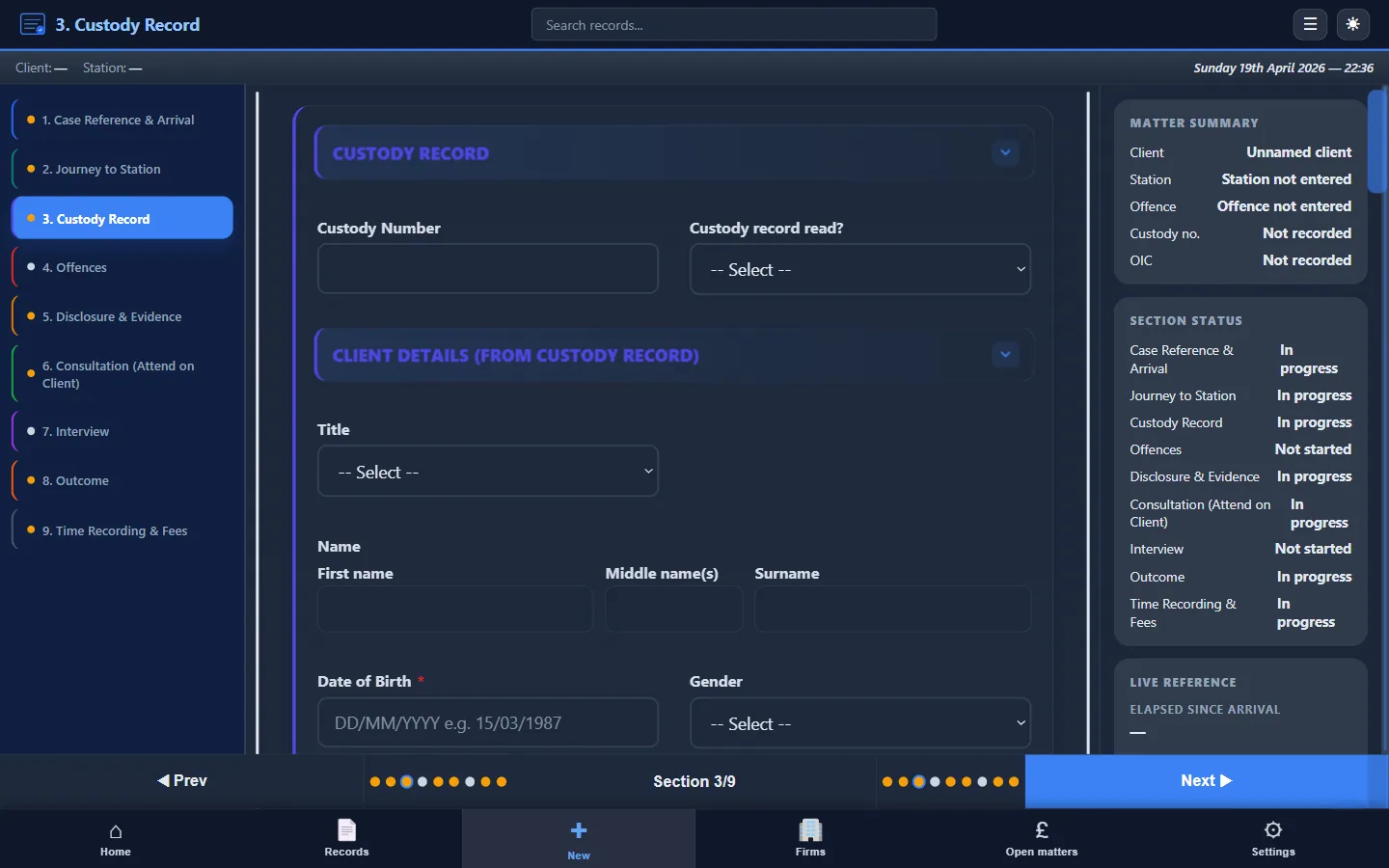
The Custody Record section is the third section of a Custody Note attendance. It records the formal aspects of the client's detention: when they were arrested, the grounds on which they are being held, the rights given to them, and the condition of the client on your arrival.
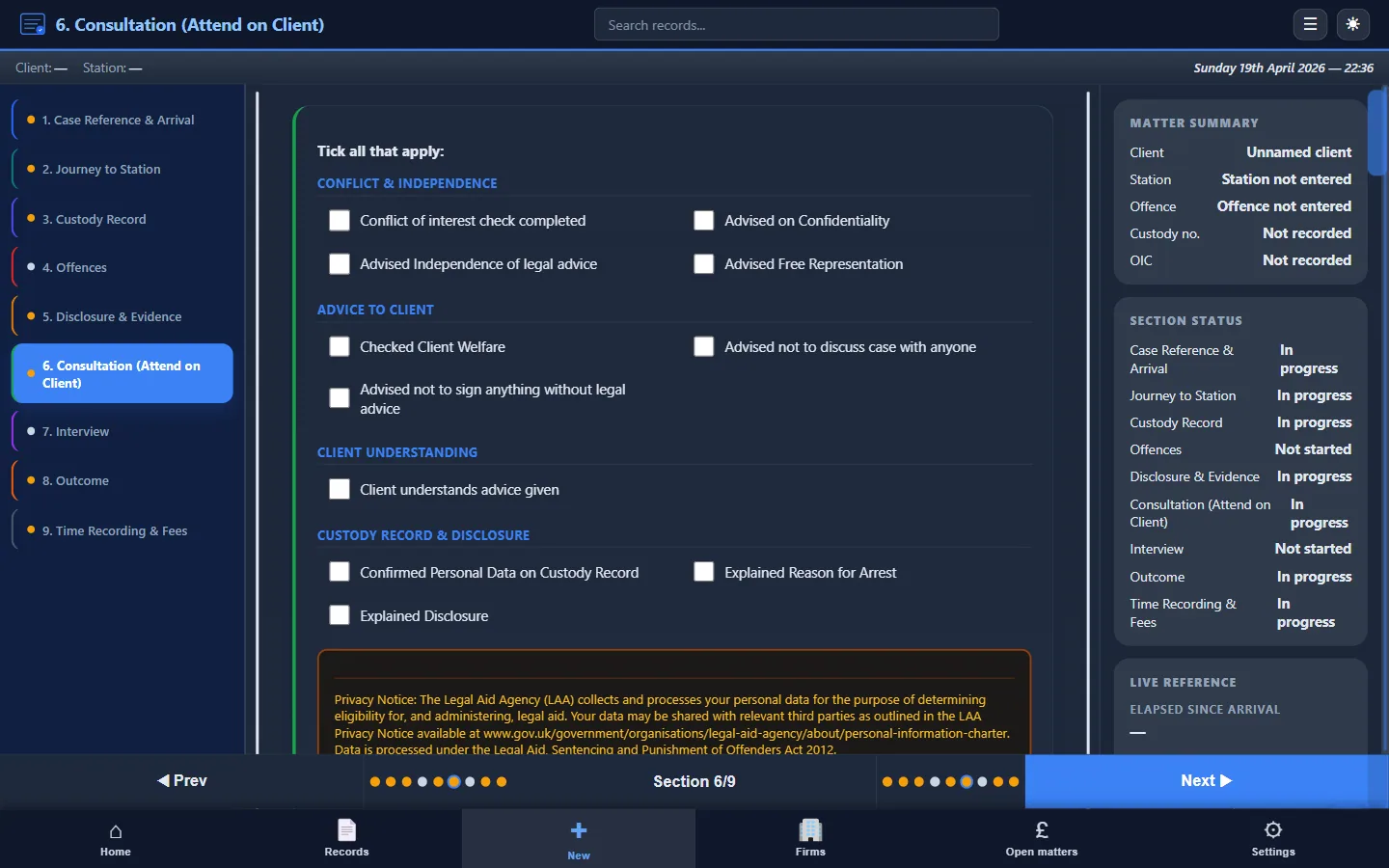
Grounds for Detention
PACE requires the custody sergeant to record the grounds for detention, and for a detained person to be informed of those grounds. The Custody Record section in Custody Note provides a structured field for recording the grounds as stated, either by the custody sergeant or as noted from the custody record itself.
Recording the grounds at the start of the attendance is important because they define the legal basis for the entire detention. If the grounds later prove insufficient, any evidence gathered during that detention may be subject to challenge.
Rights Given
The Custody Record section includes a checklist of the rights that should be communicated to every detained person under Code C:
- Right to legal advice (s.58 PACE)
- Right to have someone informed of the arrest (s.56 PACE)
- Right to consult the Codes of Practice
For each right, you can record whether it was offered, exercised, or waived. Where a suspect waives the right to legal advice, recording the circumstances, including whether the waiver appears to have been informed and voluntary, is an important note for future reference.
Condition on Arrival
There's a dedicated field for recording your assessment of the client's condition on arrival: apparent sobriety, signs of distress, whether they appear to understand what is happening, and any visible injuries or medical concerns. This contemporaneous record may become important if there's a later challenge to the client's fitness to be interviewed.
Time of Arrest vs Time of Arrival
The Custody Record section records both the time of arrest and the time of arrival at the custody suite. These are often different, particularly where a suspect was arrested away from the station and transported. The distinction matters for the PACE custody clock, which runs from the relevant time defined by PACE, usually the time of arrival at the station.
Recording both times accurately means your attendance note provides a clear picture of how much of the PACE detention period had elapsed when you arrived.
Note: This article is intended as general information for criminal defence practitioners in England and Wales. It doesn't constitute legal advice. Solicitors and accredited representatives should exercise their own professional judgment in each case. Law and practice may change; always verify current requirements with primary sources.