How Custody Note Handles Disclosure
Disclosure at the police station is often limited and sometimes misleading. The Disclosure section in Custody Note gives you a structured place to record exactly what was, and wasn't, provided by the investigating officers.
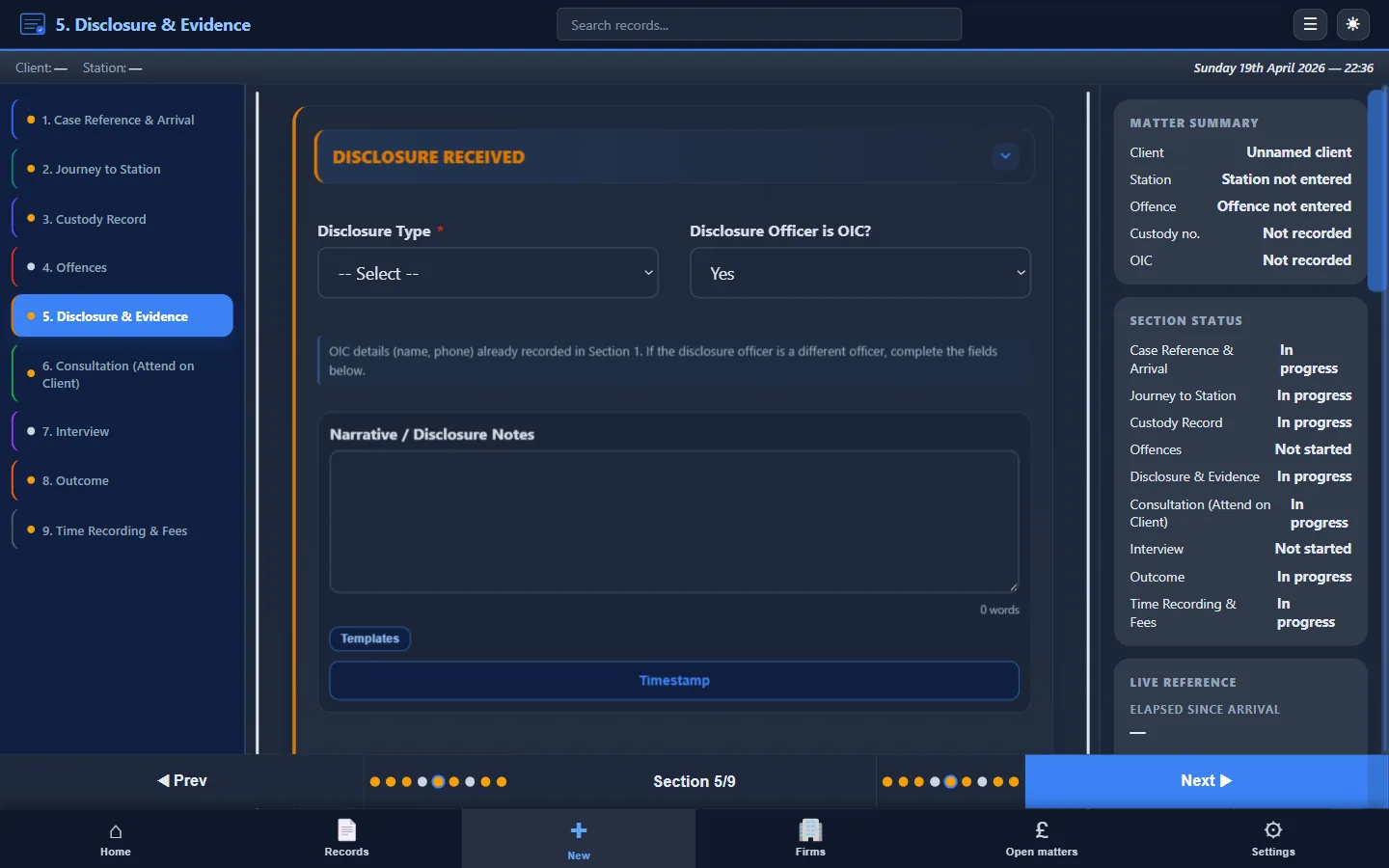
Pre-interview disclosure at the police station is rarely complete. Investigating officers often provide a summary of the allegation (enough to justify the interview) without revealing the evidence base in detail. Recording exactly what was disclosed, in what form, and when is a critical element of any proper attendance note.
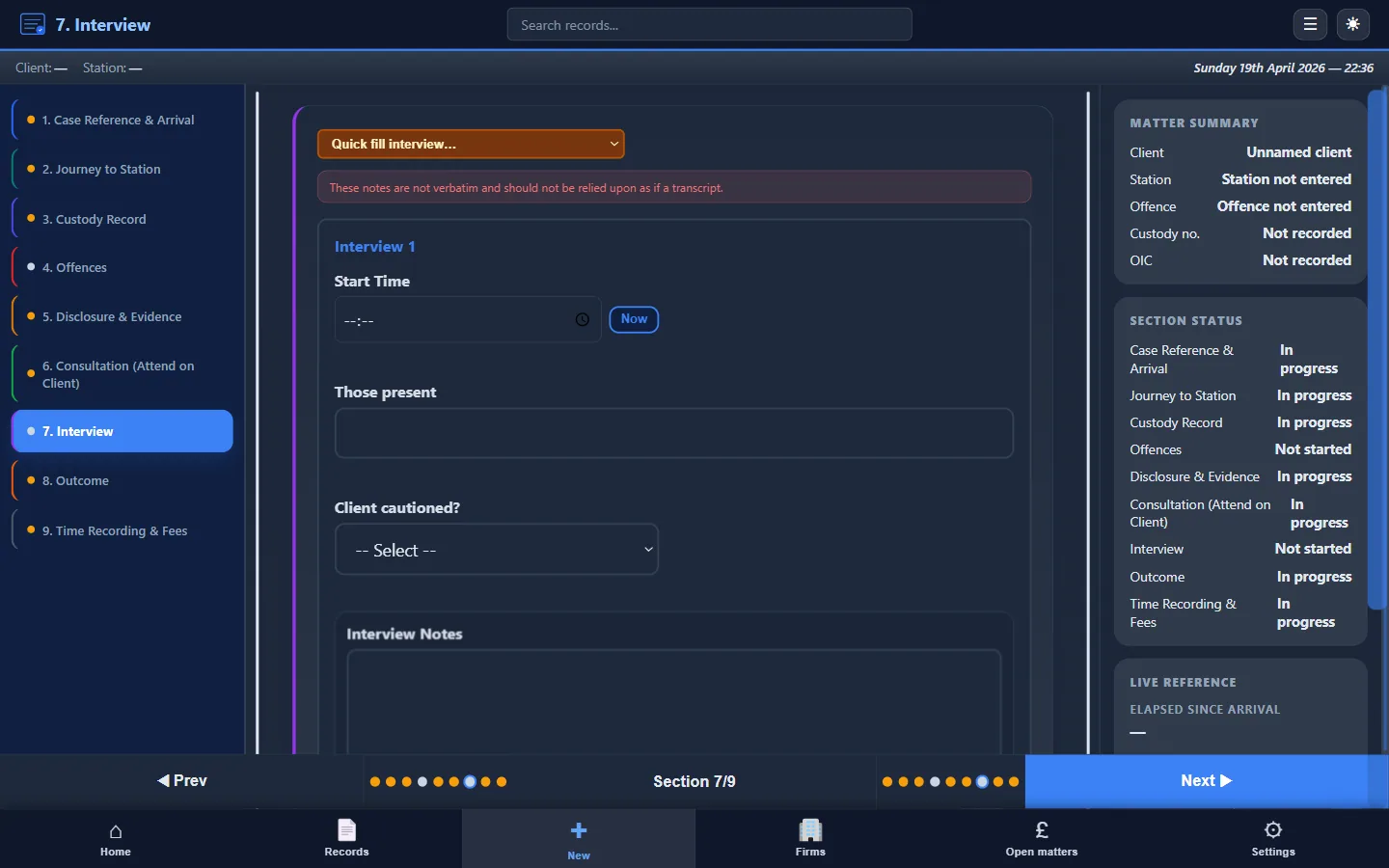
What the Disclosure Section Records
The Disclosure & Evidence section in Custody Note is structured around the two sides of any disclosure situation:
- What was provided: the substance of any disclosure given by the officers, whether verbal or documentary
- What was withheld: an explicit record of what you requested but weren't given, or what officers stated wouldn't be disclosed before interview
Keeping both sides of this on record is valuable. A note that records only what was provided leaves no record of inadequate disclosure. A note that records both what was received and what was refused or deferred is significantly more useful if the disclosure position becomes an issue at any later stage.
Timing and the Advice You Give
The adequacy of disclosure directly affects the advice you can give your client about interview. Where disclosure is minimal, you may advise that the client can't give a meaningful account without knowing the case against them. That reasoning, and its connection to the state of disclosure at the time, should be captured in the Disclosure section alongside the advice recorded in the Consultation section.
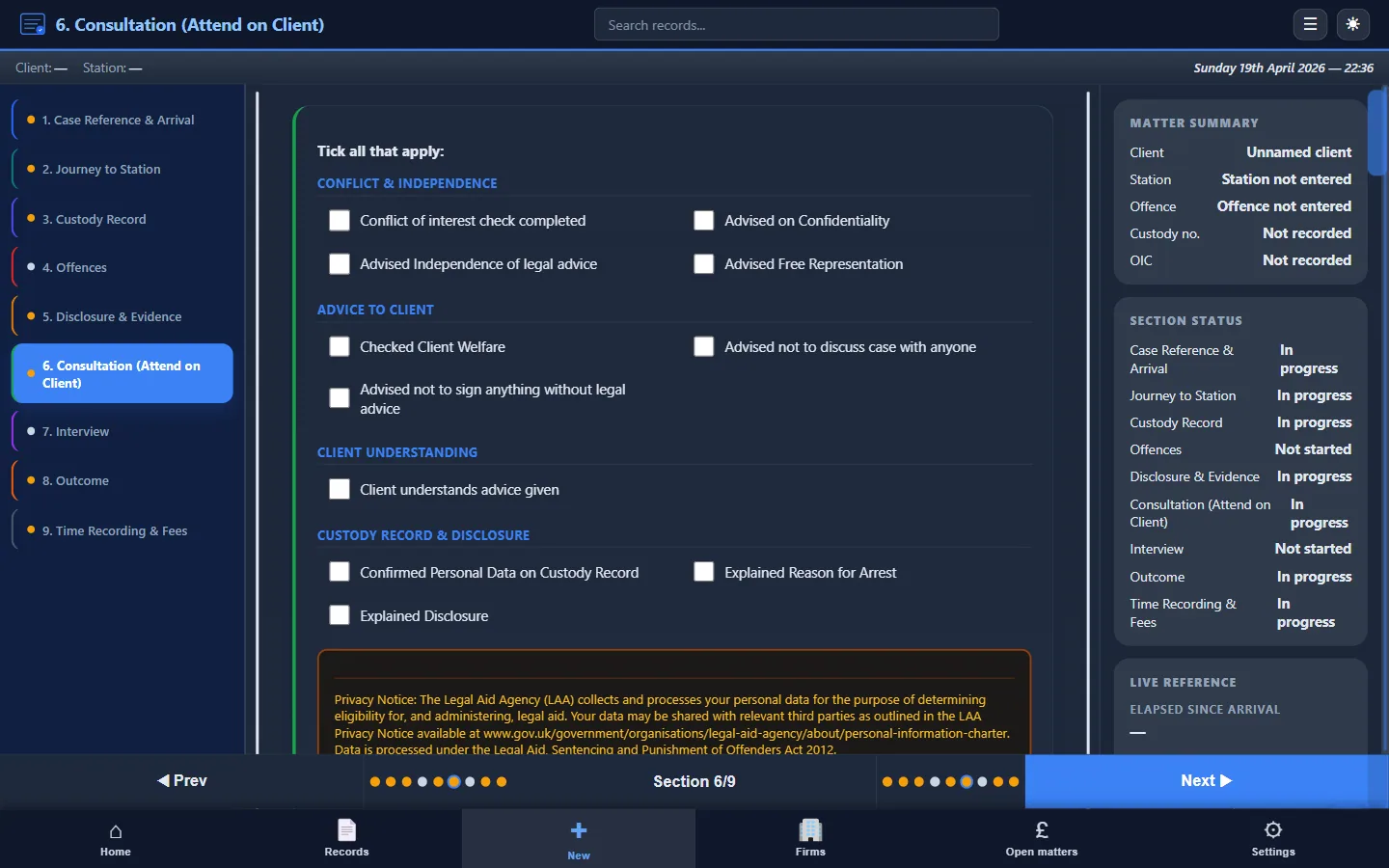
Custody Note's section structure makes this connection visible: you can flick between Disclosure and Consultation in two clicks when reviewing a completed note, which helps both for billing and for any future case review.
Requests Made and Refused
There's a specific field for recording requests made to officers for further disclosure, and the response received. This is particularly useful where you made formal representations for pre-interview disclosure and were refused. The record of that request and refusal forms part of the basis for any subsequent argument that interview conditions were unfair.
Documentation Provided
Where officers provide physical documentation (CCTV evidence descriptions, photographs, or written summaries) the Disclosure section includes a field to record the nature of that documentation and the time it was received. Where possible, note whether you were permitted to take a copy or only permitted to read the document.
Note: This article is intended as general information for criminal defence practitioners in England and Wales. It doesn't constitute legal advice. Solicitors and accredited representatives should exercise their own professional judgment in each case. Law and practice may change; always verify current requirements with primary sources.