How Legal Aid Applies at the Police Station
Legal aid at the police station is unlike legal aid for court proceedings: it isn't means-tested, it covers both telephone advice and physical attendance, and it operates through the duty solicitor scheme. Here is how it works in practice.
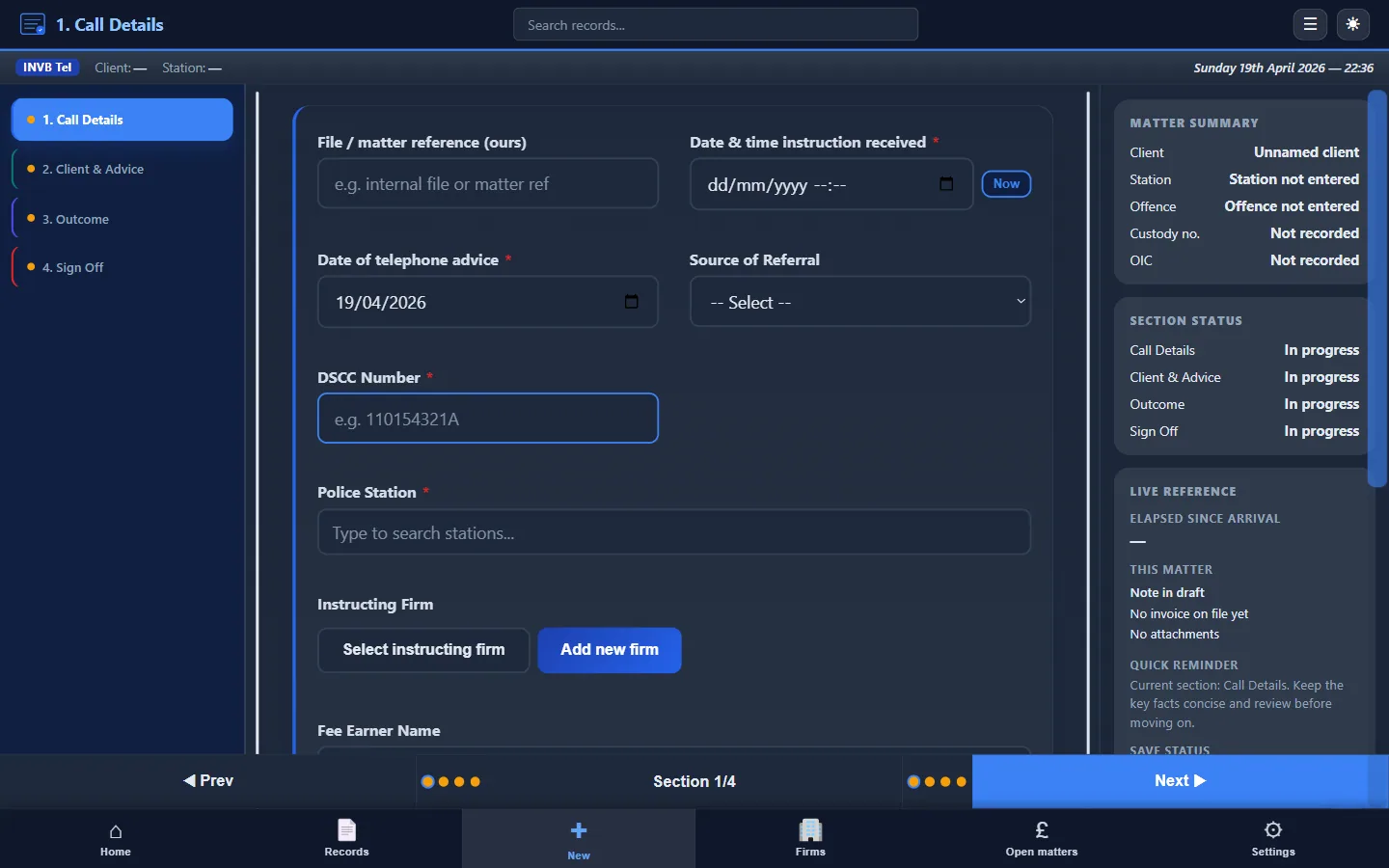
Legal aid at the police station operates under a distinct scheme from legal aid for magistrates' or Crown Court proceedings. The rules, funding arrangements, and practical implications are different, and understanding them is essential for any representative who needs to be properly remunerated for police station work.
The Duty Solicitor Scheme
The duty solicitor scheme is administered by the Legal Aid Agency through contracts with Approved Organisations. That is, law firms holding a criminal legal aid contract. Firms with a duty solicitor contract are required to provide representation to suspects at police stations, including suspects who aren't existing clients of the firm.
Duty solicitor slots are typically allocated through the Defence Solicitor Call Centre (DSCC), which receives calls from police stations and allocates them to duty solicitors or accredited representatives on the duty rota. Where a suspect has their own solicitor, the DSCC will attempt to contact that firm first.
Means Testing Does Not Apply
This is one of the most important distinctions between police station legal aid and court-based legal aid: there's no means test at the police station. A suspect is entitled to free legal advice and representation regardless of their income, assets, or financial circumstances.
Representatives should draw this to clients' attention, particularly where a suspect is hesitant to request legal advice because they believe they can't afford it. The right is unconditional at this stage of the process.
Own Solicitor vs Duty Solicitor
A detained person may request their own solicitor or the duty solicitor. Both are funded through the public scheme. Where the suspect nominates their own solicitor, the DSCC will attempt to contact that firm. If the firm can't attend or doesn't hold a duty contract in that area, the duty solicitor will be offered as an alternative, but the suspect may choose to wait for their own solicitor, within reason.
Types of Police Station Advice
The LAA distinguishes between two types of police station legal aid advice:
- Telephone advice: the representative provides advice by telephone without attending in person. This is typically used for straightforward matters, where the suspect isn't being interviewed, or where immediate attendance isn't required.
- Police station attendance: the representative physically attends the custody suite. This is required for all interviews under caution, and is appropriate where the matter is complex or serious.

Both types of advice attract public funding, though at different rates. A decision to advise by telephone rather than attend in person is a professional judgment, but one that should be recorded with its reasoning.
Billing and Attendance Notes
Claims under the police station scheme must be supported by an attendance note that records the work done and the time spent on each element. The claim is submitted using the standard billing form and will, if challenged on audit, be assessed against the attendance note.
The LAA expects attendance notes to record:
- Time of instructions: the initial call or notification from the DSCC
- Time of arrival at the custody suite
- Duration of consultation with the client
- Time spent reviewing disclosure
- Duration of interview attendance
- Any post-interview consultation
- Departure time
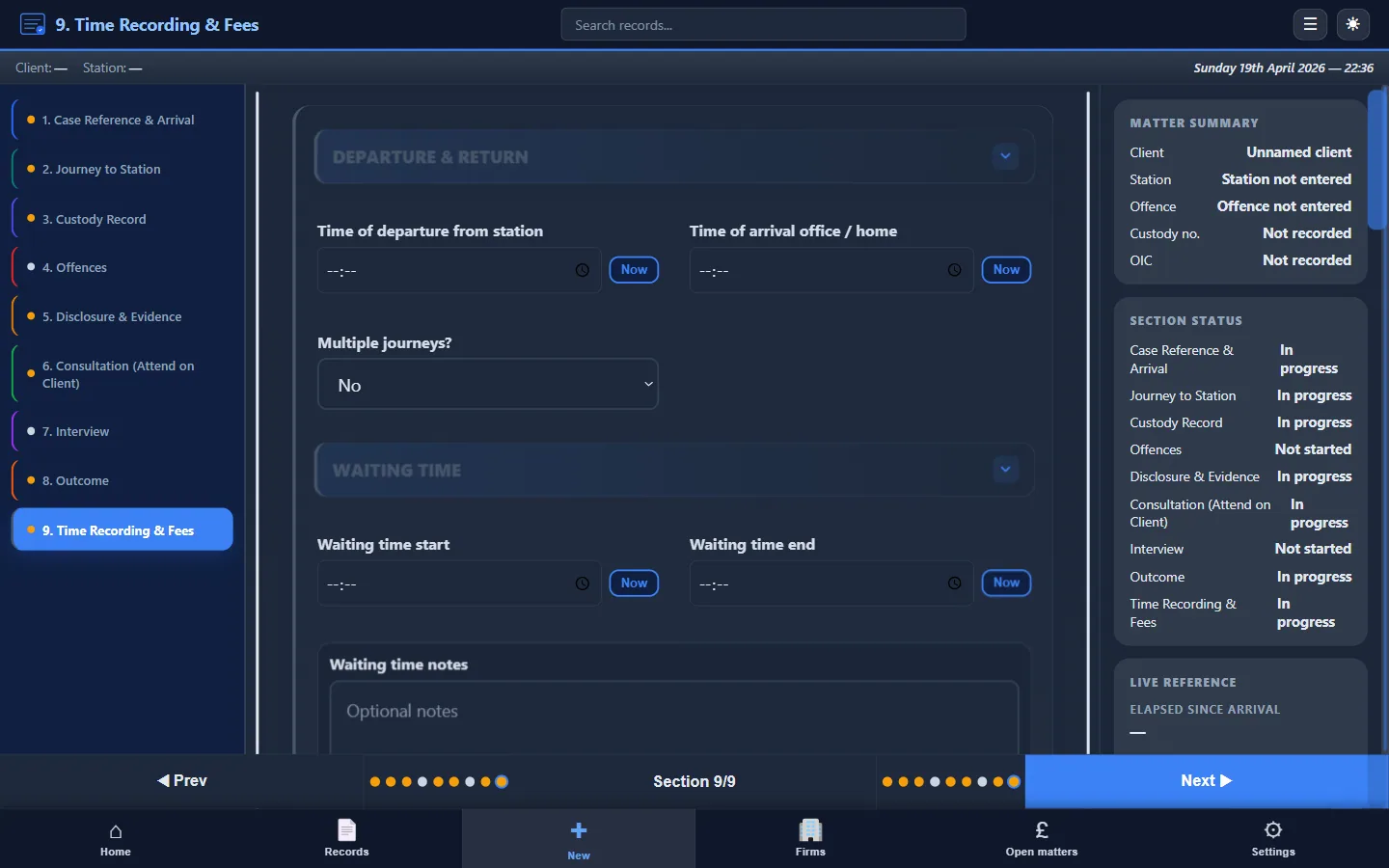
Where a claim is queried, an attendance note that doesn't record these elements may result in the claim being reduced or disallowed. Representatives who are thorough in their note-taking are therefore also protecting their own remuneration.
The Open Matters Dashboard
Across all your police station work, the Open Matters dashboard surfaces what still needs doing for billing: matters needing supporting documents, matters ready to invoice, and outstanding revenue. This is particularly useful at the end of a billing period.

SRA Accreditation
Accredited police station representatives must hold accreditation under the Law Society's Police Station Accreditation Scheme, or an equivalent scheme recognised by the LAA. Only accredited representatives may attend police station interviews under the public funding scheme. Firms should ensure that the accreditation of all representatives is current and that records are maintained accordingly, as this is an area that the LAA may review on audit.
Note: This article is intended as general information for criminal defence practitioners in England and Wales. It doesn't constitute legal advice. Solicitors and accredited representatives should exercise their own professional judgment in each case. Law and practice may change; always verify current requirements with primary sources.