Why Your Attendance Notes Would Fail an LAA Audit
Most attendance notes wouldn't survive close scrutiny from the Legal Aid Agency. Here are the problems auditors find, and how to fix them before your next claim.
Legal aid practitioners know that the Legal Aid Agency audits files. What many don't fully appreciate is how often attendance notes (the single most important document in a police station file) fall short of what auditors expect. The problems are rarely dramatic. They're usually small things that happen on every file, and they can all be fixed. But left alone, they put claims at risk, trigger repayment demands, and in the worst cases contribute to contract compliance action.
Here are the most common reasons attendance notes fail an LAA audit, what the auditors are looking for, and how to fix each one.
What auditors are looking for
An LAA auditor reviewing a police station file isn't reading your attendance note like a novel. They are checking it against a set of criteria derived from the Standard Crime Contract, the Criminal Bills Assessment Manual, and established billing guidance. In practice, they are asking a small number of specific questions:
- Does the time claimed match the time recorded?: The note must contain enough time data to support the total claimed. Start times, end times, and a breakdown of activities (travel, waiting, consultation, interview, post-interview) should be present and internally consistent.
- Does the work described justify the time?: A note that records three hours at the station but describes only a brief consultation and a short interview will prompt questions. The auditor wants to see substantive work throughout the attendance.
- Are the billing fields complete?: UFN, DSCC reference, offence codes, outcome, and the correct claim type (lower, higher, escape fee) must all be present and accurate.
- Is the note contemporaneous?: Auditors look for indicators that the note was created at or near the time of the attendance, not reconstructed days later. Specific times, sequential entries, and granular detail all suggest contemporaneous recording.
For a complete breakdown of what must be in every attendance note, see LAA Attendance Notes Explained.
Problem 1: Missing or incomplete time entries
This is the single most common audit failure. The note records a start time and an end time, or sometimes just a date, but doesn't break the attendance down into its component parts. Without a time breakdown, the auditor can't verify that the total claimed time is reasonable.
What the auditor expects to see: the time you were notified, the time you arrived at the station, the start and end of each consultation, the start and end of each interview, any waiting periods, and the time you departed. These entries should be precise: “arrived 14:22” rather than “arrived mid-afternoon”, and consistent with each other.
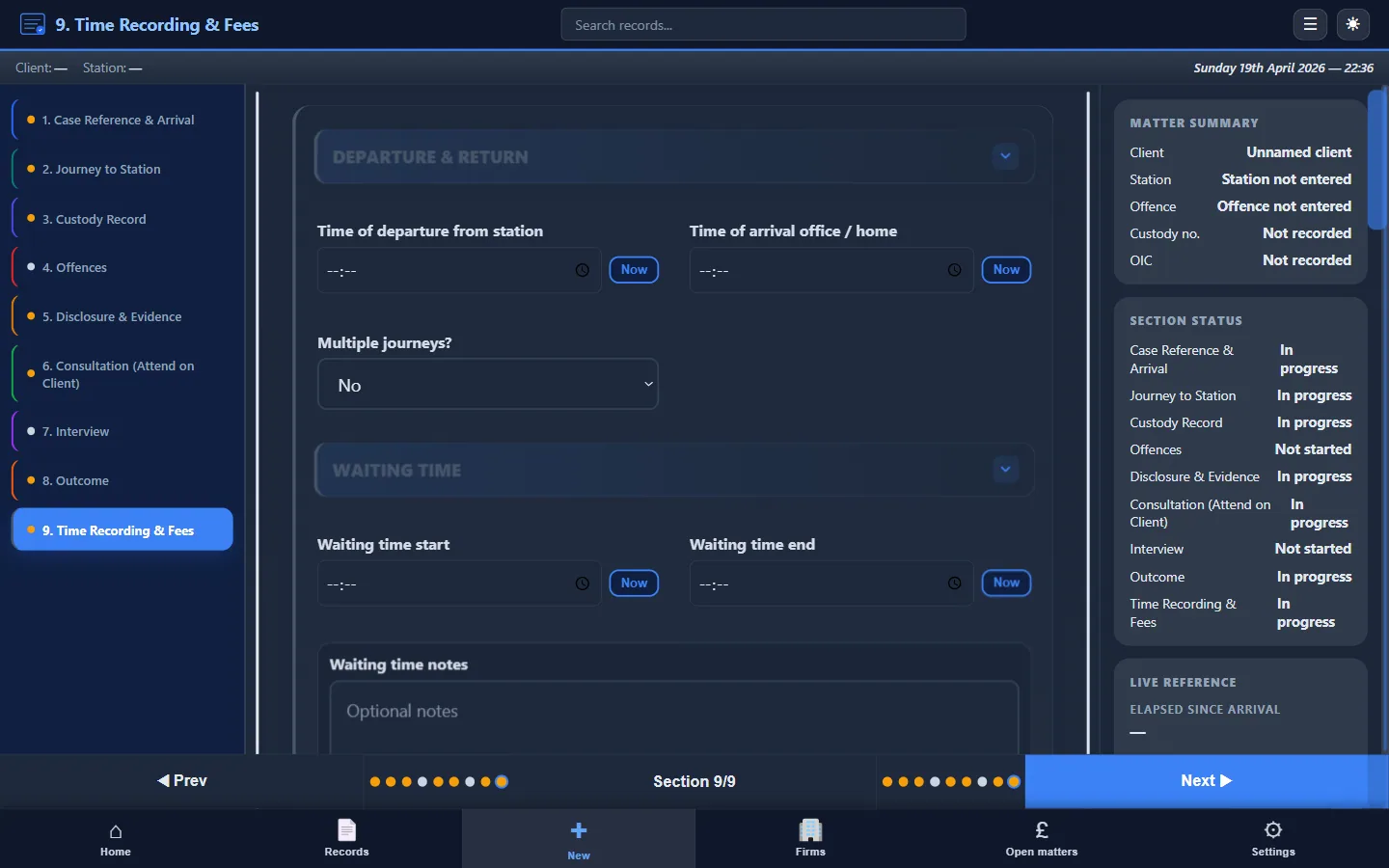
How to fix it: Record times as events happen, not from memory afterwards. Use your phone or watch and note the time at each transition point. If you use structured software, dedicated time fields at each stage make this automatic.
Problem 2: Vague or generic narratives
Notes that read “attended station, consulted with client, sat in on interview, client charged” tell the auditor nothing about what you actually did. They provide no evidence of substantive work and no basis for assessing whether the time claimed was reasonable.
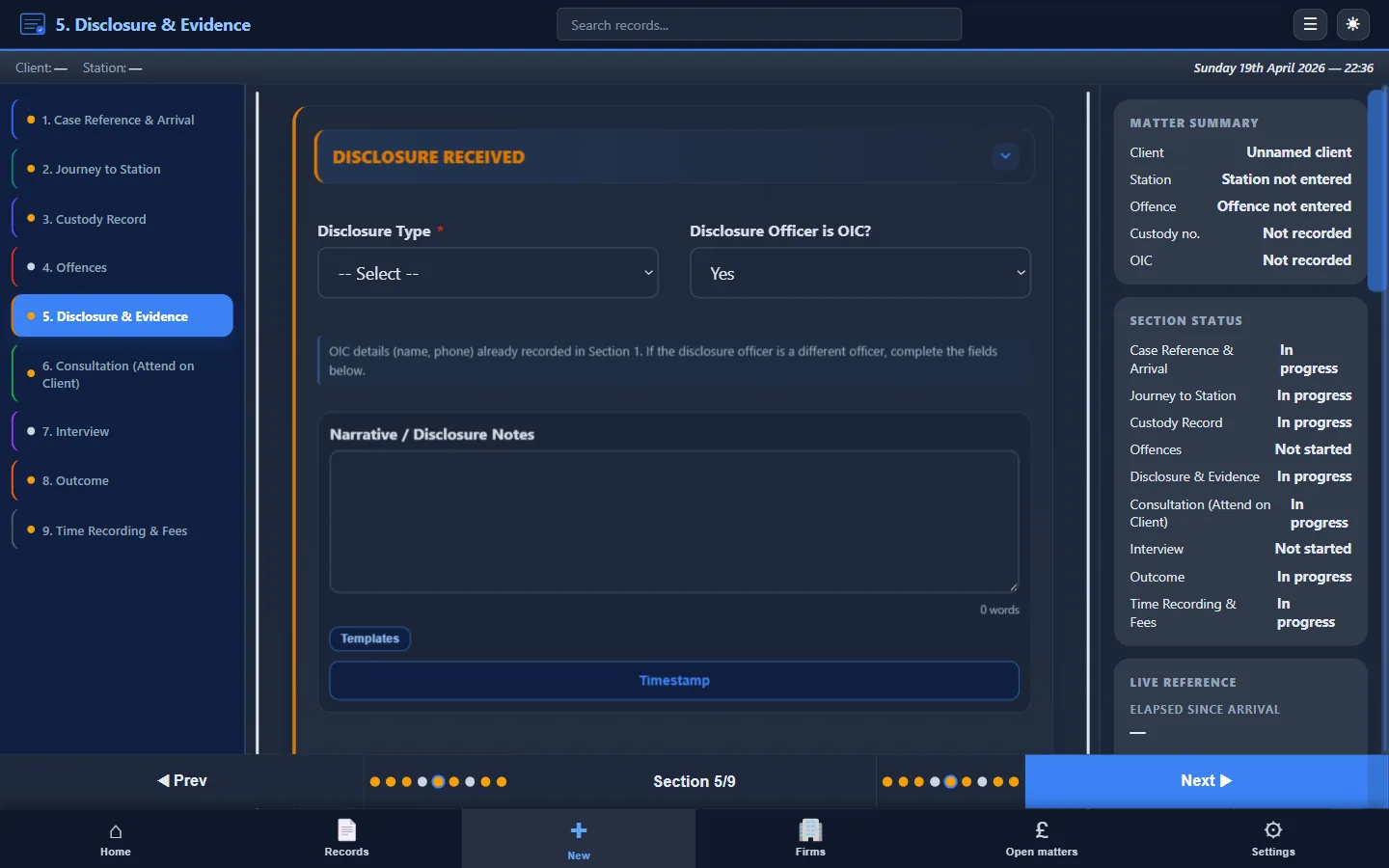
Auditors want specificity. What was the offence? What disclosure was given? What advice did you provide in the consultation? What topics did the interview cover? What representations did you make to the custody officer? What was the outcome and what advice did you give at that point?
How to fix it: Replace generic summaries with specific, factual entries. You don't need to write an essay, but each stage of the attendance should contain enough detail to show that you were actively engaged in the work. A consultation entry that says “advised no comment due to inadequate disclosure on count 2; client instructed to provide prepared statement on count 1” is vastly better than “consulted with client.”
Problem 3: No fee justification for escape cases
Escape fee claims require the practitioner to demonstrate that the case met the relevant threshold, typically that the time spent exceeded the standard fee by a defined percentage. If the note doesn't contain sufficient time data and narrative to justify the higher claim, the auditor will reduce it to the standard fee.
This is particularly common in cases involving multiple interviews, interpreter delays, or overnight detentions. The total time may genuinely exceed the threshold, but if the note doesn't record the individual components (each interview duration, each waiting period, each consultation) the claim can't be verified.
How to fix it: Treat every attendance as a potential escape case. Record each component of time separately so that if the total exceeds the threshold, the supporting evidence is already in the note. For more on billing and attendance notes, see Attendance Notes for Legal Aid Billing.
Problem 4: Inconsistent or missing formats
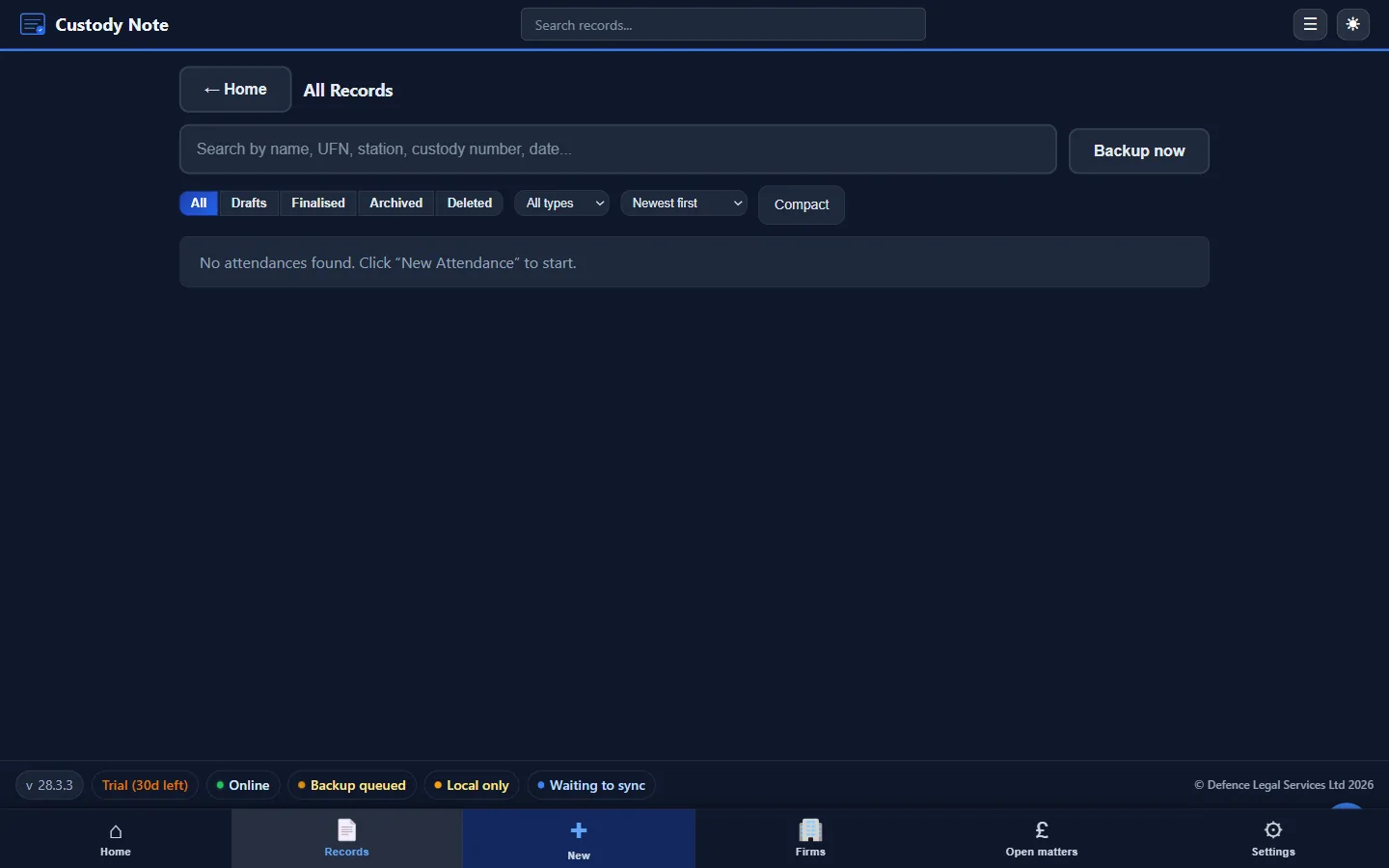
Auditors review multiple files from the same firm. If every attendance note looks different (some on headed paper, some in Word, some handwritten, some with times and some without) it suggests the firm lacks a consistent process. Inconsistency doesn't automatically mean a claim is wrong, but it increases scrutiny and makes it harder for the auditor to find the information they need.
Particular problems arise when notes are handwritten and partially illegible, when they are typed up days after the attendance from memory, or when they use non-standard abbreviations that the auditor can't interpret.
How to fix it: Adopt a standard format across the firm. Whether paper or digital, every note should follow the same structure: header information (client, offence, UFN, DSCC), a chronological narrative with times at each stage, and a closing section with outcome and departure time. Consistency makes audits faster and reduces the risk of queries.
Problem 5: Missing billing reference data
Every police station file needs a Unique File Number, a DSCC reference (for duty cases), the correct offence code, and an accurate outcome code. Missing or incorrect references create administrative problems that can delay payment or trigger a request for further information.
In audit, missing references raise a more fundamental question: if the practitioner didn't record the basic case identifiers, what else did they not record? It creates an impression of carelessness that colours how the auditor reads the rest of the file.
How to fix it: Record reference data at the start of every attendance. The UFN and DSCC reference should be the first things in the note, entered when you receive the call. Offence and outcome codes should be confirmed before the note is finalised.
Problem 6: No record of advice given
The attendance note should record what advice you gave at each stage: before interview, during any breaks, and after interview when the outcome is known. A note that records the factual events but omits the advice given is incomplete from both a billing and a professional standpoint.
For the auditor, the absence of recorded advice raises questions about whether substantive legal work was actually performed. For the practitioner, it also creates a professional risk, if a complaint is made or the case goes to trial, there's no contemporaneous record of what was advised.
How to fix it: At each consultation stage, record the advice given and the client's instructions in response. This does not need to be lengthy. A few sentences recording the substance of the advice and the client's decision is sufficient.
How structured software helps
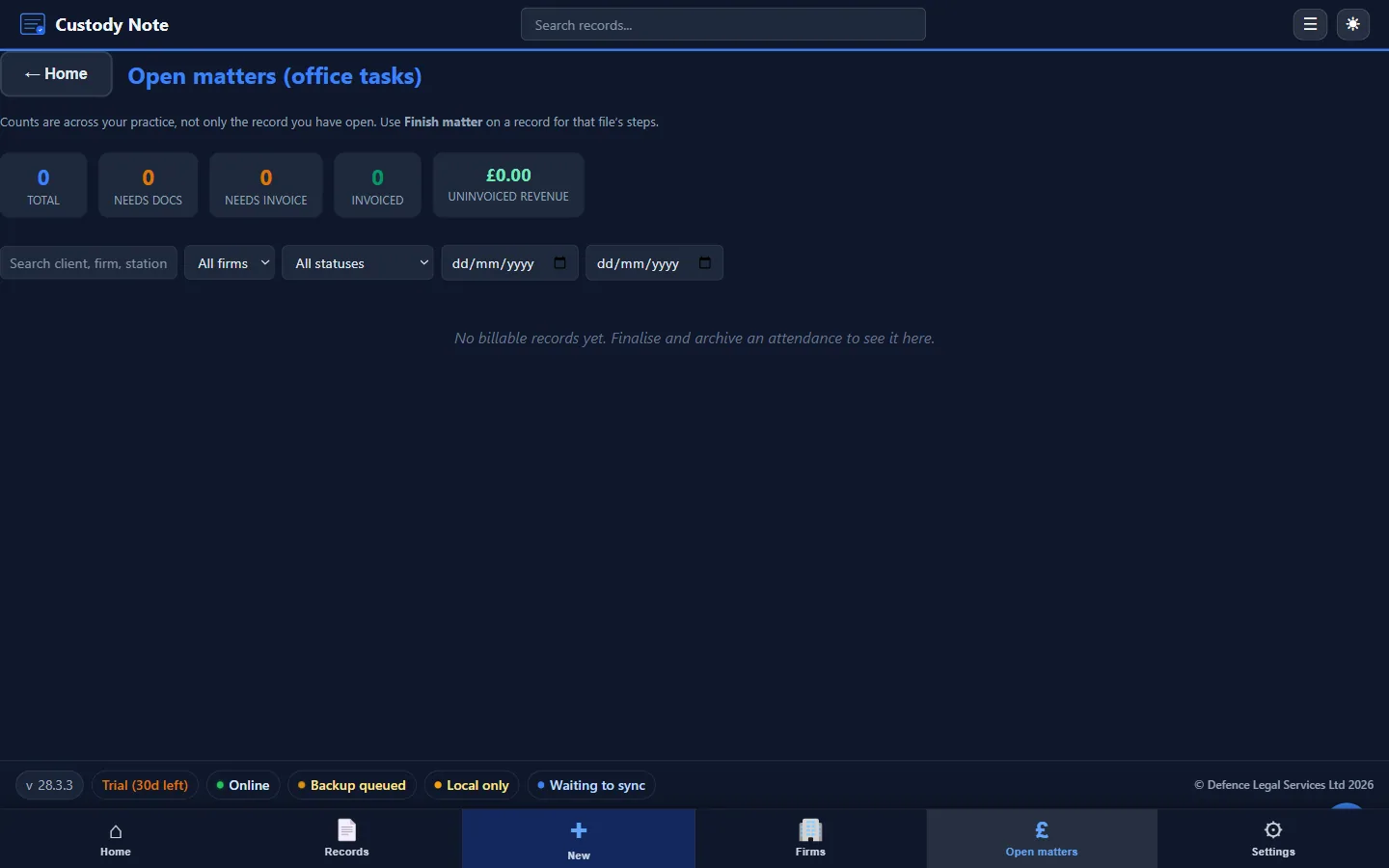
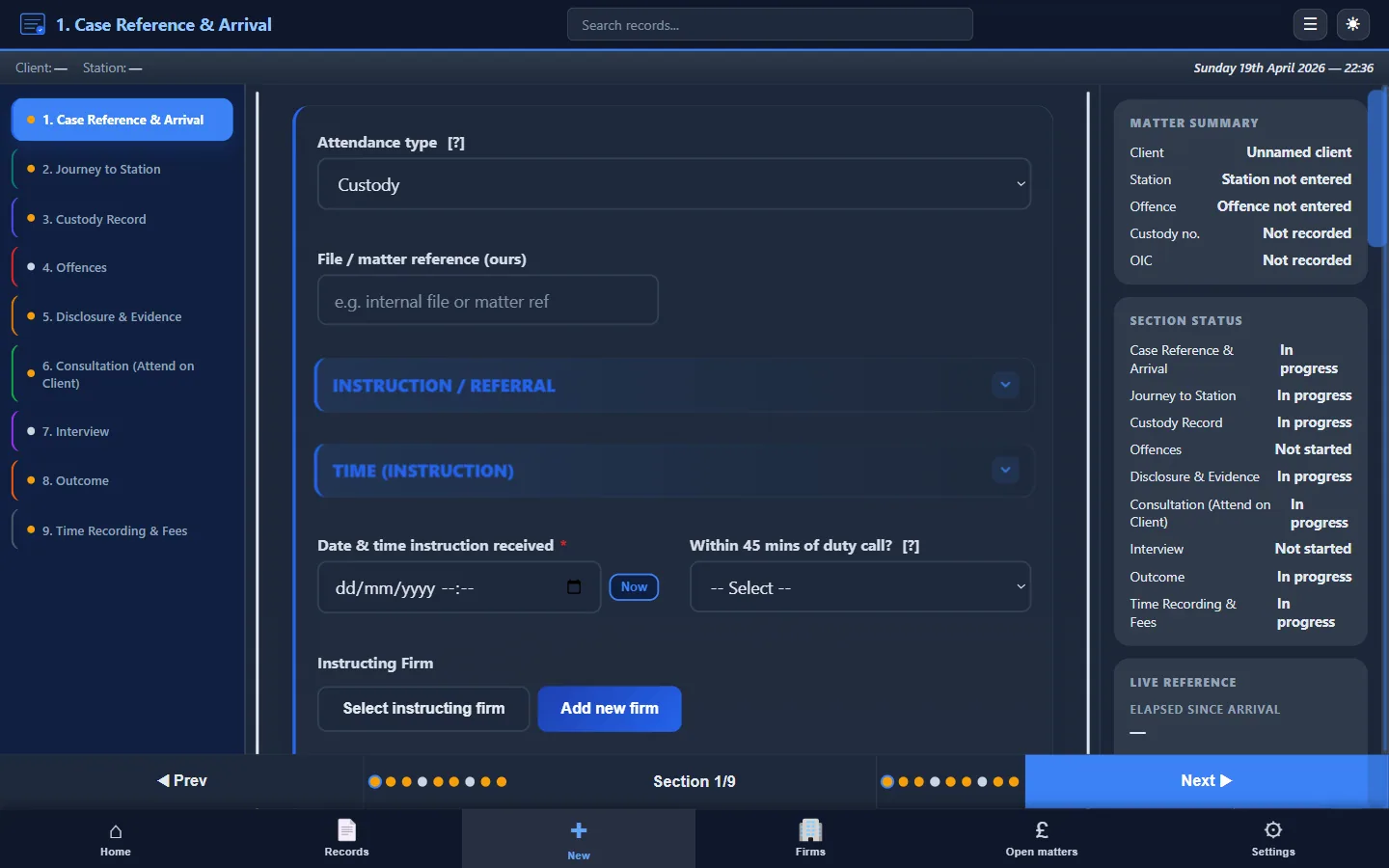
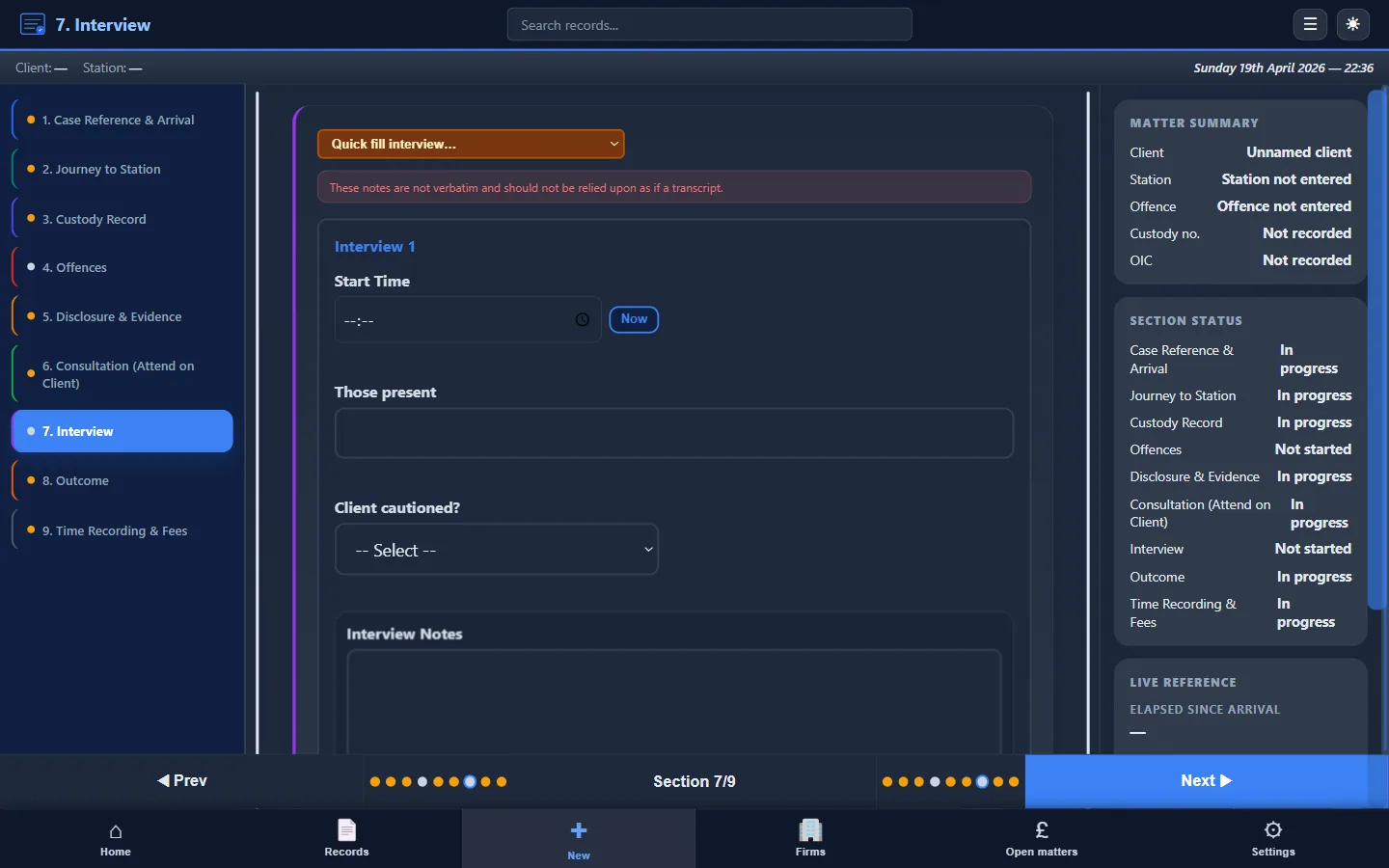
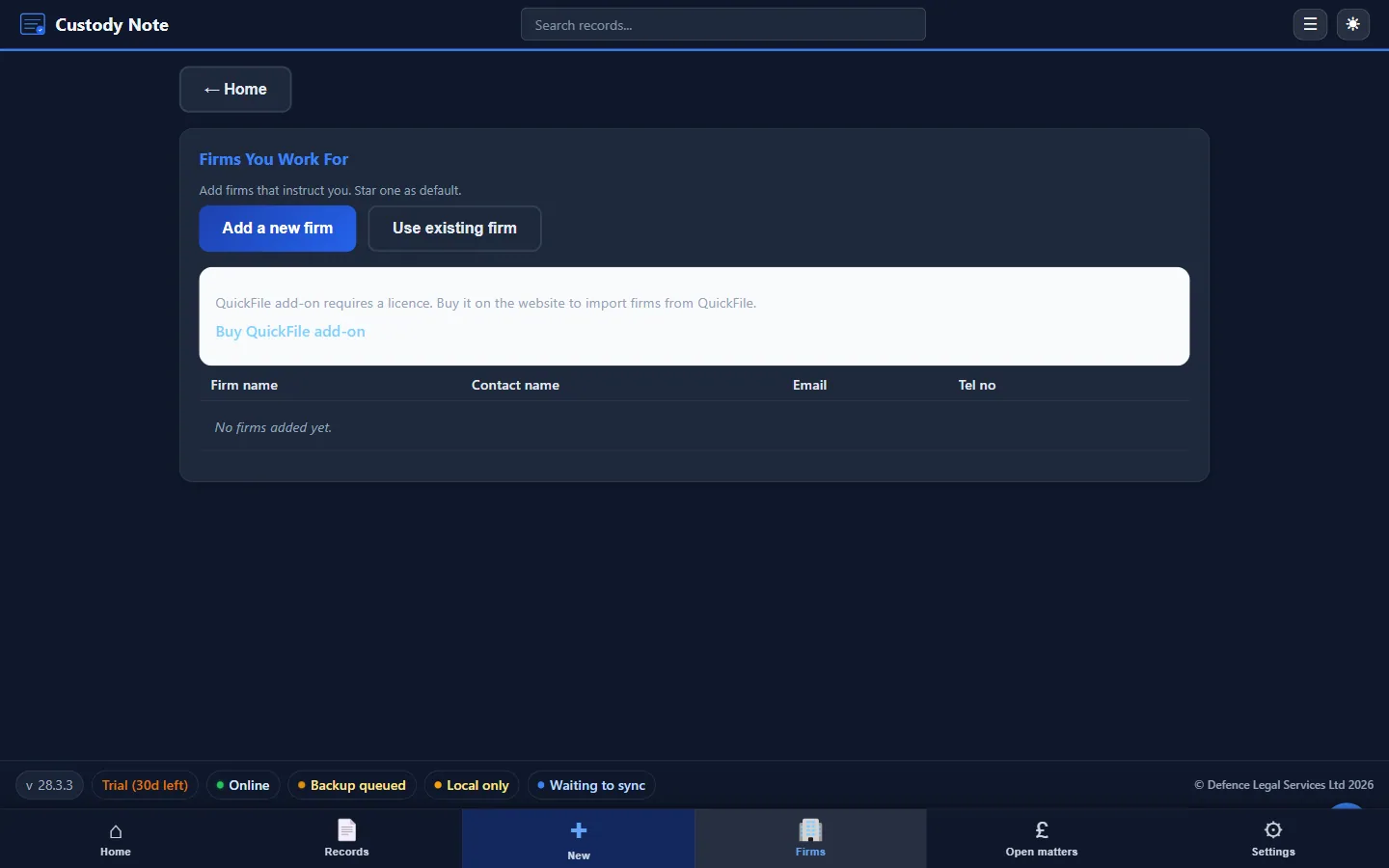
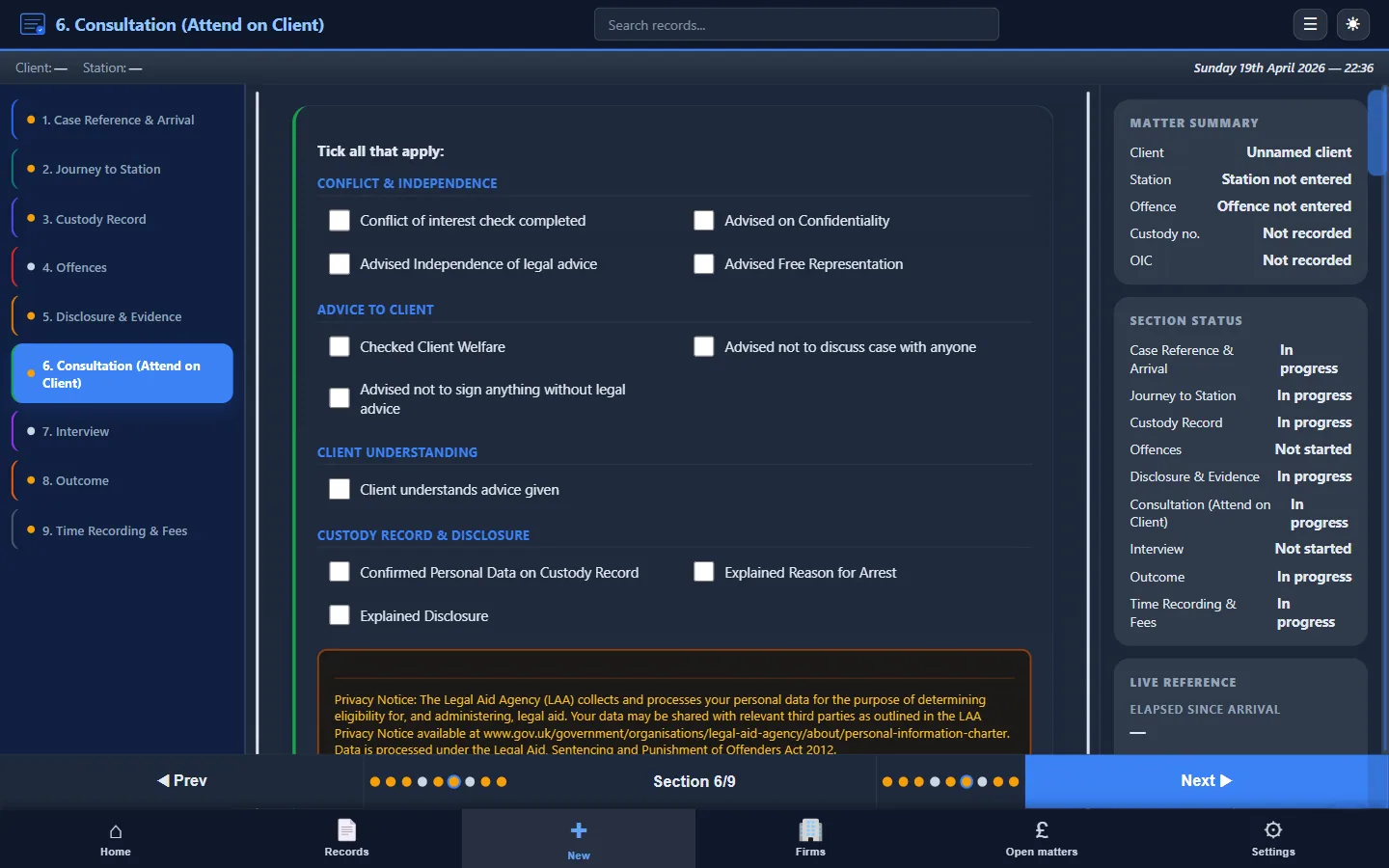
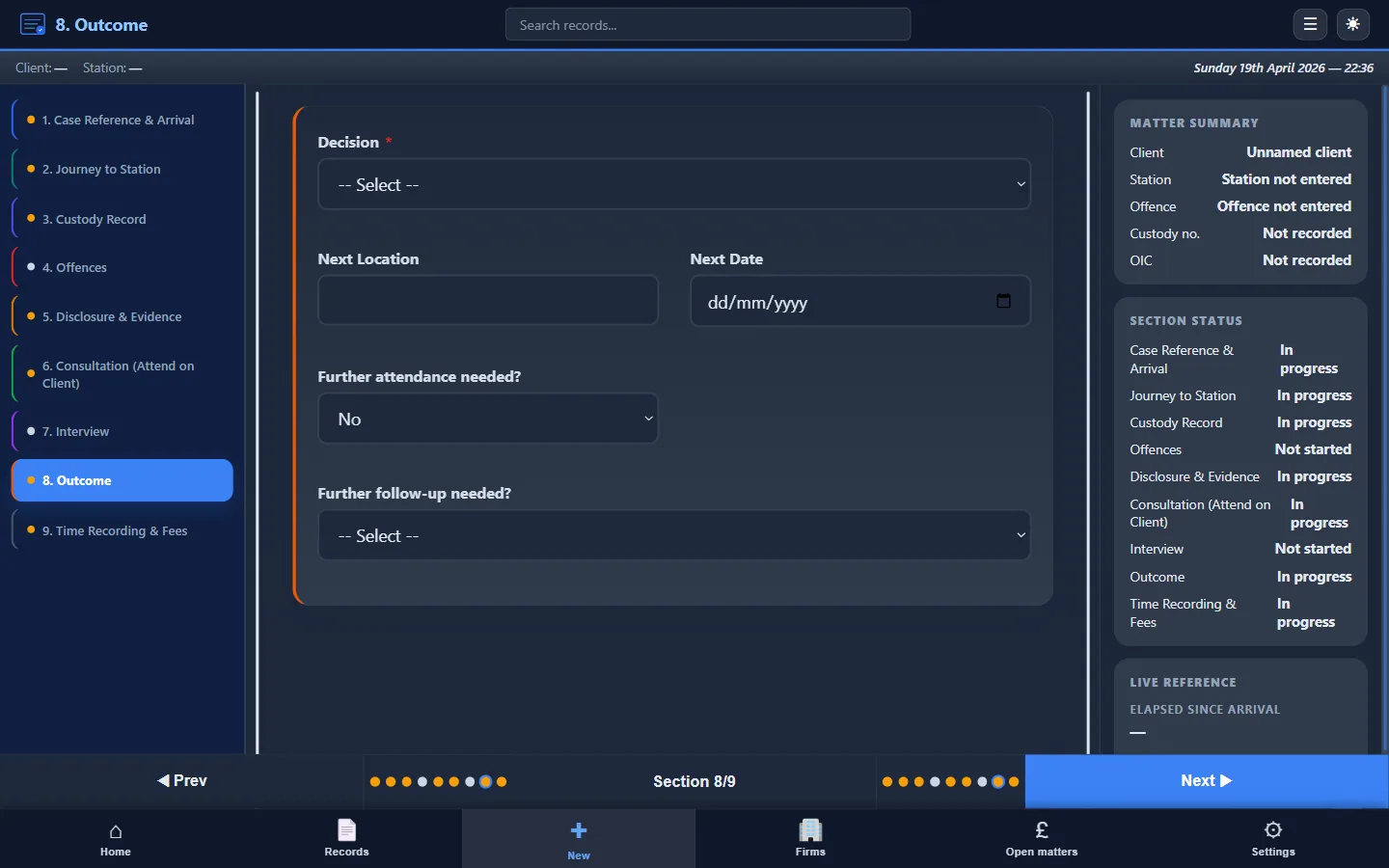
Most audit failures come from omission rather than error. The practitioner did the work but failed to record it fully. Structured attendance note software addresses this by prompting for the required data at each stage. Instead of a blank page, the practitioner works through sections that correspond to the chronology of the attendance (notification, arrival, custody record review, disclosure, consultation, interview, outcome, departure) with dedicated fields for times, advice, and billing references.
Legal aid software designed for police station work ensures that the note is complete before it's exported. Missing fields are flagged. Time entries are validated for internal consistency. The result is a note that answers the auditor's questions before they are asked.
Custody Note is built around this principle. Every section of the attendance note maps to a stage of the police station attendance, and every field captures data that auditors, assessors, and file reviewers expect to find. The note is created at the station as the attendance progresses, not reconstructed from memory afterwards.
Summary
Attendance notes fail LAA audits for predictable, fixable reasons: missing times, vague descriptions, incomplete billing data, no fee justification, inconsistent formats, and absent advice records. Each of these can be resolved by adopting a structured, chronological approach to note-taking and recording data as it happens rather than from memory. Structured software makes this easier, but even a consistent paper template is better than an unstructured narrative written up the next day.
Frequently asked questions
What happens if my attendance note fails an LAA audit?
The consequences depend on the severity and frequency of the issues. A single incomplete note may result in a claim being reduced or a request for further information. Systematic problems across multiple files can lead to repayment demands, peer review referrals, or contract compliance action. The LAA may also increase the frequency of future audits for your firm.
Can I fix my attendance notes before an audit?
You can improve your processes going forward, and this is always worthwhile. However, retrospectively amending existing notes is problematic: auditors may view amended notes with suspicion, and any changes should be clearly marked as later additions. The better approach is to ensure every new note is complete from the start.
How detailed does the time breakdown need to be?
Detailed enough to support the total time claimed. As a minimum, record the time of notification, arrival, each consultation start and end, each interview start and end, and departure. If you claim three hours, the auditor should be able to add up the individual components and reach a figure that's broadly consistent with the total. For a full guide to time recording and billing, see Attendance Notes for Legal Aid Billing.
Build audit-ready notes into your workflow
Custody Note prompts for every field auditors expect (times, advice, billing references, and outcome) so nothing is missed.
Rolling out to a firm? See IT deployment for Microsoft Store, winget, and Setup.exe backup options.