Understanding PACE in Police Interviews
The Police and Criminal Evidence Act 1984 and its Codes of Practice form the legal framework for every police interview in England and Wales. Here is a concise guide to the provisions most relevant to police station representatives.
The Police and Criminal Evidence Act 1984, universally known as PACE, is the primary legislative framework governing the detention, treatment, and questioning of suspects in England and Wales. Understanding PACE, and the Codes of Practice made under it, is fundamental to competent police station representation.
The Codes of Practice
PACE operates alongside six main Codes of Practice. Each Code deals with a discrete area of police procedure:
- Code A: Stop and search
- Code B: Searching of premises and seizure of property
- Code C: Detention, treatment and questioning of persons not in custody for terrorist offences
- Code D: Identification of persons by police officers
- Code E: Audio recording of interviews
- Code F: Visual recording with sound of interviews with suspects
For police station representatives, Code C and Code E (or Code F in visually recorded interviews) are the most frequently relevant.
Code C: Detention and Questioning
Code C sets out the rights of detained persons, the conditions of their detention, and the process for interviewing. Key provisions include the right to have a named person informed of the arrest (under section 56 of PACE), the right to consult a solicitor (section 58), and the right to consult the Codes of Practice.
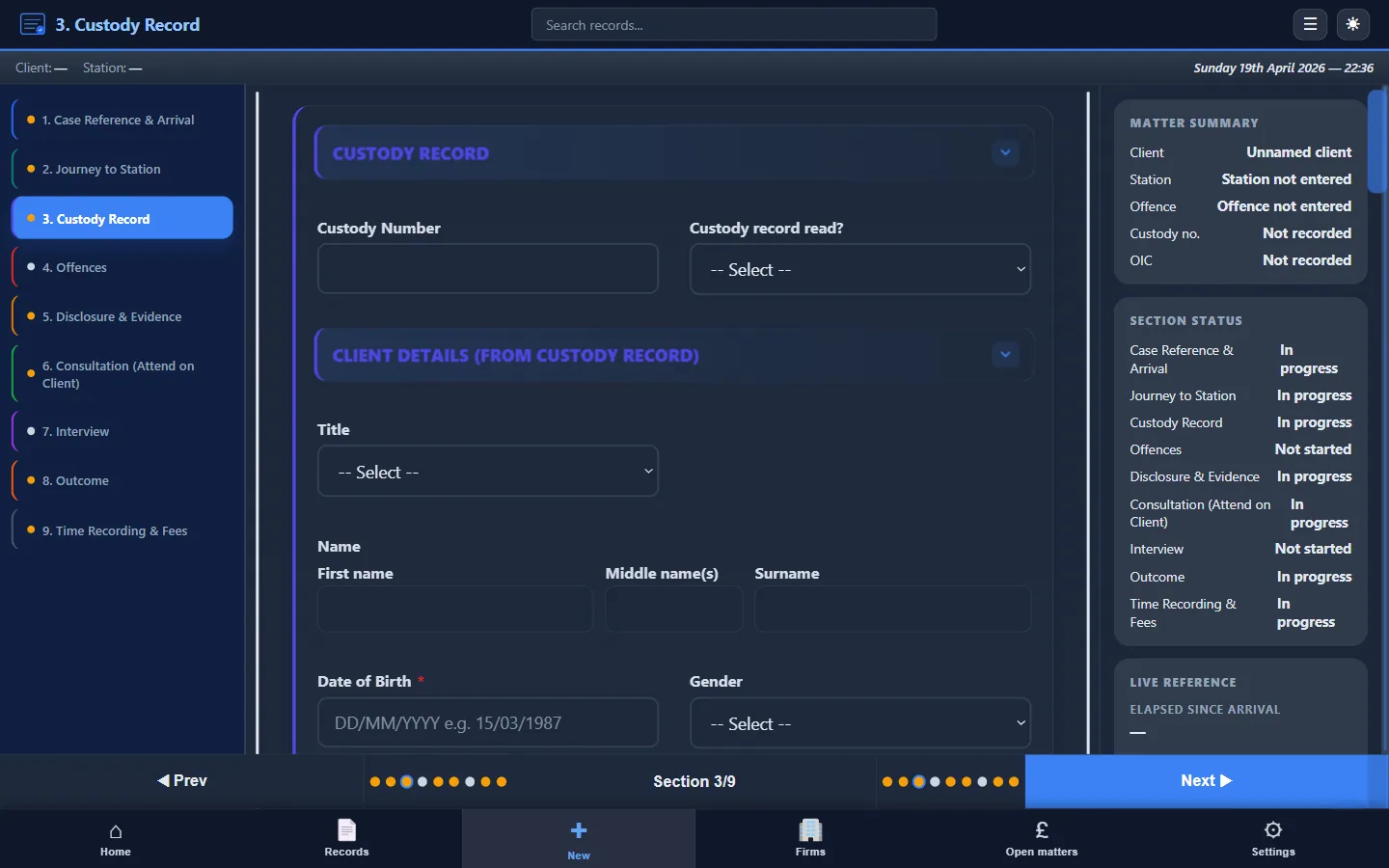
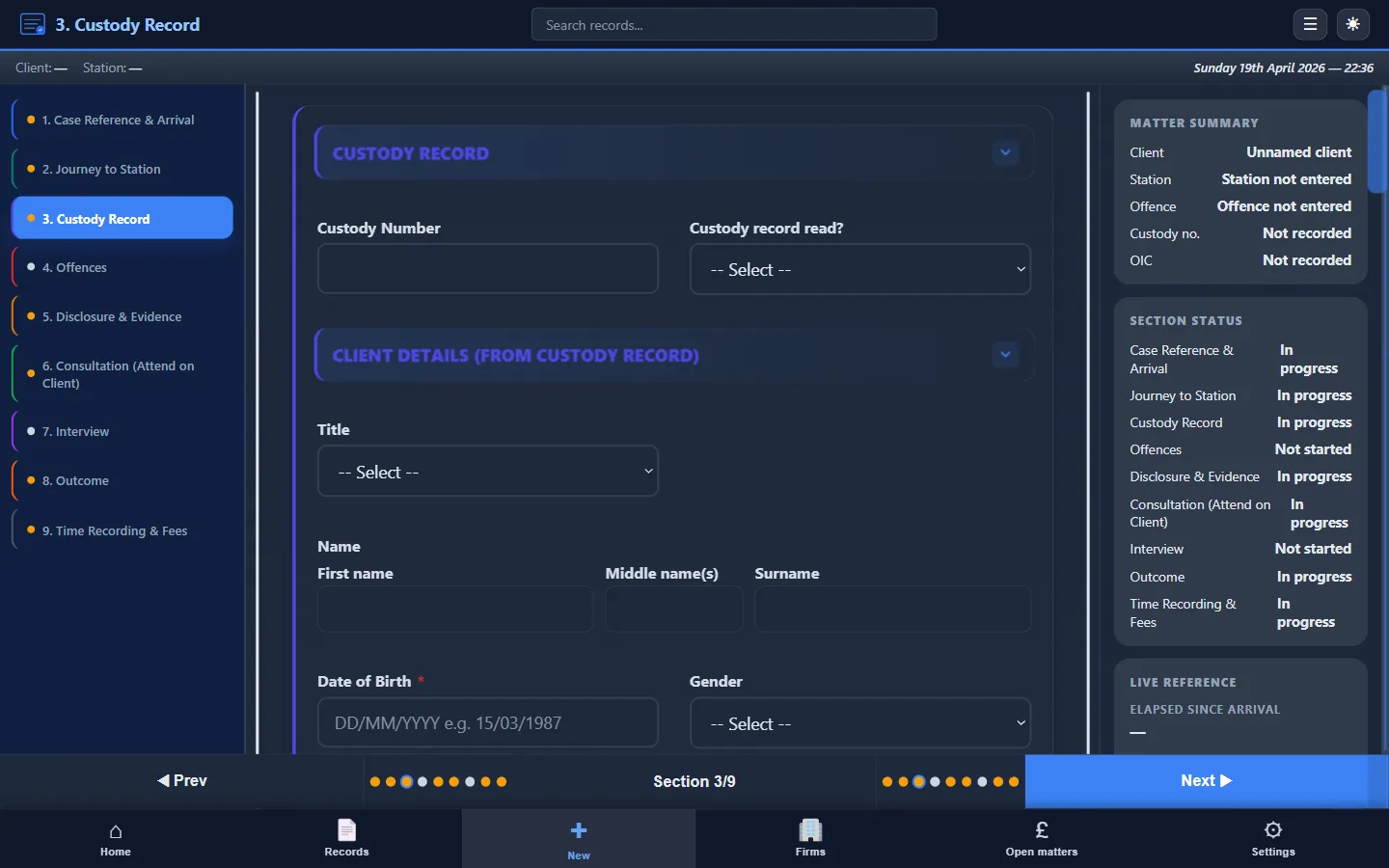
Code C also requires that a custody record be opened for every detained person. This record must capture arrival time, grounds for detention, rights notifications, review times, and anything material that happens during the detention.
Rest periods are also mandated: a detained person is entitled to at least eight continuous hours of rest in each twenty-four hour period. This can't be interrupted for questioning except in limited and specific circumstances.
Time Limits in Custody
PACE sets strict time limits on how long a person can be detained without charge. Initial detention is limited to 24 hours. A superintendent may authorise detention up to 36 hours where there are reasonable grounds to believe the suspect has committed an indictable offence and further detention is necessary.
Beyond 36 hours, continued detention requires a warrant from a magistrates' court. Magistrates may authorise detention up to a maximum of 96 hours. These time limits are tracked from the relevant time, usually the time of arrival at the police station, though the definition varies in some circumstances.
The Caution
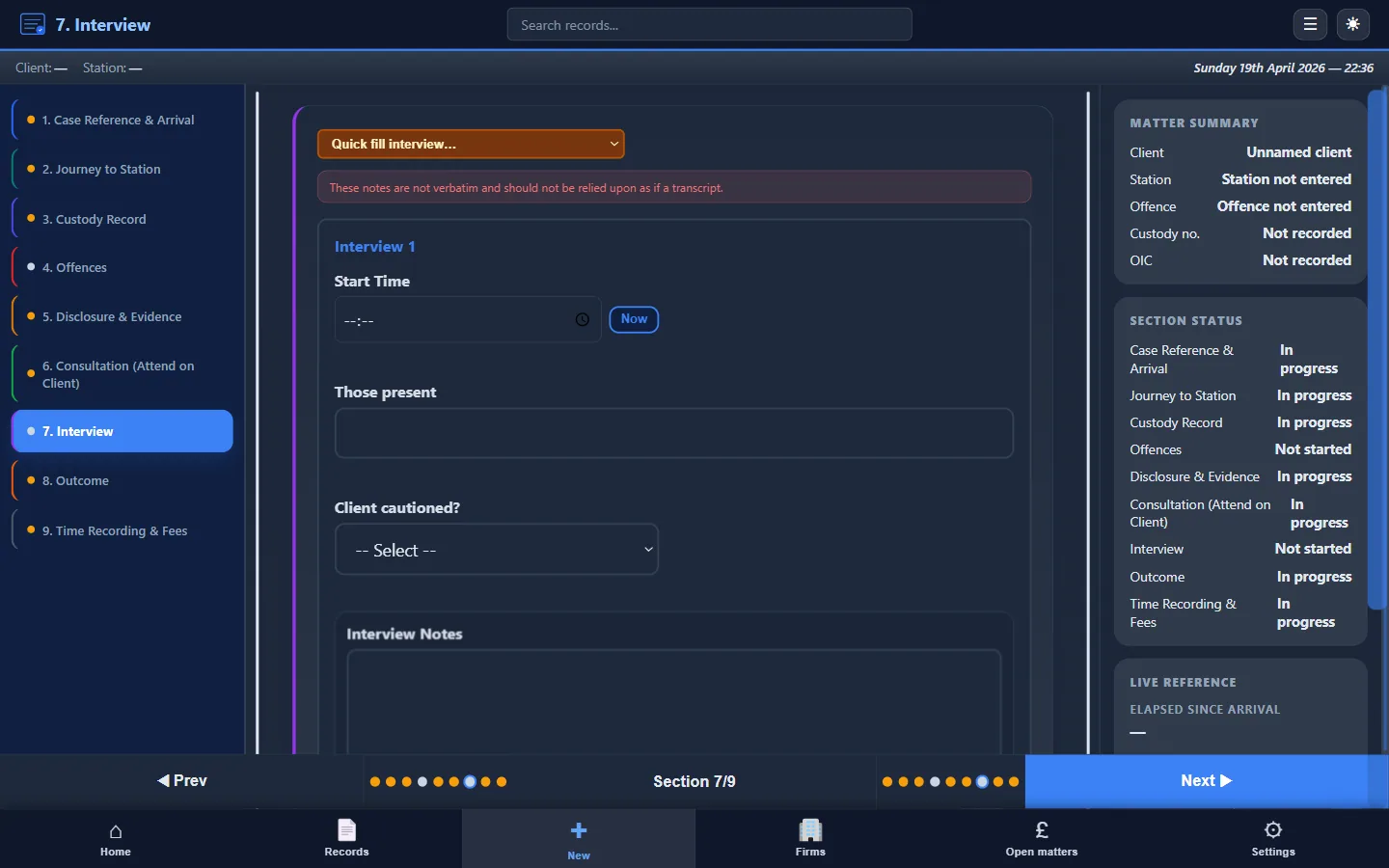
Before questioning under caution, a suspect must be cautioned in the following terms:
"You don't have to say anything. But it may harm your defence if you don't mention when questioned something which you later rely on in court. Anything you do say may be given in evidence."
This is the standard caution used when adverse inferences may potentially be drawn. A modified caution ("You don't have to say anything, but anything you do say may be given in evidence") is used where inferences aren't available, such as when the suspect hasn't had access to legal advice.
Adverse Inference Provisions
Sections 34 to 38 of the Criminal Justice and Public Order Act 1994 allow a court to draw adverse inferences from a suspect's silence in certain circumstances. These provisions apply where:
- The suspect failed to mention something when questioned that they later relied on in their defence
- The suspect failed to give evidence at trial
- The suspect failed to account for an object, substance or mark found on them or about their person
- The suspect failed to explain why they were at a particular place
These provisions are subject to important safeguards. An adverse inference can't be drawn from silence if the suspect wasn't given the opportunity to consult a solicitor before interview. This is one of the most significant reasons why the right to legal advice is so important in practice.
Appropriate Adults
Certain categories of suspect (juveniles and adults who appear to be mentally disordered or otherwise mentally vulnerable) must have an appropriate adult present during any interview. The appropriate adult isn't a legal representative but serves a protective function: to ensure the suspect understands what is happening and to facilitate communication with officers.
Where an appropriate adult is required and not provided, any resulting interview may be vulnerable to exclusion. Representatives should identify at the earliest opportunity whether their client requires an appropriate adult and, if so, ensure the custody sergeant arranges one before interview proceeds.
Note: This article is intended as general information for criminal defence practitioners in England and Wales. It doesn't constitute legal advice. Solicitors and accredited representatives should exercise their own professional judgment in each case. Law and practice may change; always verify current requirements with primary sources.