What Makes a Good Police Station Attendance Note?
The attendance note is the central document of any police station representation. Here is what distinguishes a note that will withstand LAA scrutiny and serve your client's case from one that won't.
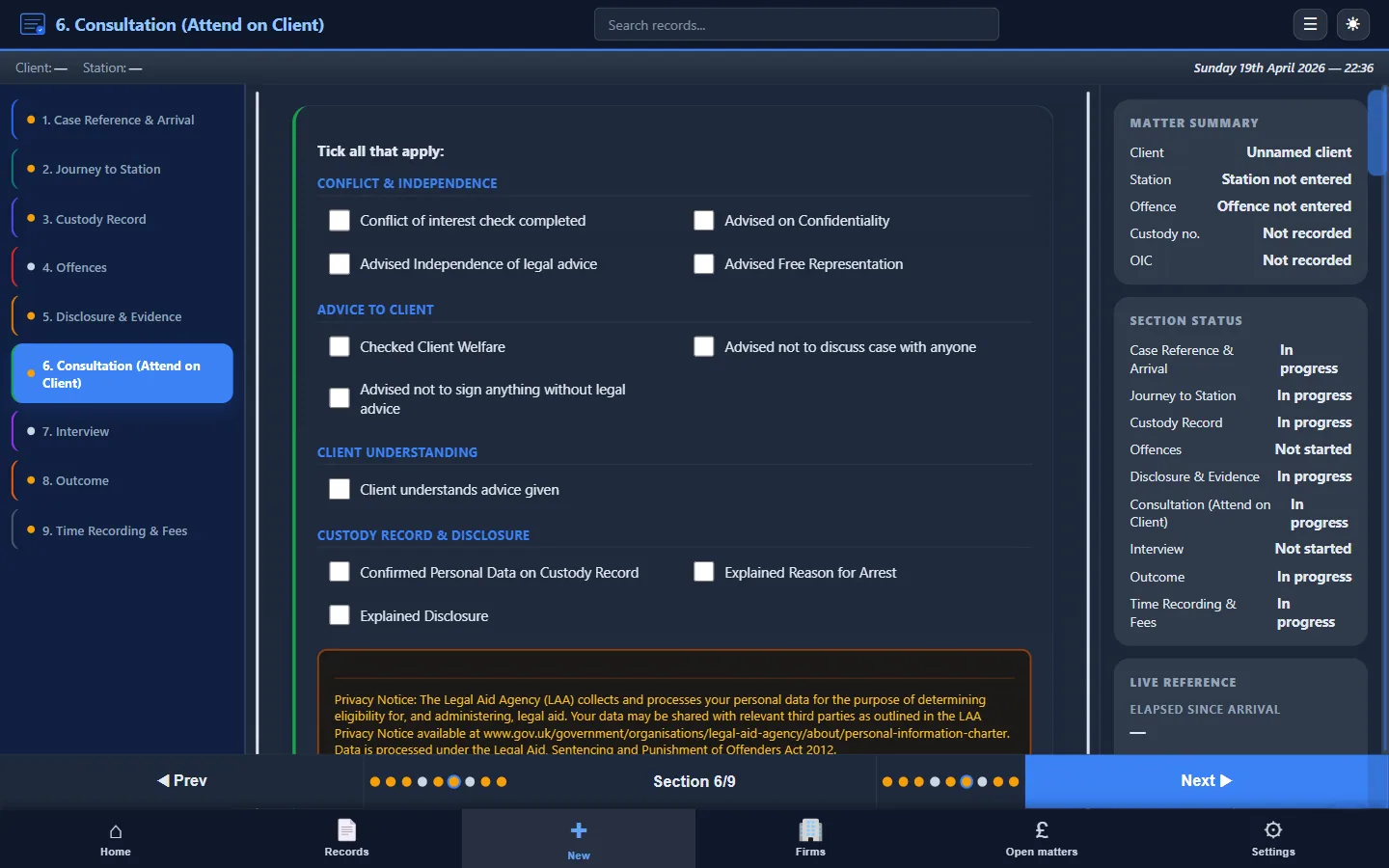
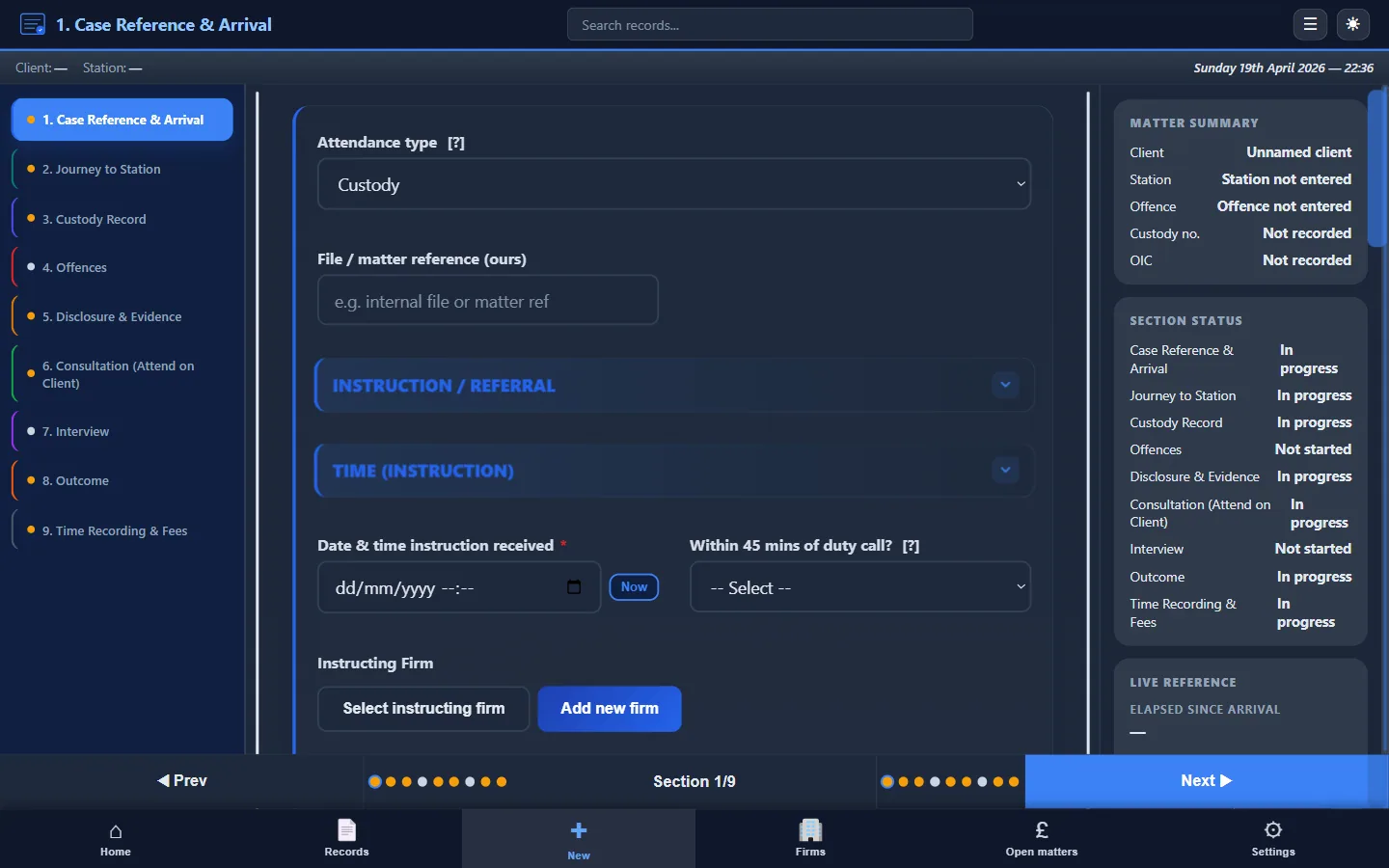
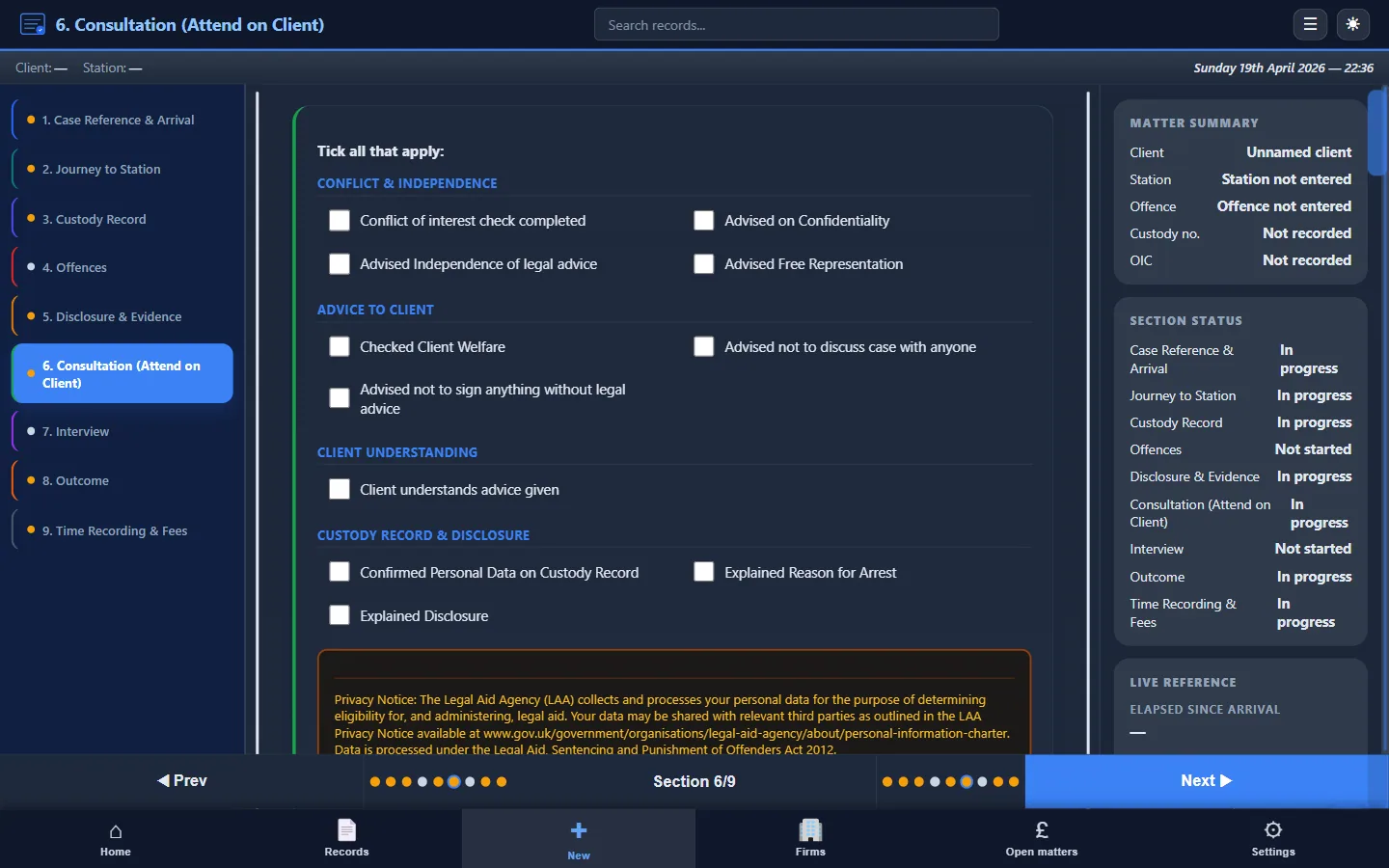
The attendance note is the central document of any police station representation. Duty solicitor or accredited rep, the quality of your attendance note affects everything that follows: your client's case, your billing, and your professional record.
Contemporaneity
The golden rule for attendance notes is that they should be made at the time of the relevant event, or as soon as practicable afterwards. A note made three days later is materially weaker than one made the same evening. Courts and the Legal Aid Agency both assess the credibility of notes partly by their proximity to events.
If circumstances prevent contemporaneous note-taking, for example, during a particularly fast-moving interview, the representative should make notes as soon as the interview concludes, while memory is fresh.
What to Record
A good attendance note will capture, at minimum:
- Client's full name, date of birth, and custody reference number
- Time and date of your arrival at the custody suite
- The offence or offences alleged
- Whether the client has been charged or remains under caution
- Names and collar or warrant numbers of the investigating officers
- A summary of the legal advice given (without breaching privilege)
- The client's instructions, including any decision not to comment in interview
- Whether PACE rights were exercised or waived, and by whom
- The outcome of the attendance
Each of these elements serves a distinct purpose. Client details anchor the note to a specific detention. Times are needed for billing and for any later challenge to the detention review clock. Officer names and numbers allow for later verification. The advice summary demonstrates professional engagement with the case.
Why structure helps
Unstructured notes are harder to use. A solicitor presenting a claim to the LAA or advising counsel needs to find information quickly. Notes organised by chronological sections, arrival, consultation, interview, outcome, are easier to navigate than unbroken narrative text.
Some representatives use a consistent template with labelled sections. This ensures that nothing is omitted under the pressure of a busy custody suite and that the note is legible to anyone who later needs to use it.
The Legal Aid Agency Connection
The Legal Aid Agency will, from time to time, audit attendance notes as part of a billing assessment. Notes that fail to justify the time claimed risk being reduced or disallowed. A good note records what you did and how long each stage took, including:
- Waiting time at the custody suite
- Telephone advice before attendance
- Consultation with the client
- Time spent reviewing disclosure
- Time in interview
- Any post-interview consultation
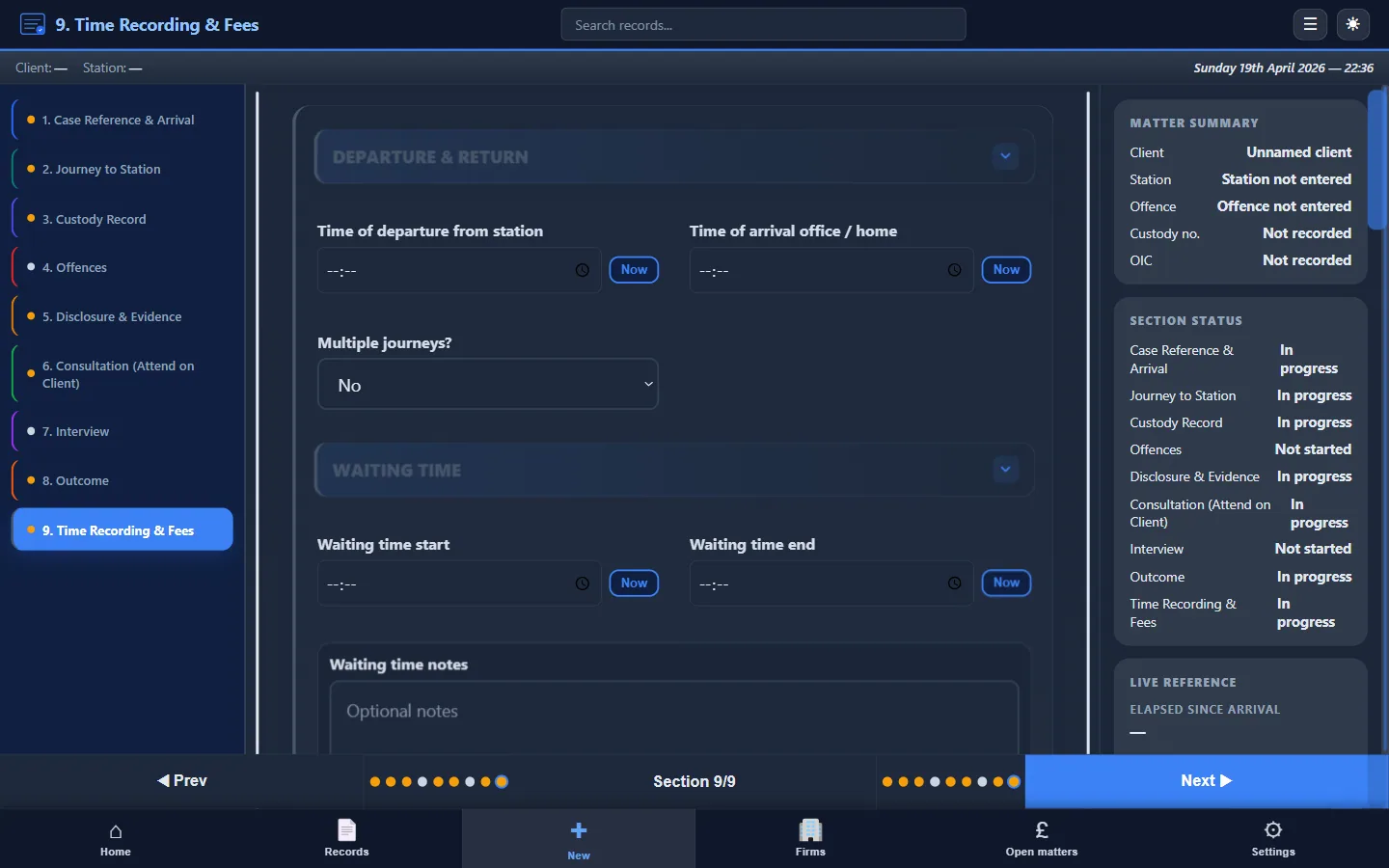
Where a bill is challenged on audit, the attendance note is usually the primary, and sometimes only, evidence of what occurred. A detailed, well-structured note is your best protection against a disallowed claim.
Practical Considerations
Representatives should also note the condition of the client on arrival: apparent sobriety, any signs of distress, whether they appear to understand what is happening. This information may be relevant if there's a later challenge to the client's fitness to be interviewed.
Where a representative believes a client isn't fit for interview, for example, due to intoxication, mental health concerns, or exhaustion, that assessment and the basis for it should be recorded carefully. The custody record will record a healthcare professional's attendance, but your own note provides a contemporaneous record of your professional view.
Note: This article is intended as general information for criminal defence practitioners in England and Wales. It doesn't constitute legal advice. Solicitors and accredited representatives should exercise their own professional judgment in each case. Law and practice may change; always verify current requirements with primary sources.