Attendance Note Software for UK Legal Practice
Attendance note software helps solicitors and legal representatives create structured, consistent records of client interactions. In criminal defence, attendance notes are essential for police station work, voluntary interviews, and telephone advice: recording what instructions were taken, what advice was given, and what happened during the case.
What are attendance notes?
An attendance note is a contemporaneous record of a legal professional's interaction with a client or on a client's behalf. In criminal defence, attendance notes serve as the primary evidence of work done, for the firm file, for LAA billing, and for any future scrutiny of the case. They record:
- When and where the interaction took place
- Who was present
- What information was received (disclosure, instructions)
- What advice was given and what the client decided
- What happened (interview, outcome, next steps)
- How long each stage took
Well-structured attendance notes protect both the client and the practitioner. They demonstrate that proper advice was given, that the client's rights were observed, and that the work claimed was actually carried out. For a detailed breakdown, see What Must Be Included in Attendance Notes.
Why software helps
Most attendance notes in criminal defence are still written on paper, typed into blank Word documents, or entered into generic text fields in practice management systems. Each approach has the same core problem: nothing guides the practitioner through what to record.
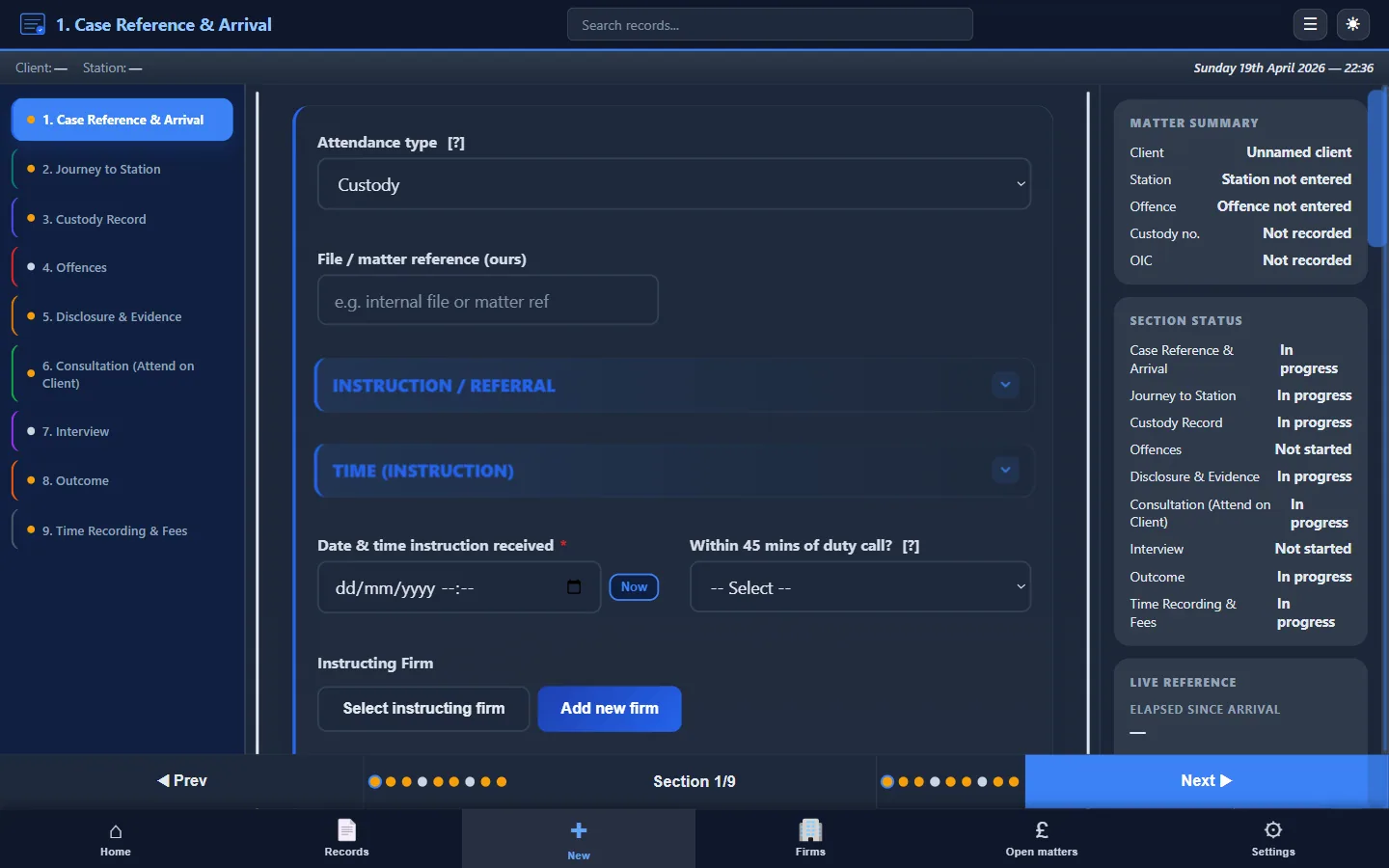
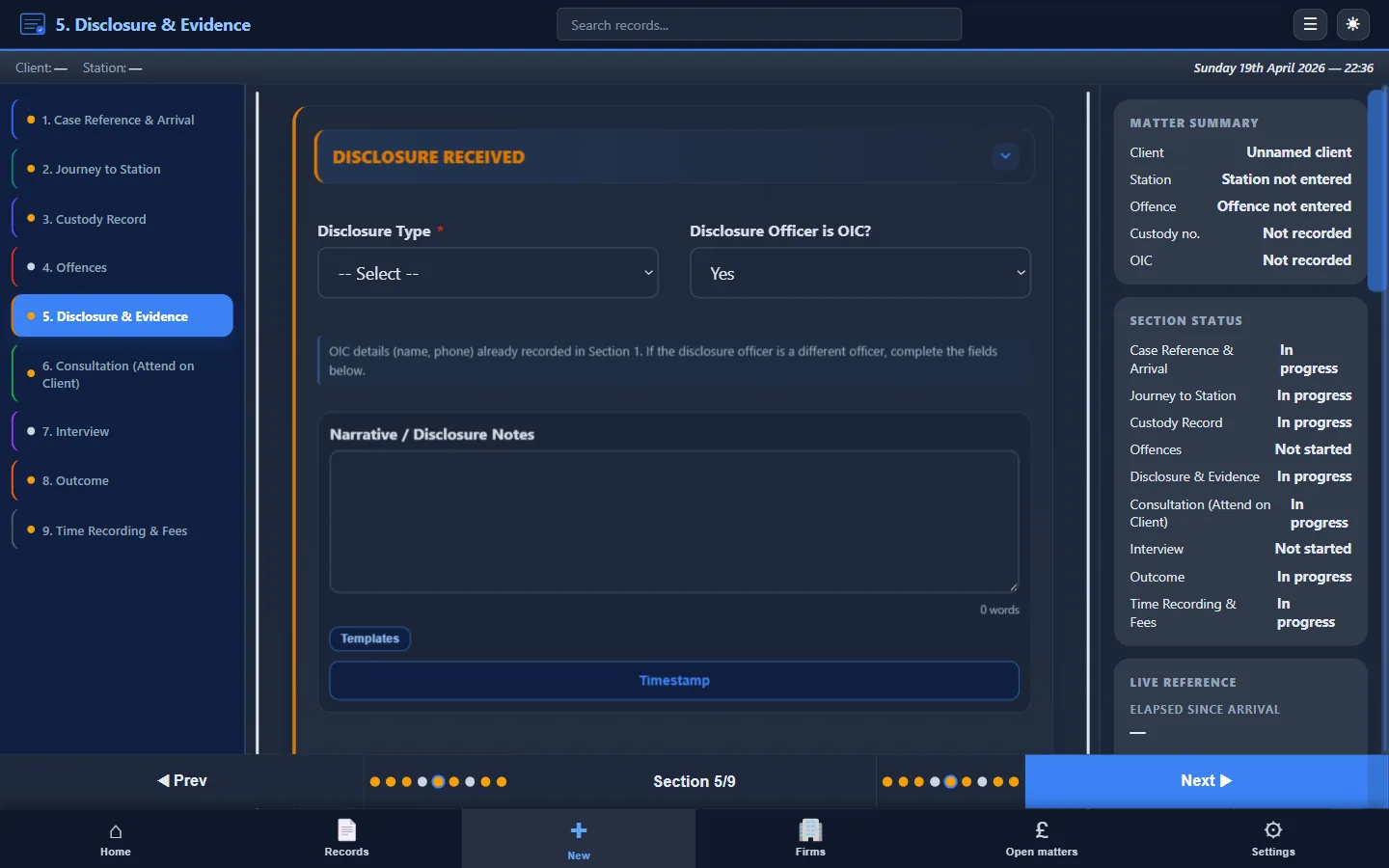
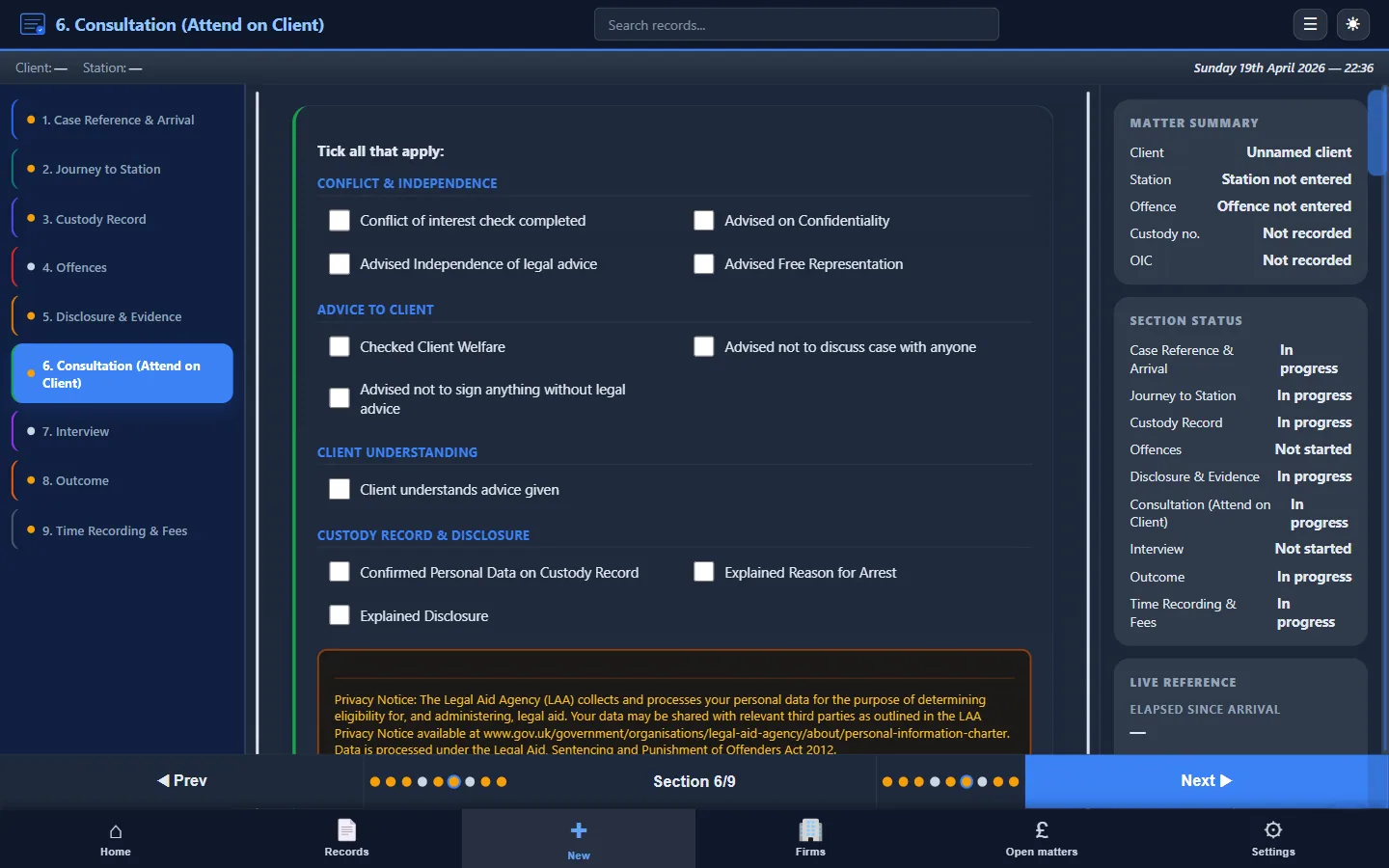
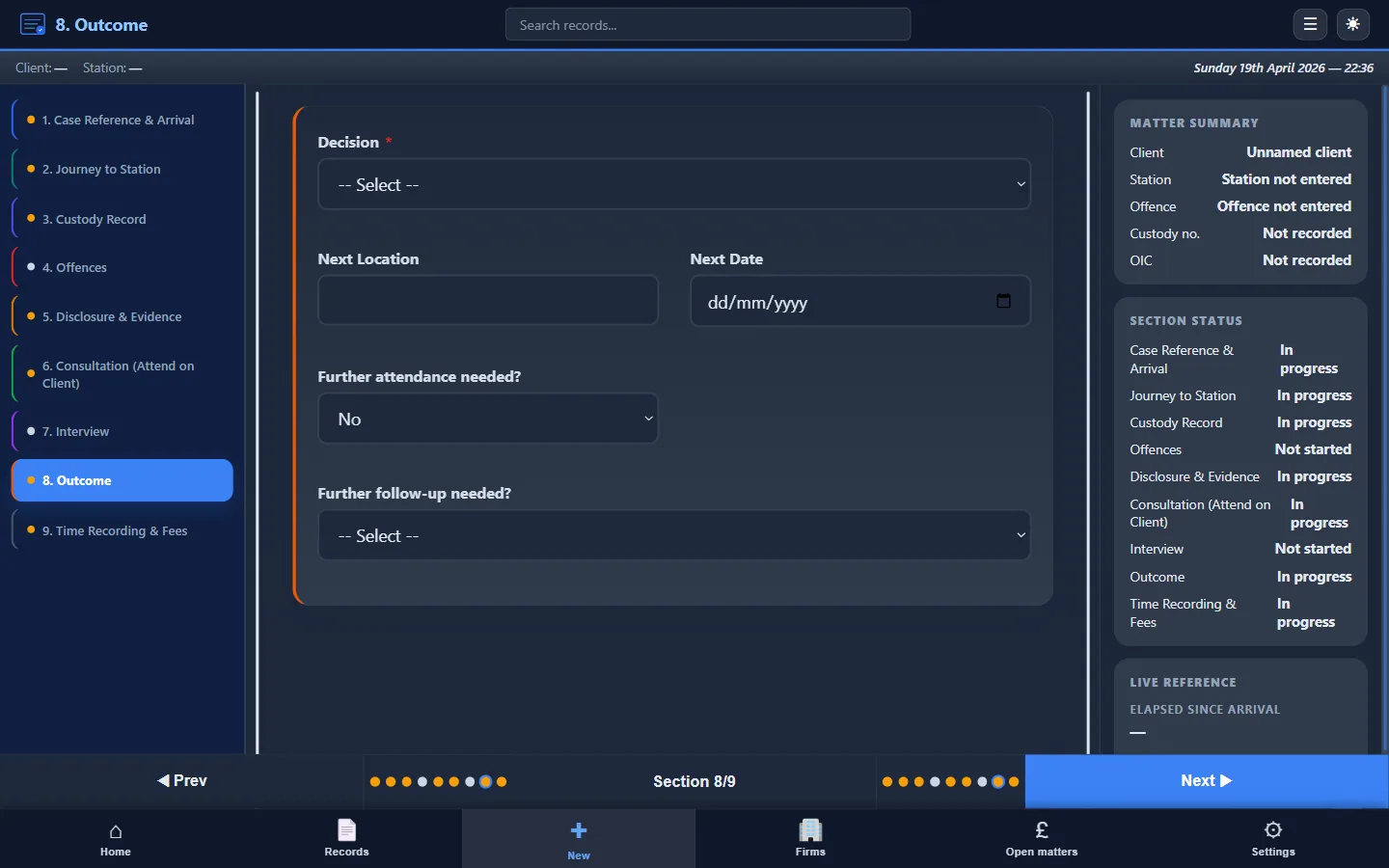
Attendance note software addresses this by providing structured templates with dedicated sections for each stage of the attendance. Instead of a blank page, you work through prompted fields (client details, disclosure, consultation, interview, outcome, billing) so the critical information is captured consistently every time.
The benefits are practical:
- Consistency: every attendance note follows the same structure, regardless of who attended or how complex the matter was
- Completeness: prompted sections reduce the risk of forgetting to record key information (especially under pressure at the station)
- Speed: structured fields are faster to complete than writing freeform prose, particularly for routine sections like client details and billing
- Audit readiness: consistent, structured notes are easier for LAA assessors and file auditors to review
- Security: dedicated software can encrypt client data, which paper and plain Word documents can't
Three types of attendance
Custody Note provides separate templates for the three main types of criminal defence attendance, each with fields tailored to that specific workflow.
Police station custody attendances
The most detailed template, covering the full PACE custody workflow: callout details, travel and arrival, custody reference, disclosure review, private consultation, interview attendance, post-interview advice, outcome (NFA, charge, bail), and billing. This is the core use case: recording everything that happened from the moment you received the instruction to the point you left the station. See Police Station Attendance Notes for a full guide.
Voluntary interviews
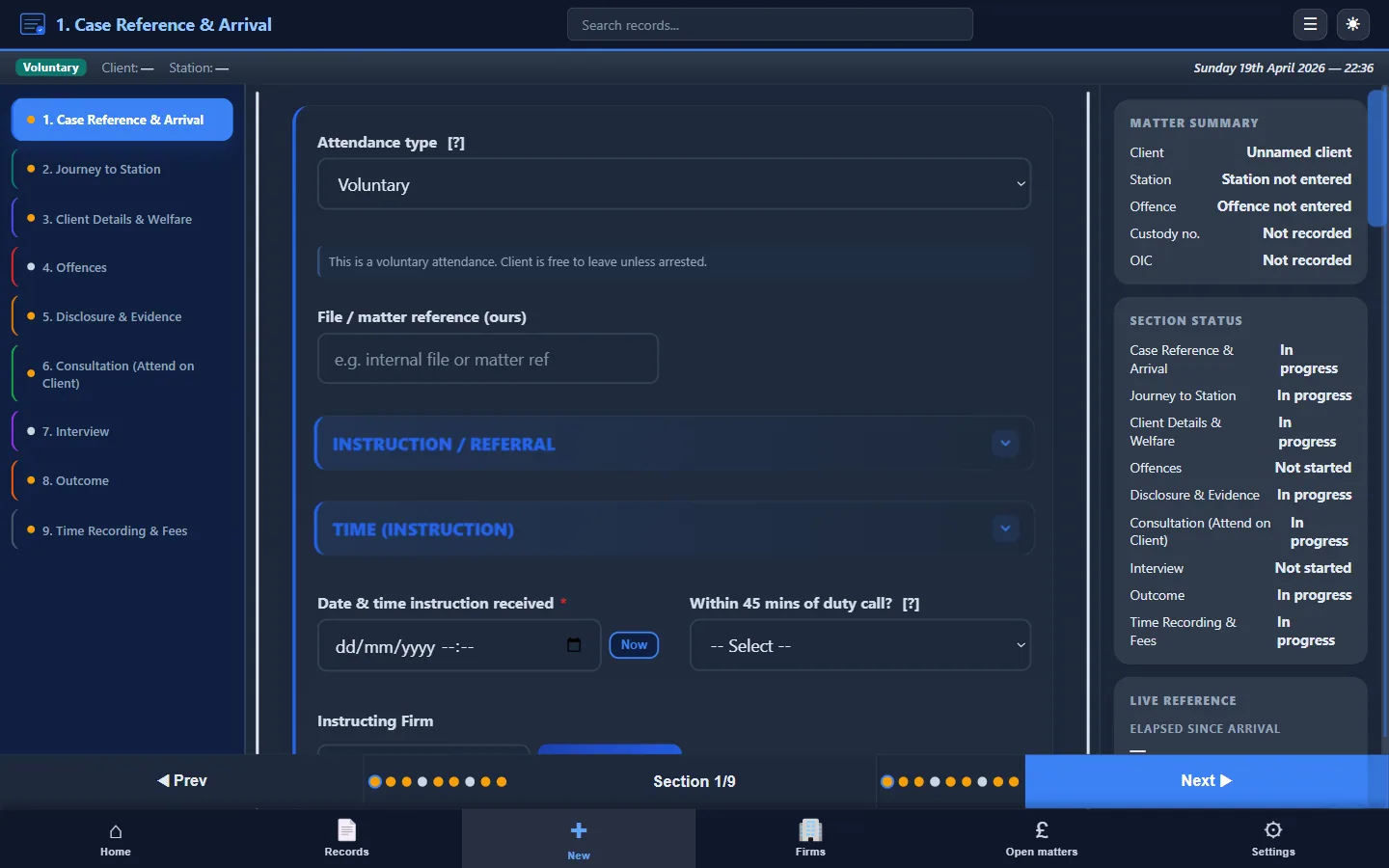
Voluntary interview attendances differ from custody in important ways: the client isn't detained, there's no custody record, and the procedural context is different. Custody Note's voluntary interview template omits custody-specific fields and includes sections relevant to this attendance type: the basis of the voluntary attendance, the location, and the different rights framework.
Telephone advice
Not every instruction requires a physical attendance. Telephone advice records are shorter but still need to capture: who called, what the issue was, what advice was given, what the client decided, and how long the call lasted. Custody Note provides a shorter template for these interactions.
Features of Custody Note
Custody Note is a Windows desktop application (Windows 10 or later, 64-bit) built specifically for criminal defence attendance notes. Key features include:
- Works offline: works without internet. Your encrypted database is stored locally on your laptop
- AES-256 encryption: client data is protected at rest
- PDF export: generate a structured attendance note for your firm file or instructing solicitor
- LAA billing fields: time recording, fee type, claim reference, and fee calculation built into the record
- QuickFile integration: push billing data to your invoicing workflow
- Email templates: disclosure requests, bail confirmations, and officer correspondence
- Quick Capture: log incoming callout details before starting the full record
- Sync: it's free during beta. Sign in with your email to sync your notes across up to 5 computers. Notes are encrypted on your computer before upload. Managed cloud backup (AWS London) is planned for Pro after beta
From template to finished note
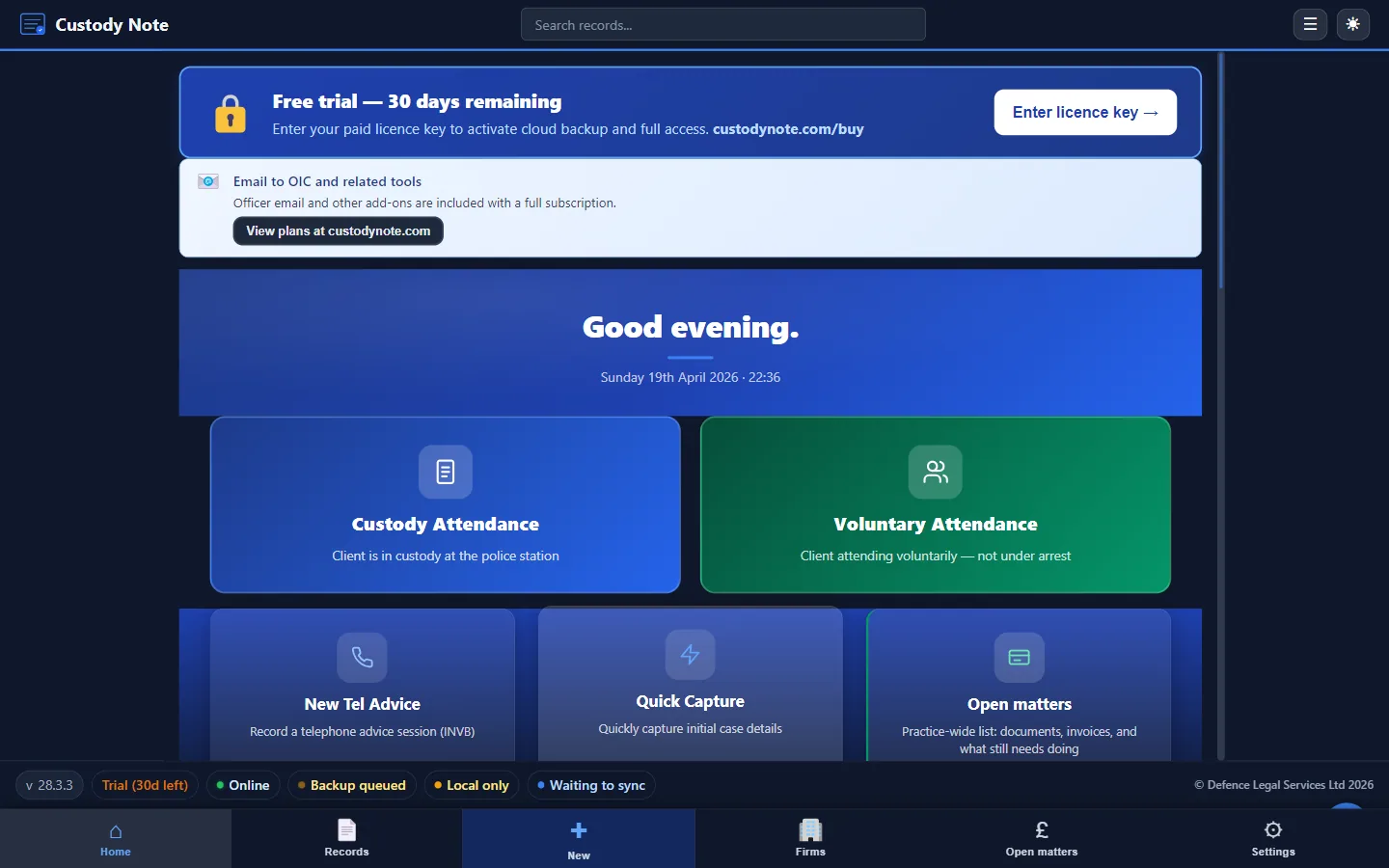
The workflow is straightforward. When you receive a callout or instruction, create a new record and select the attendance type. Work through each section as the attendance progresses, or fill in sections immediately afterwards while the details are fresh. When complete, export the PDF and save it to your firm's case file.
Because billing fields are part of the same record, there's no separate step to reconcile your notes with your claim. The attendance note is the billing evidence. For more on this workflow, see Attendance Note Template (UK).
Pricing
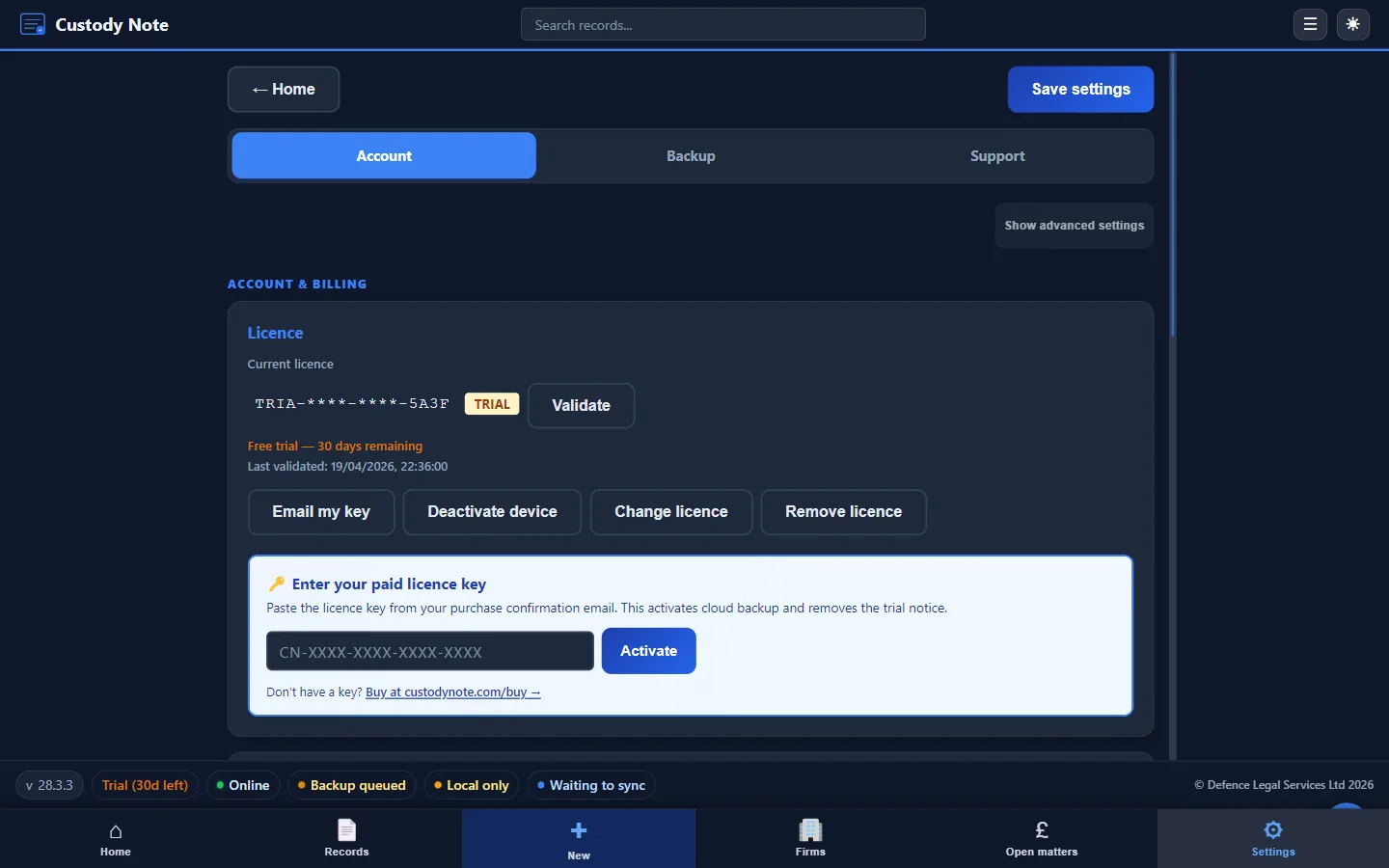
Custody Note is free while it's in beta. A Pro plan, at around £9.99 a month, is planned after beta, with cloud backup, sync and firm reporting. You can't buy it yet. No card needed to download. See full pricing details.
Structured attendance notes, not blank pages.
Custody Note gives you guided templates for custody attendances, voluntary interviews, and telephone advice. Offline, encrypted, and ready to export. Free during beta.
Download freeFrequently asked questions
Is this only for criminal defence?
Custody Note is designed specifically for criminal defence police station work. The templates, fields, and workflows are built around PACE custody attendances, voluntary interviews, and telephone advice in criminal matters. It isn't a general-purpose attendance note tool for other areas of law.
Can I customise the attendance note template?
The structured sections are fixed to ensure consistency and completeness. However, each section includes free-text fields where you can add case-specific detail. The balance is between guided structure (so nothing is missed) and flexibility (so you can record what's relevant to the individual case).
How does the software handle multiple attendances on the same matter?
Each attendance is a separate record linked to the same client and matter. If you attend the same police station twice for the same client (for example, a re-interview after further investigation), each visit has its own attendance record with its own times and billing data.
Does Custody Note replace my practice management system?
No. Custody Note handles attendance note creation and billing data capture at the police station. It exports structured PDFs that you save to your practice management system. It complements your PMS rather than replacing it.
What if I need to edit a note after export?
You can edit the attendance record in Custody Note at any time and re-export the PDF. The software records when edits are made, which supports the contemporaneous nature of the record while allowing genuine corrections.