LAA Attendance Notes Explained: What Solicitors Need to Know
Your attendance note is the evidentiary foundation for your Legal Aid Agency claim. If the note is weak, the claim is vulnerable. This guide explains exactly how attendance notes support LAA billing for police station work.
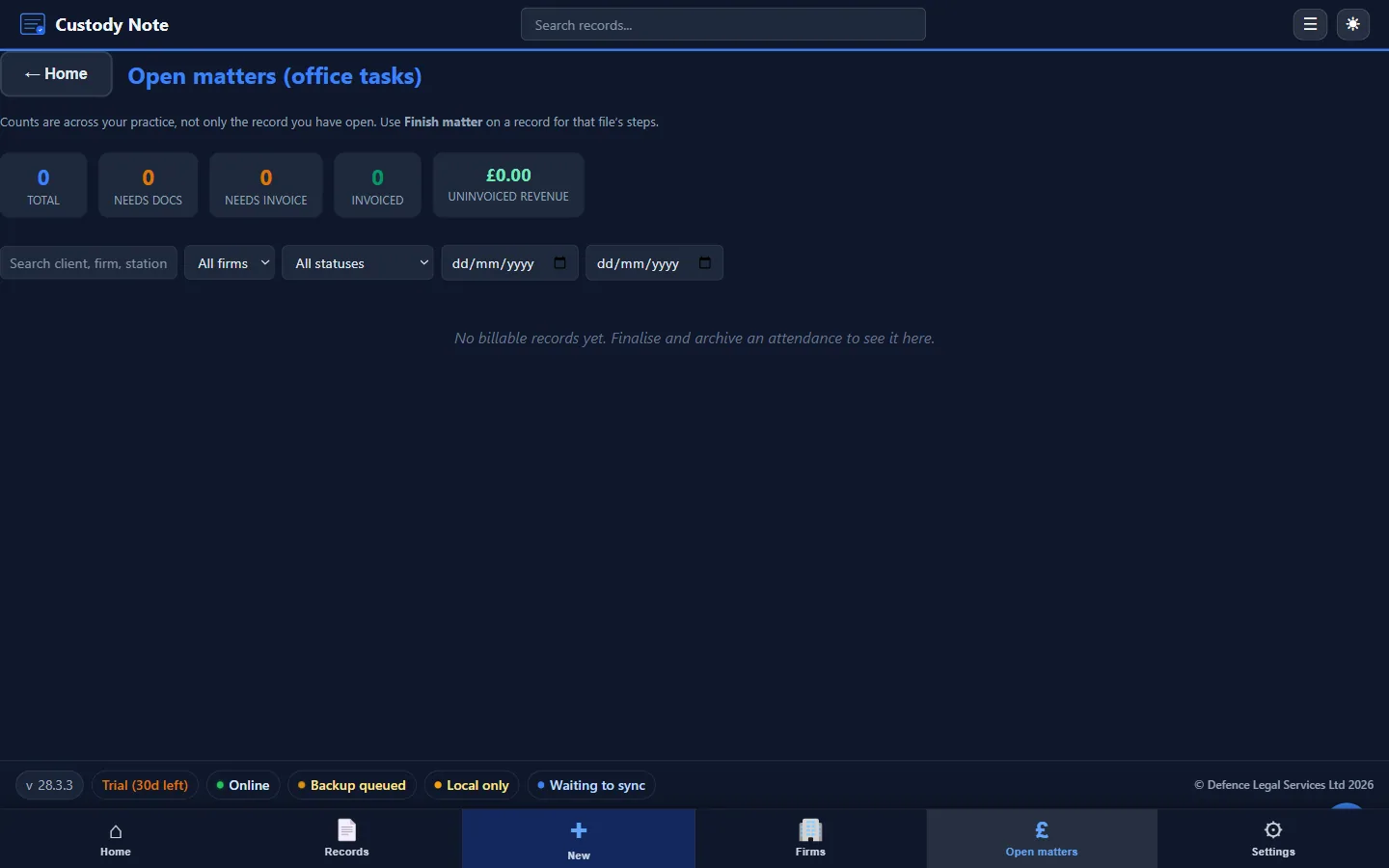
For the full guide to attendance notes, see Police Station Attendance Notes (UK Guide).
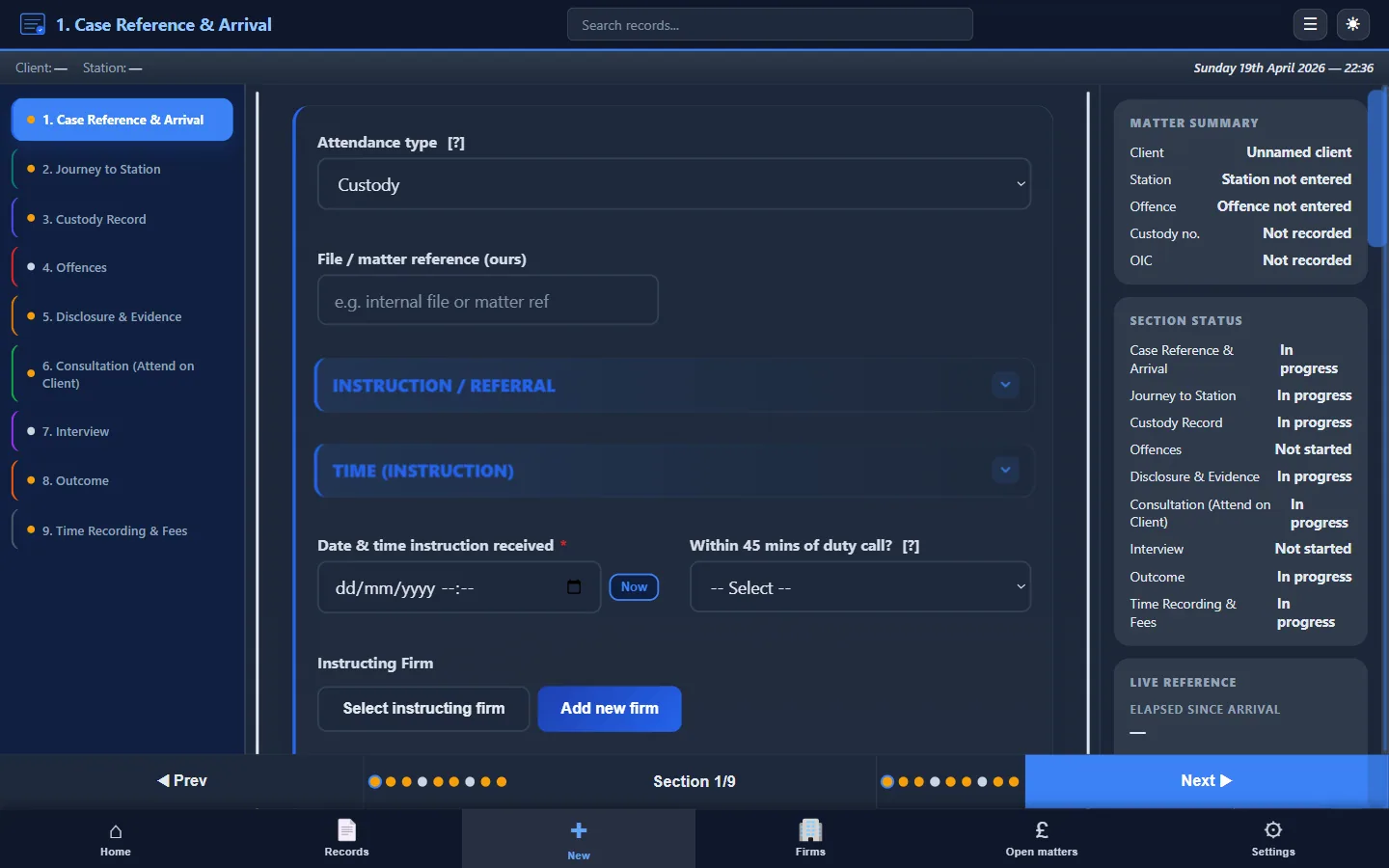
How the LAA billing system works for police station attendance
Police station work under legal aid is billed using the fixed fee scheme. The key numbers (as of December 2025):
- Standard fixed fee (INVC): £320
- Telephone fixed fee: London (INVB1): £33
- Telephone fixed fee: non-London (INVB2): £31.74
- Escape fee threshold: £650 profit costs (excluding VAT) for UFNs from 22 December 2025; claim = £320 fixed fee plus excess over £650
Claims are submitted monthly through the Submit a Bulk Claim (SaBC) system, which replaced the previous CWA system in February 2026.
When attendance notes become critical for billing
Fixed fee claims
For standard fixed fee claims, your attendance note must demonstrate that the work was actually done. An assessor checking the file will look for:
- Evidence of attendance (times, station, custody reference)
- Evidence of work done (disclosure, consultation, interview)
- Correct fee code applied
- Claim narrative consistent with the file
A structured attendance note with clear sections makes this straightforward. A vague note with no timestamps or structure invites queries.
Escape fee claims
Escape fee claims are where attendance notes become essential. You must show profit costs at hourly rates exceeded the £650 threshold and support the claim of the £320 fixed fee plus the excess over £650 (CBAM v27 section 5.13; SCC Specification paragraph 9.94). That requires:
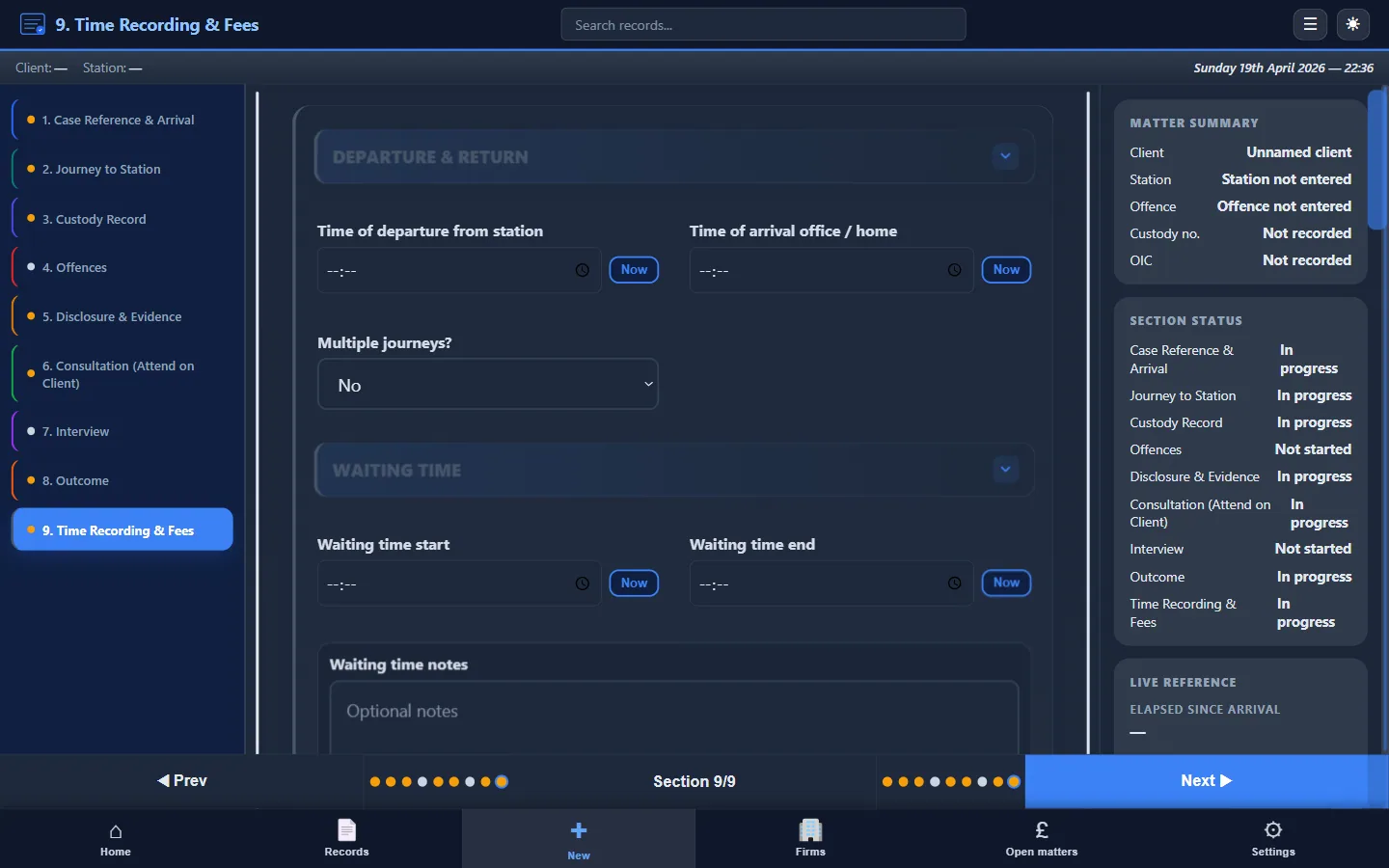
- A detailed time breakdown (travel, waiting, consultation, interview, post-interview)
- A narrative explaining complexity: why the matter exceeded the fixed fee in duration or difficulty
- Consistent records: the times in your attendance note must match the times in your CRM
The time breakdown in your attendance note is the primary evidence. If the note says “total: 2 hours” with no segmentation, the assessor can't verify the claim components.
Travel and waiting
Travel and waiting time are claimable where the Standard Crime Contract permits. Your note must record:
- Time you departed
- Time you arrived at the station
- Time spent waiting before consultation or interview began
Without these timestamps, the claim element is difficult to defend.
Disbursements
Interpreter fees, mileage, and other disbursements must be linked to a specific attendance date and matter. A structured attendance note with disbursement fields ties the expenditure to the record automatically, rather than relying on retrospective receipt-matching.
Common LAA claim mistakes and how attendance notes prevent them
- Vague time records. The CRM shows “3 hours” but the file has no breakdown. Fix: segmented time summary in the attendance note.
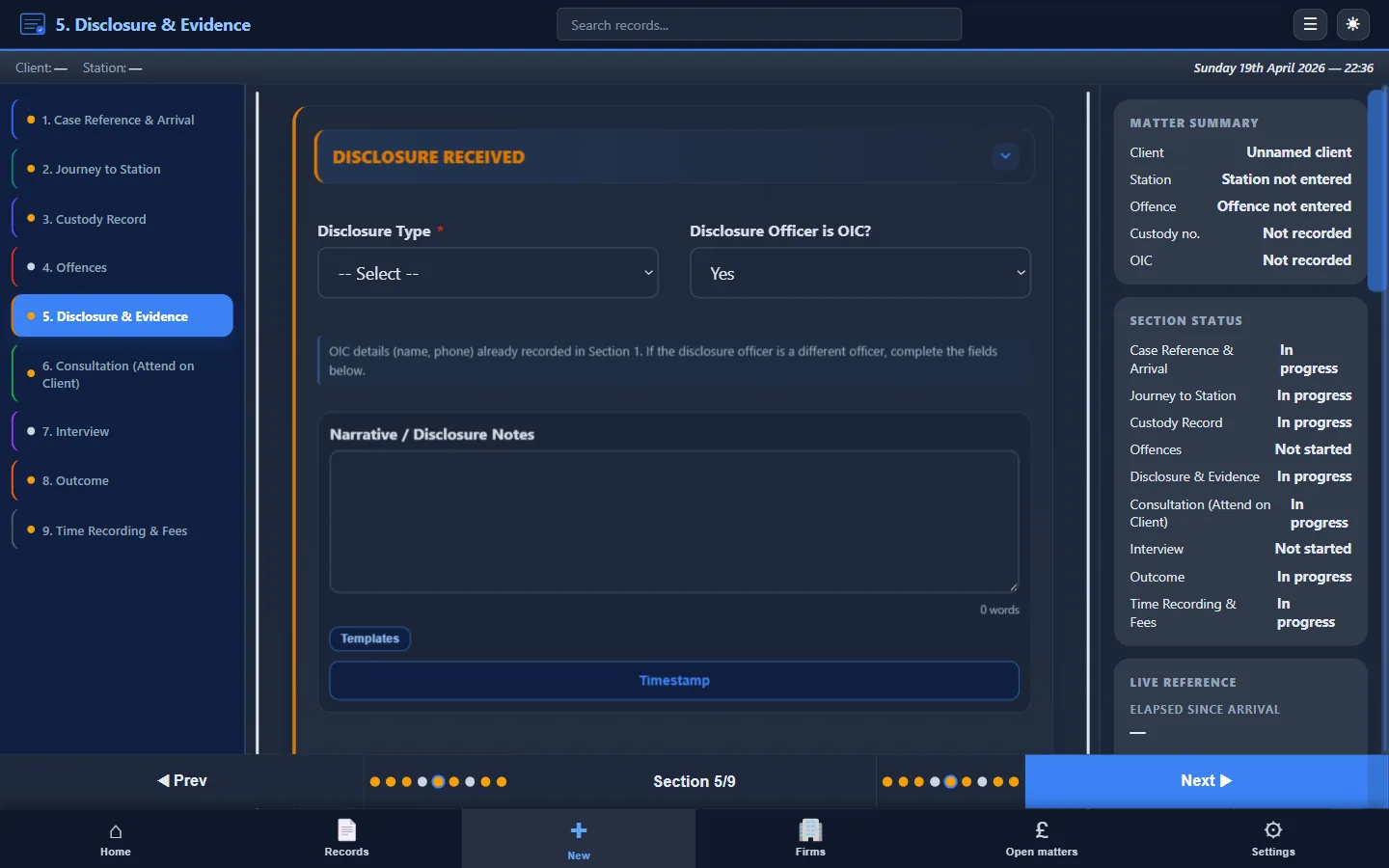
- Missing custody reference. The claim can't be matched to the police records. Fix: custody record number in the header of every note.
- Narrative doesn't match the file. The CRM claims interview attendance but the note shows telephone advice only. Fix: consistent attendance type recorded at the time.
- Inconsistent versions. The billing team works from a handwritten note that differs from the typed-up Word version. Fix: one structured digital record created at the time.
- Orphan disbursements. An interpreter invoice can't be linked to an attendance. Fix: disbursement fields in the note tied to the date and matter.
How structured digital notes reduce rejections
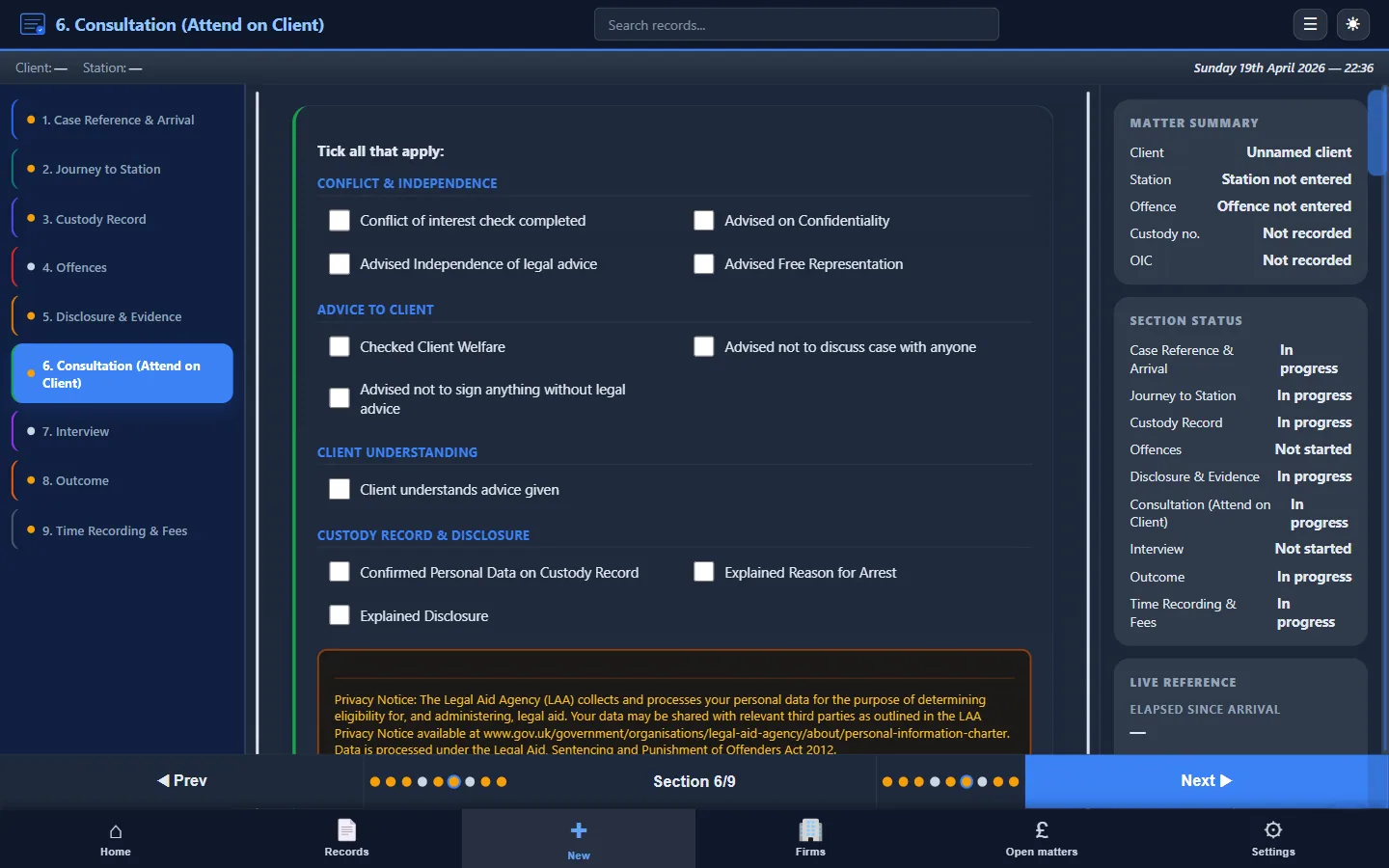
A structured digital workflow answers the same questions on every attendance: who, where, when, what was advised, what happened, and what supports the fee. That doesn't guarantee payment, but it reduces the gap between the work done and the file an assessor sees months later.
Tools like Custody Note include billing fields set out for LAA claims, time recording, fee calculation, and QuickFile invoicing, so the journey from attendance to claim is one continuous workflow rather than five separate re-typing exercises.
The SaBC system
Since February 2026, claims are submitted through the LAA's Submit a Bulk Claim system. Providers submit monthly by the 20th. The system calculates fees based on the fee codes and data you provide. Structured attendance notes make SaBC submissions faster and more accurate because the data, attendance type, times, disbursements, is already captured in a consistent format.
Professional responsibility
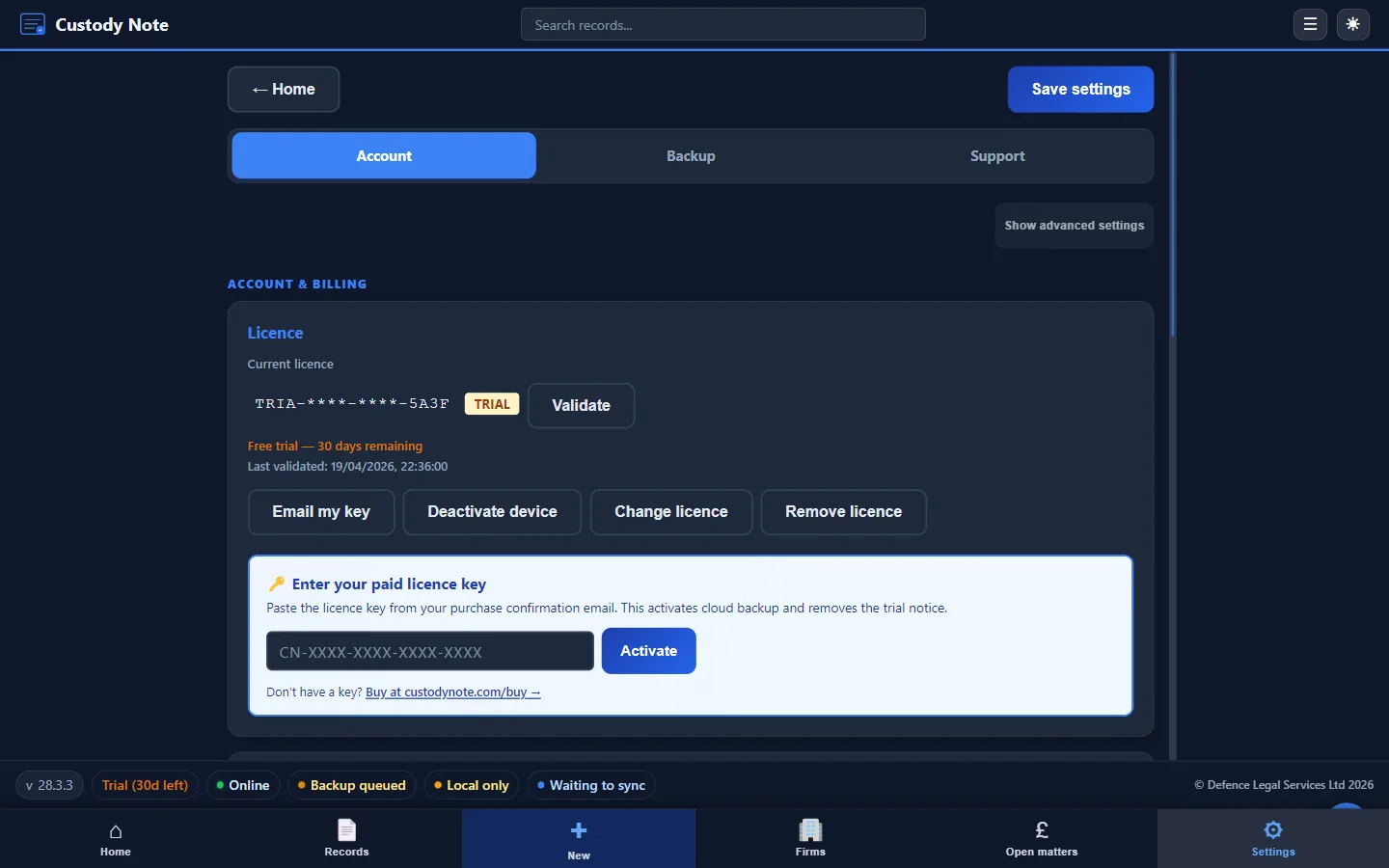
Billing software doesn't replace your obligation to apply the correct codes, rates, and narratives. You must check the current LAA tables, CRM guidance, and your firm's billing procedures before submitting any claim. Custody Note isn't endorsed by the LAA. It's a tool to help you produce structured records that support your professional judgment.
Build billing data into your attendance notes from the start
Custody Note includes LAA billing fields, time recording, and fee summaries in the same record as your station note.
Rolling out to a firm? See IT deployment for Microsoft Store, winget, and Setup.exe backup options.