PACE custody note requirements
PACE Code C doesn't prescribe a specific format for solicitors' attendance notes, but it creates obligations and expectations that directly shape what a defensible note must contain.
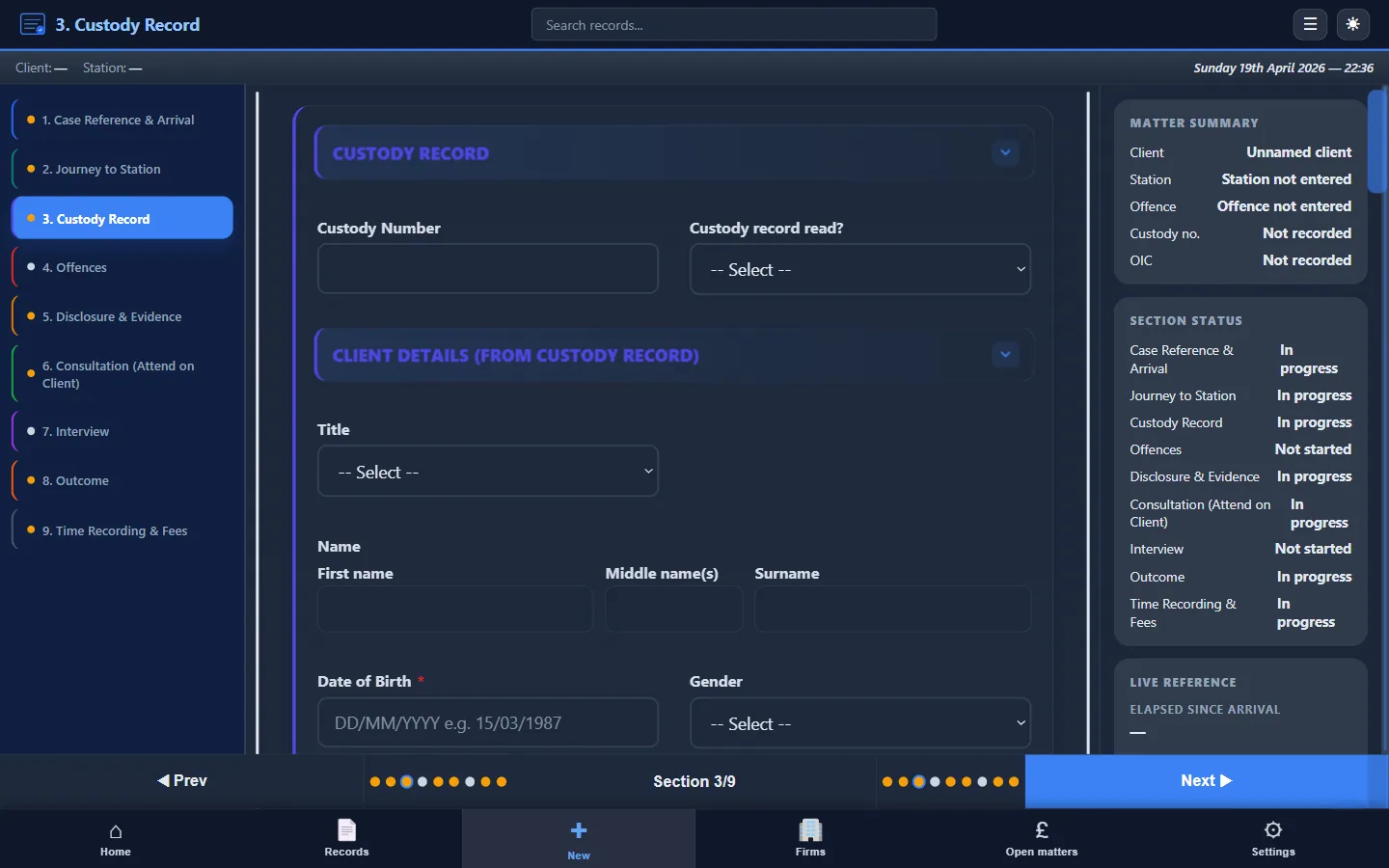
The Police and Criminal Evidence Act 1984 (PACE) and its Codes of Practice (particularly Code C, on detention, treatment and questioning) set the procedural framework for police station attendances. While Code C primarily governs what the custody officer and interviewing officer must do, it creates the factual landscape your attendance note needs to capture accurately.
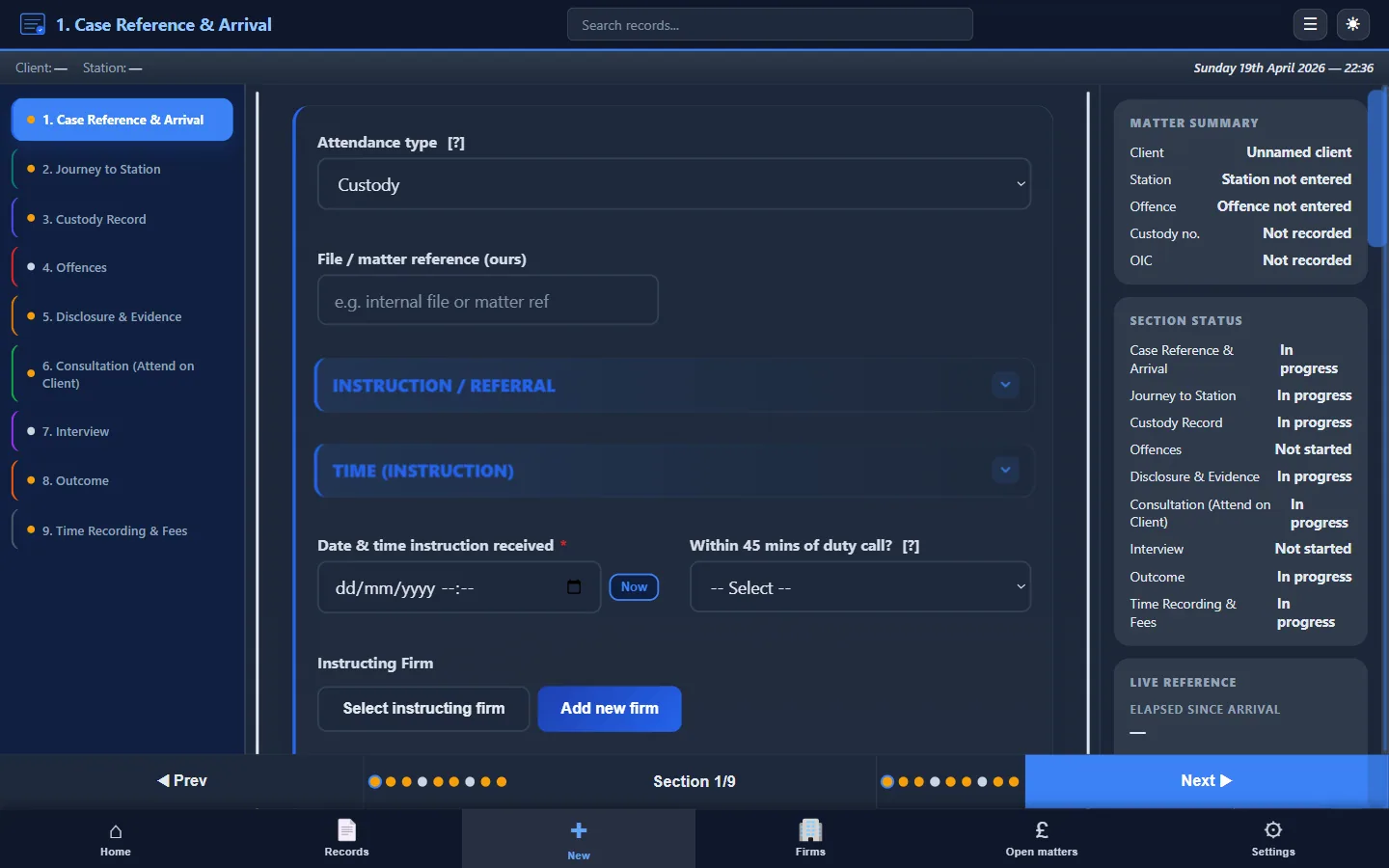
Key areas your note should address
The following sections are shaped directly by PACE Code C provisions and practical expectations in criminal defence work:
- Detention and custody record: Code C requires custody officers to maintain a custody record. Your note should reference the custody record number, DSCC reference, and the time you were notified / arrived.
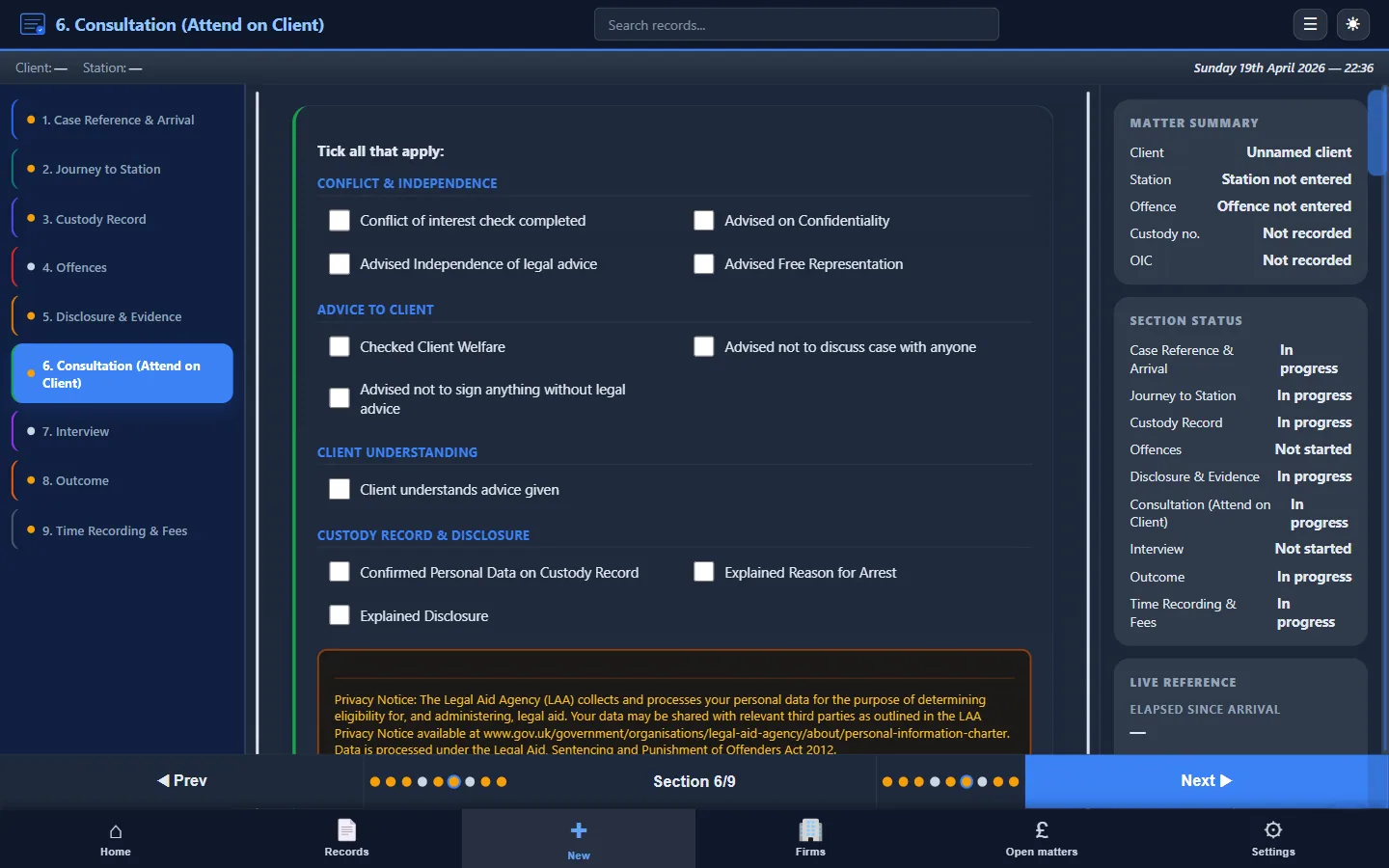
- Rights and entitlements: Record whether rights under s.56 (someone informed) and s.58 (legal advice) were exercised, delayed, or waived, and whether you were present when rights were read.
- Conditions of detention: Note anything relevant about the client’s condition: fitness for interview, appropriate adult involvement (Code C 11.15–11.17), interpreter needs, or medical attention.
- Disclosure: Record what information the investigating officer provided before the interview (Code C 11.1A), what was withheld, and your assessment of sufficiency.
- Pre-interview consultation: Record the advice given, instructions received, and agreed interview strategy. The right to consult privately is under PACE s.58(1) and Code C section 6 (Note 6J). Paragraph 6.8 is different: it entitles a detainee who has been permitted to consult a solicitor to have the solicitor present when interviewed (subject to paragraph 6.6).
- Interview: Note start/end times, breaks (Code C 12.8), significant statements, and any objections or representations made during interview.
- Outcome: Charge, NFA, bail (pre-charge bail under s.47ZA PACE), or release under investigation. Record any conditions and next steps.
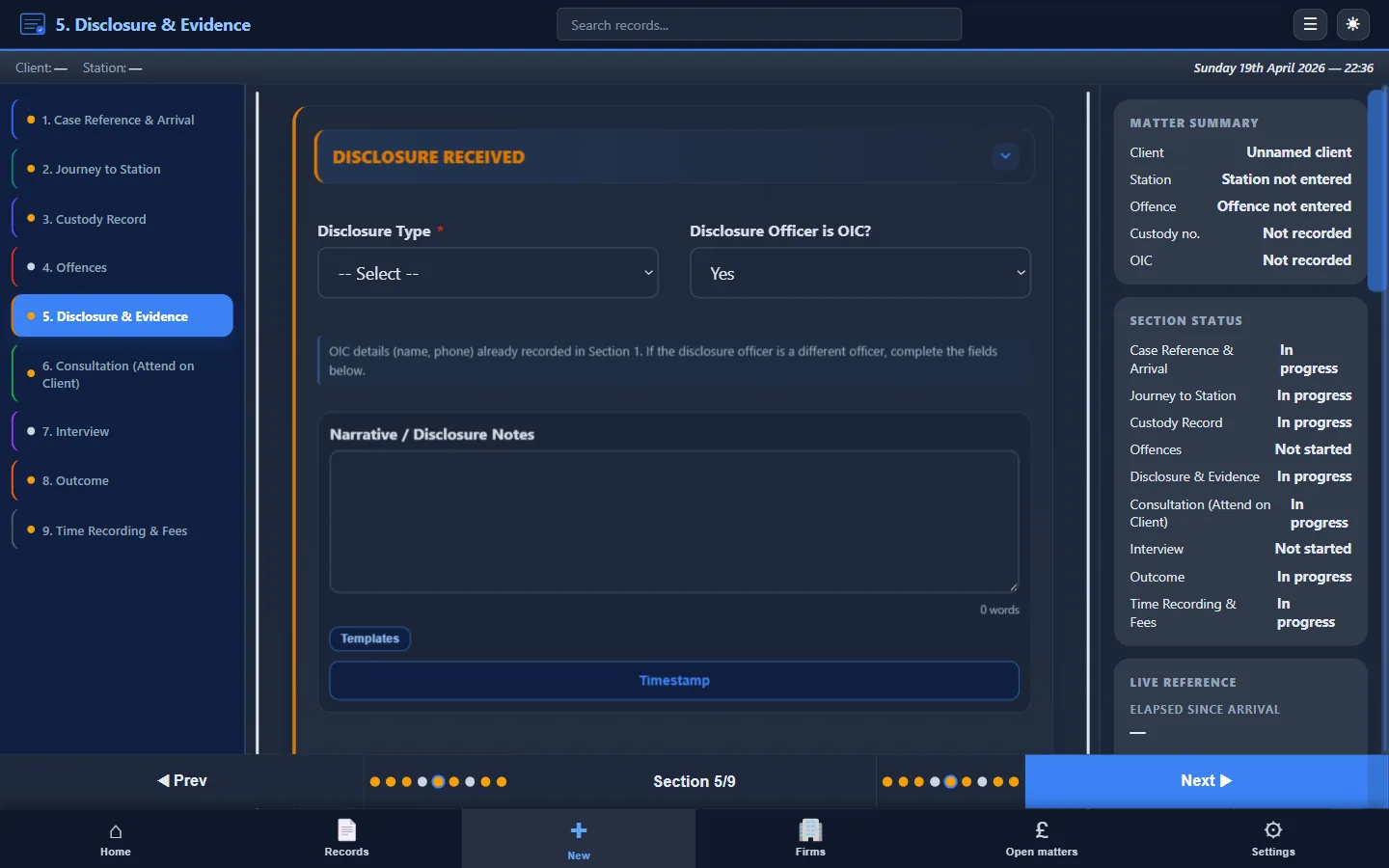
Structured vs unstructured notes
PACE doesn't mandate a template, but the volume and specificity of what needs recording means unstructured notes (handwritten on paper, or typed into a blank Word document) are far more likely to have gaps. A structured approach ensures each critical area is addressed in sequence.
See our guide on common attendance note mistakes for practical examples of what goes wrong when notes lack structure.
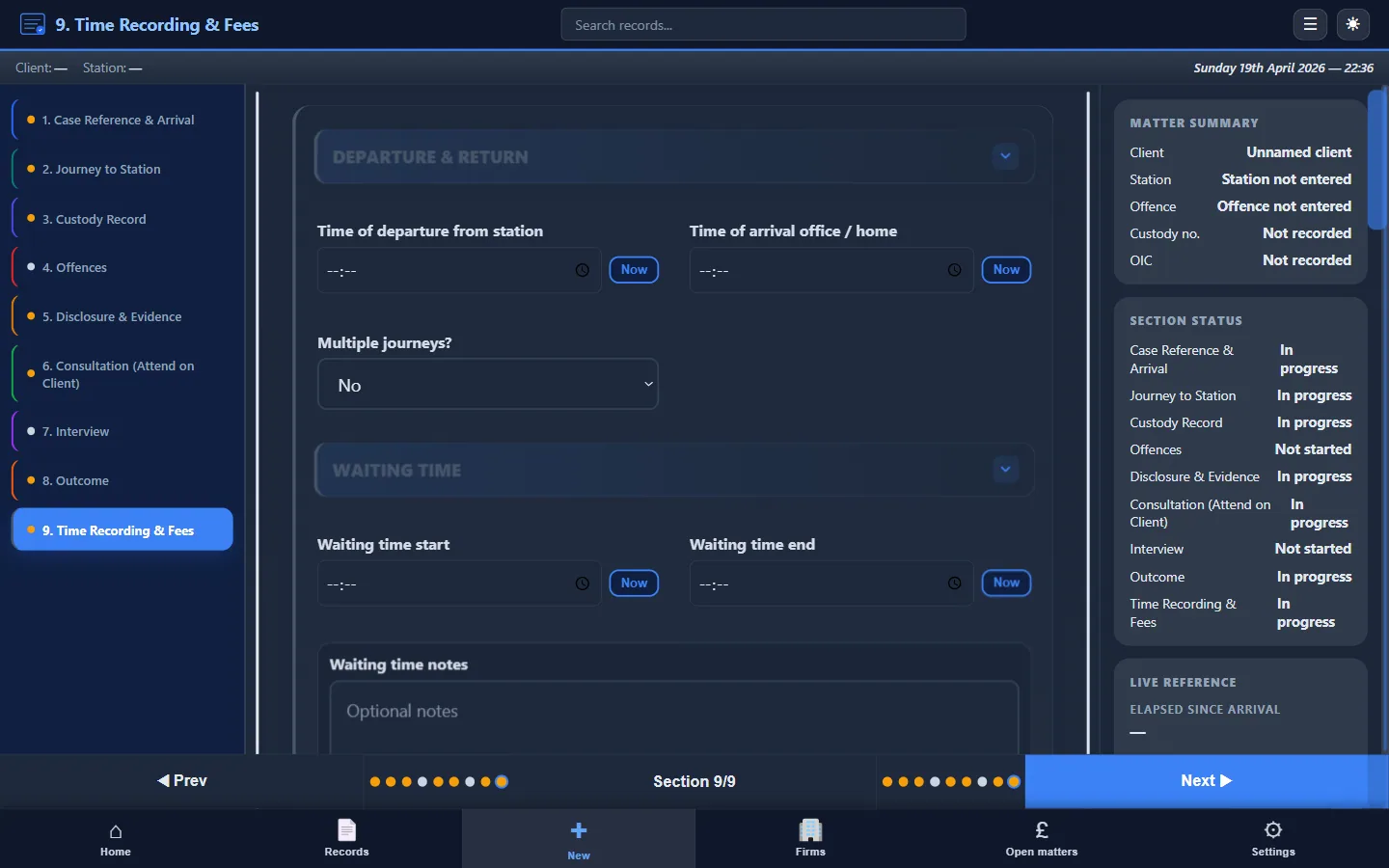
Time recording and PACE
PACE provisions create a timeline of events that maps naturally onto time recording for billing purposes. Arrival time, consultation time, interview duration, and departure time are all PACE-relevant and LAA-relevant simultaneously. Recording them once, as the matter progresses, reduces duplication and supports both your file and your claim.
Defensibility
A defensible note is one that could withstand scrutiny from a court, an LAA auditor, or a professional conduct review. That means it's contemporaneous (or near-contemporaneous), structured, complete, and internally consistent. PACE doesn't set the standard for solicitors’ notes directly, but the framework it creates defines the minimum factual landscape your note should cover.
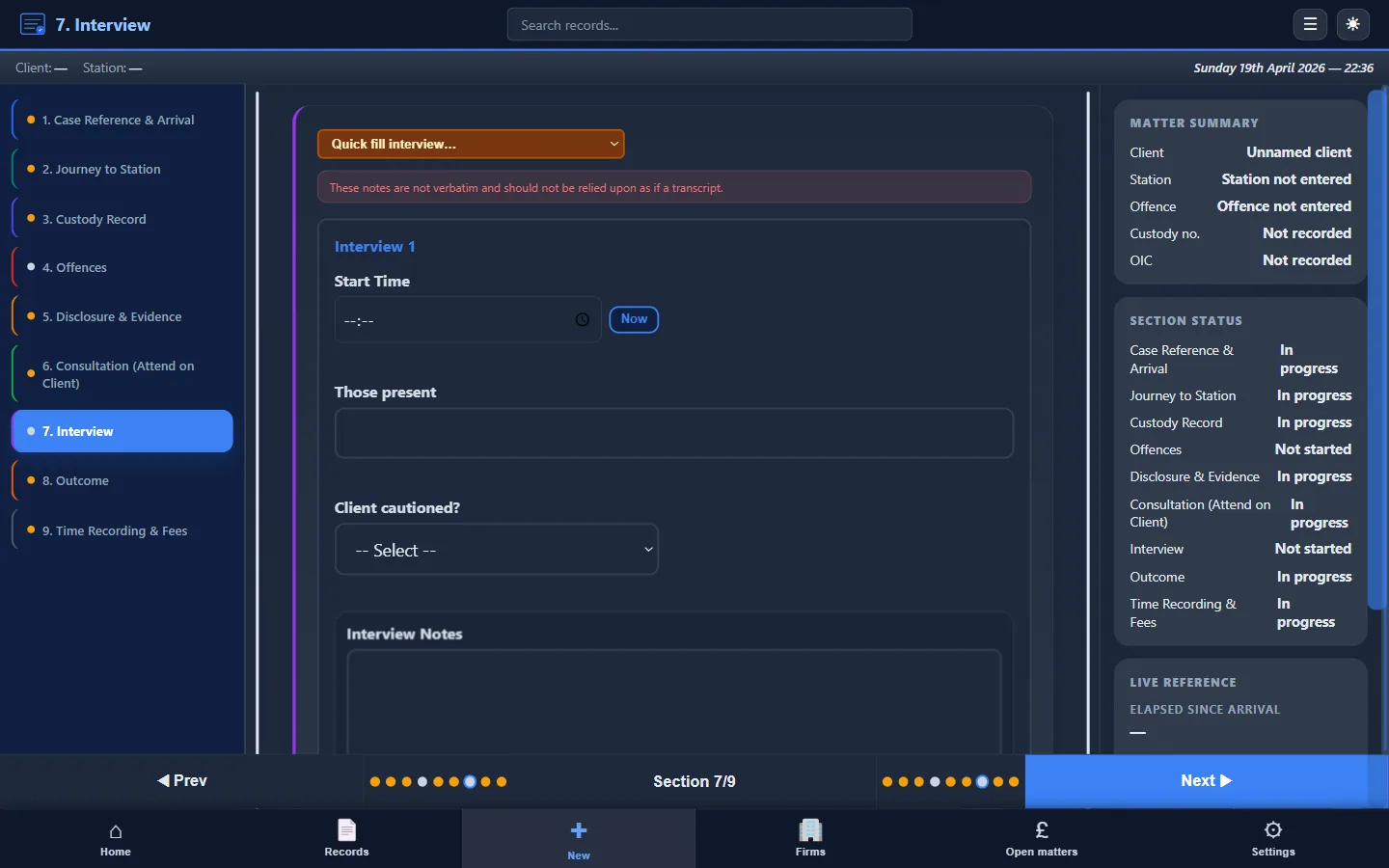
Write notes that follow PACE with Custody Note
Custody Note provides a structured workflow that mirrors the PACE custody timeline, from notification through to departure. Each section prompts the information you need, so nothing is missed.