Police Station Interview Notes: Best Practice for Solicitors and Reps
The interview is the centrepiece of most police station attendances, but interview notes are often the weakest section of the attendance record. This guide covers what to record, how to record it, and what to do when something goes wrong.
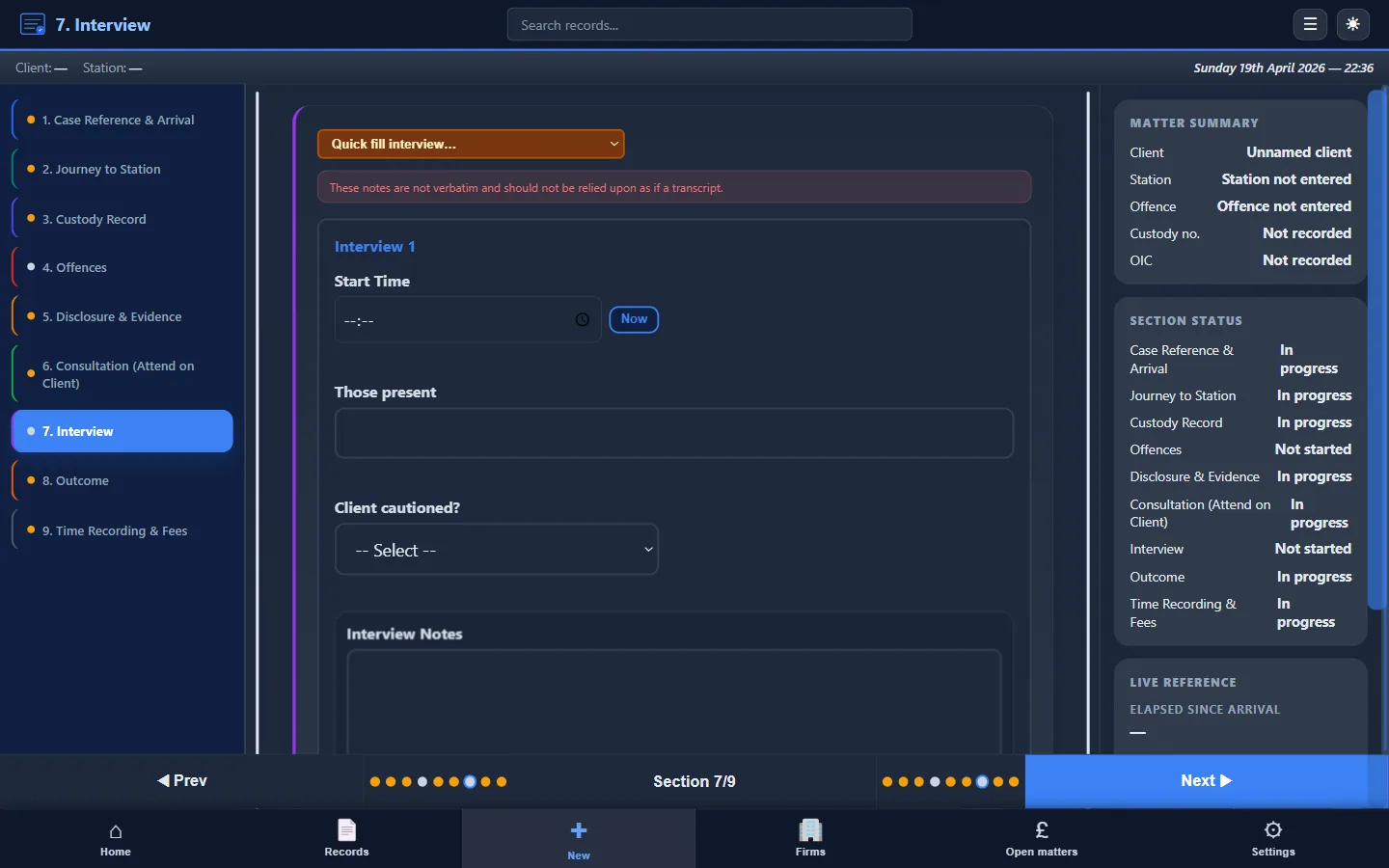
For the full guide to attendance notes, see Police Station Attendance Notes (UK Guide).
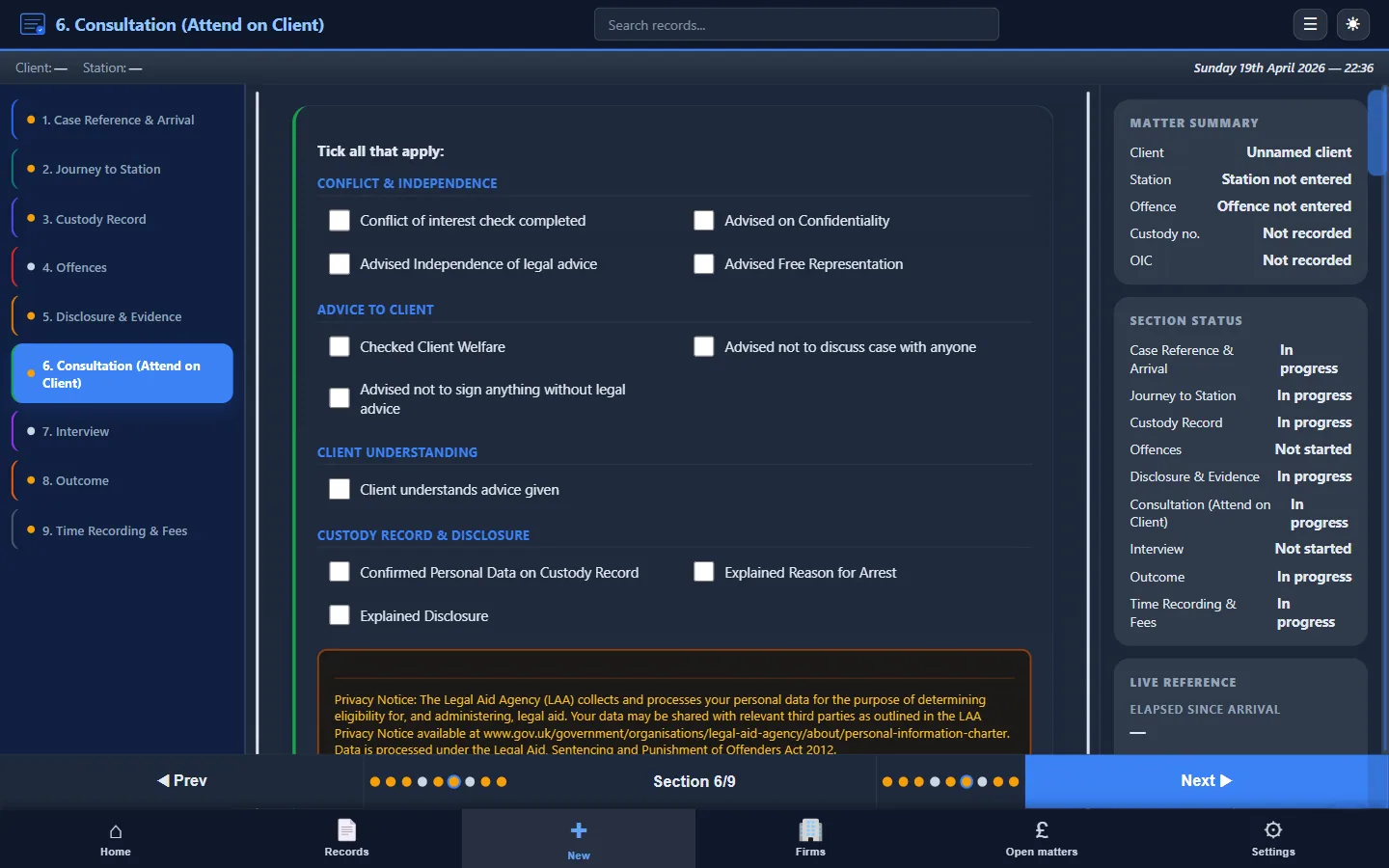
Your role during the interview
You're there to protect the client's interests, not to observe passively. During a PACE interview, your responsibilities include:
- Ensuring the caution is properly administered
- Objecting to improper, oppressive, or unfair questions
- Seeking clarification of ambiguous questions
- Requesting breaks where appropriate (Code C 12.8)
- Noting any significant statements or admissions
- Monitoring the client's welfare and fitness to continue
Your interview notes should reflect this active role.
What to record during the interview
Timings
- Interview start time
- Any breaks (with start and end times, and reason)
- Interview end time
These are critical for billing and for verifying compliance with PACE detention time limits.
Officers present
Record the names and ranks of all interviewing officers. If officers rotate during a lengthy interview, note the change.
Recording method
Confirm whether the interview was audio recorded, video recorded, or (rarely) conducted as a written interview. This is important if the recording is later disputed or unavailable.
The substance of the interview
You aren't creating a transcript. That's the recording's function. Your note should capture:
- Key areas of questioning (themes, not every question)
- The client's approach (full account, no comment, prepared statement read)
- Any significant admissions or denials
- Questions you considered improper or unfair
- Points where the client appeared confused or distressed
Representations and objections
This is the most important part of your interview notes. If you objected to a question, noted improper conduct, or made representations to the interviewing officer, record:
- What you objected to (the question or conduct)
- The basis for your objection
- The officer's response
- Whether the objection was noted on tape
These entries may support an exclusion application under s.76 or s.78 PACE, or an abuse of process argument, months or years later. If they aren't in your attendance note, they effectively didn't happen.
Prepared statements
If a prepared statement was read at the start of the interview, note:
- That the statement was read (with the time)
- Whether the client was invited to comment further and declined
- Any follow-up questions and the client's response (or non-response)
No-comment interviews
A no-comment interview isn't a reason for a blank interview section. Record:
- That the client declined to comment on all questions
- Any areas where the client was tempted to respond (and your advice during any break)
- The officers' questioning areas. This tells the firm what the investigation is focused on
- Any attempts by officers to persuade the client to comment outside the formal interview
When things go wrong
Improper questions
If an interviewing officer asks a question that's leading, oppressive, or assumes facts not in evidence, intervene and record the intervention. Note the question, your objection, and the outcome.
Client distress
If the client becomes distressed, requests a break, or appears unfit to continue, request a break and record the circumstances. Note whether a healthcare professional was called.
Denial of rights
If you're excluded from the interview room, denied the opportunity to consult before interview, or the interview proceeds in your absence despite your objection, record everything in detail. These notes may be the foundation of an application to exclude the interview.
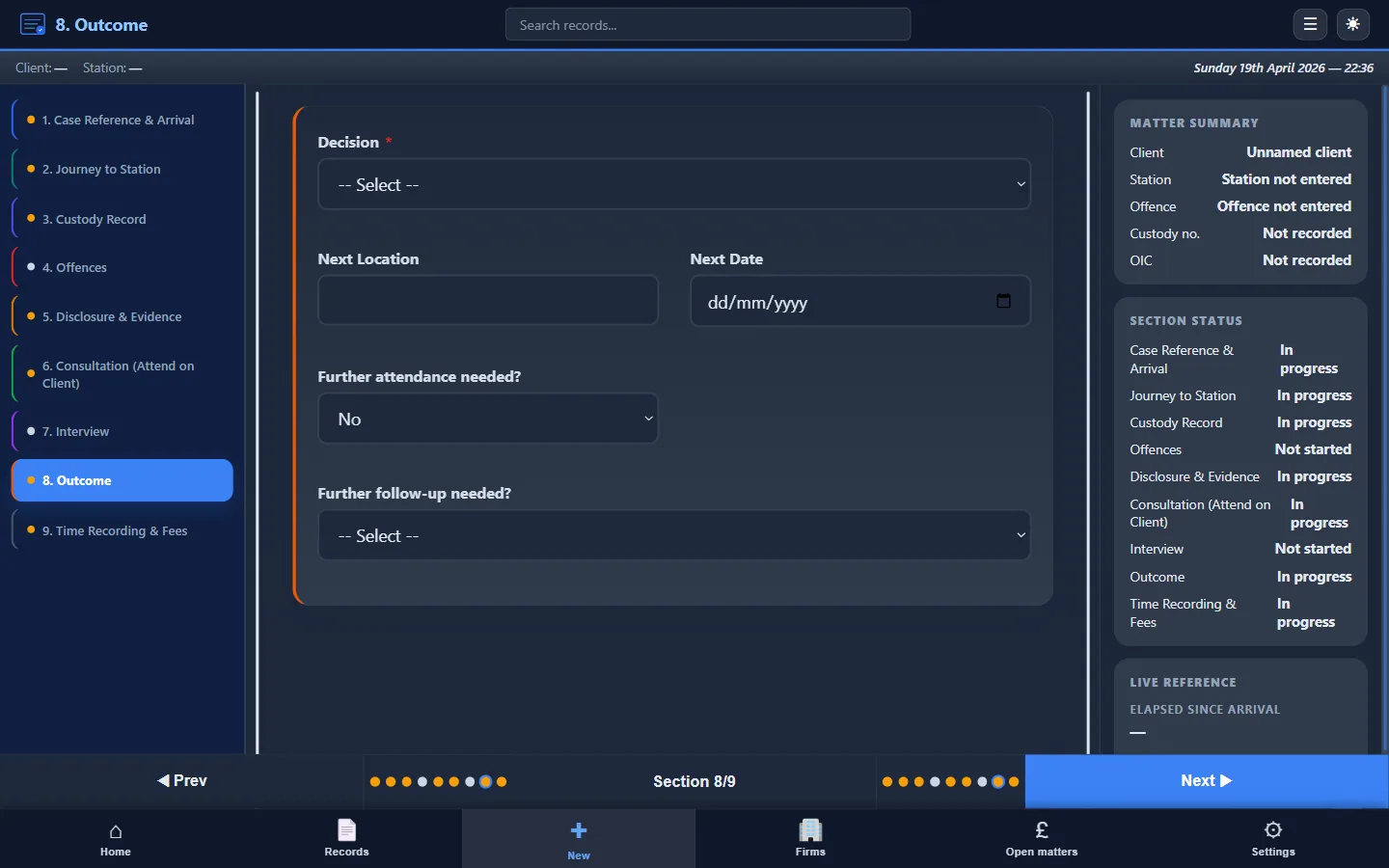
After the interview
Complete the interview section of your attendance note before moving to the outcome section. Record the end time, confirm the recording details, and note any immediate post-interview exchanges.
Summary
The interview section of your attendance note should demonstrate that you were present, active, and professional. It should capture the timeline, the substance, your interventions, and anything that might matter later. Even a no-comment interview requires a complete record.
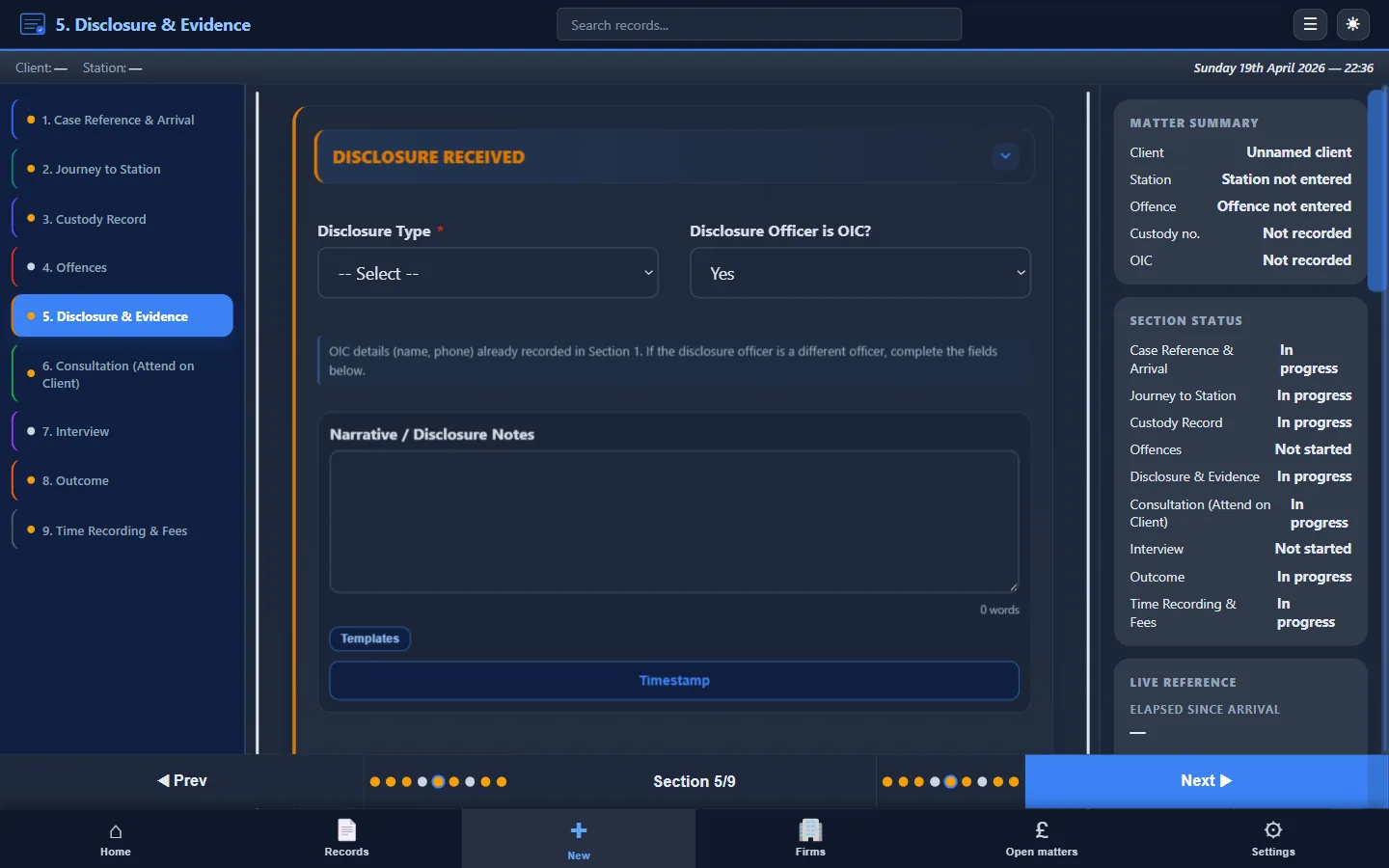
For how the interview section fits into the broader attendance note, see Police Station Attendance Notes (UK Guide). For a worked example including interview notes, see Police Station Notes Example.
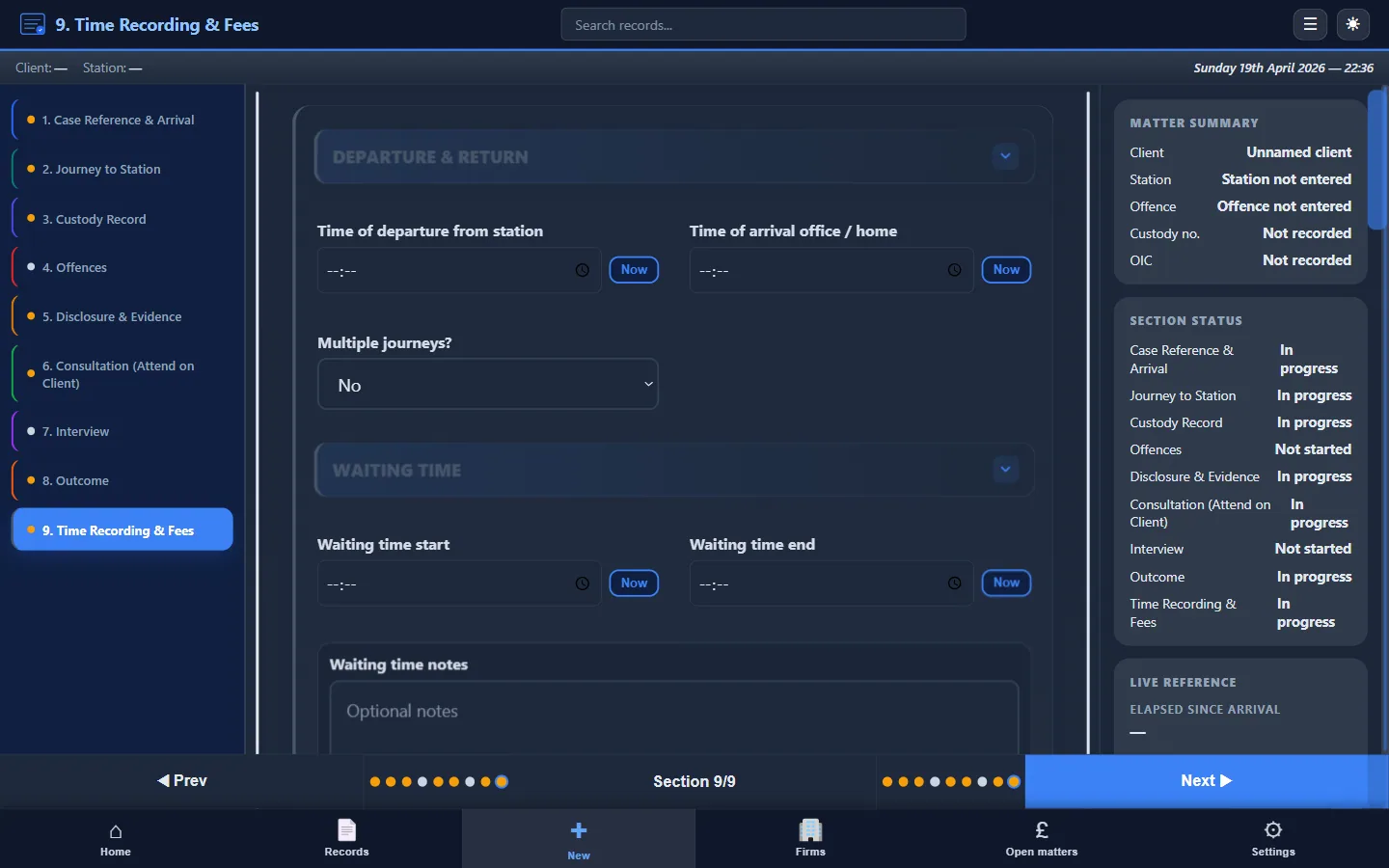
Structured interview recording as part of a complete attendance note.
Custody Note guides you through each interview field, times, officers, representations, outcomes, as part of the full attendance workflow. Offline, encrypted, instant PDF. Free during beta.
Download free