Telephone Advice Notes: Recording Remote Instructions
Telephone advice notes record advice given remotely to a client who is in police custody or who contacts you about a criminal matter. In England and Wales, telephone advice is a billable activity under legal aid, and the attendance note must record the date, time, duration, the client's situation, the advice given, and any follow-up actions.
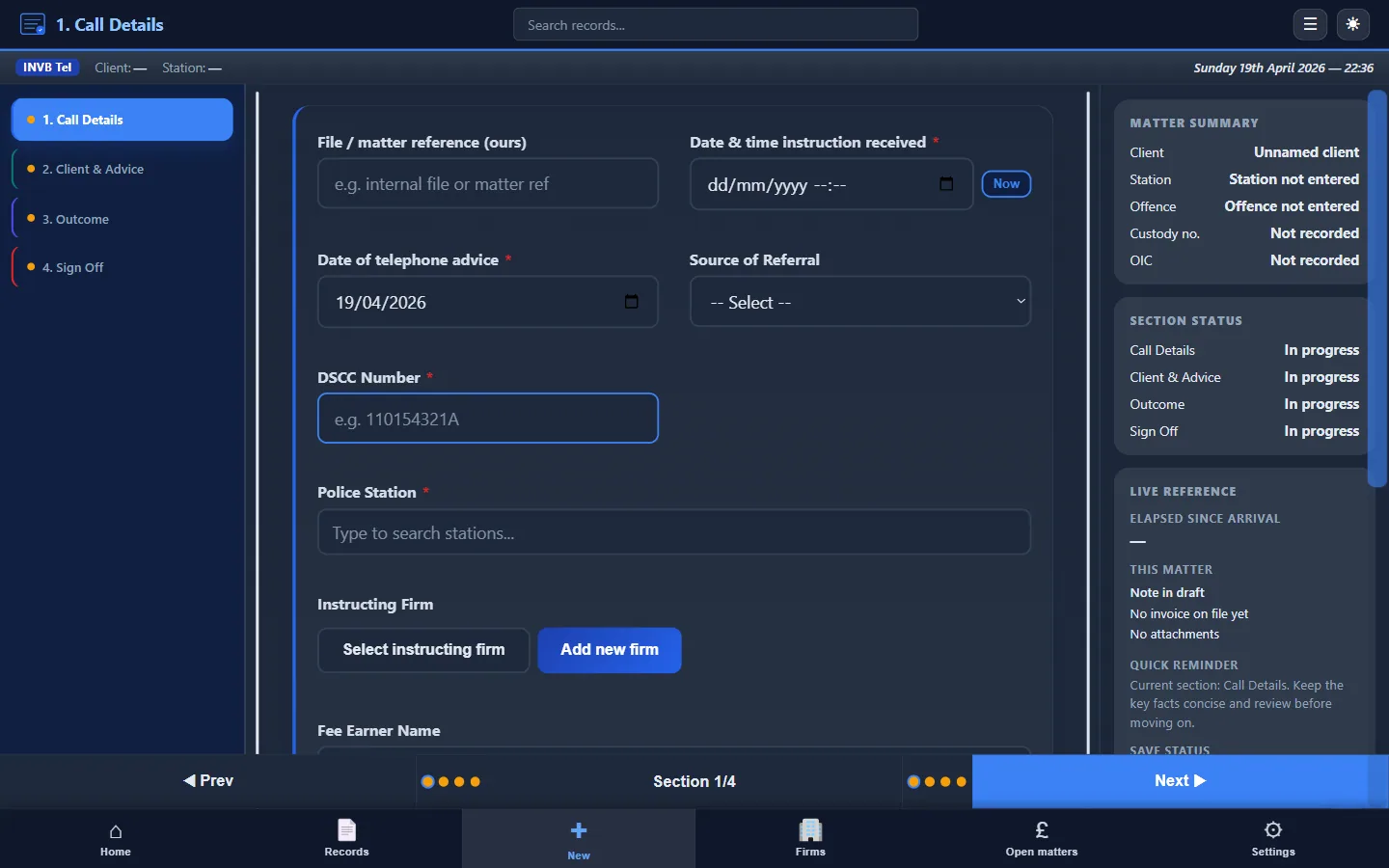
Telephone advice is a routine part of criminal defence practice. A client may call from a police station after being offered the duty solicitor, a custody sergeant may contact you on behalf of a detained person, or an existing client may telephone for advice about an upcoming voluntary interview or bail condition. In each case, the attendance note is the evidence that the advice was given, what it covered, and how long it took. Without a proper record, the work can't be billed, can't be supervised, and can't be relied on if the case develops.
When telephone advice arises
Telephone advice in criminal defence typically arises in the following situations:
- Custody calls. A detained person exercises their right to legal advice and the solicitor provides initial advice by telephone before deciding whether to attend in person.
- CDS Direct referrals. For certain less serious offences, the Defence Solicitor Call Centre (CDS Direct) may handle the initial advice. Where the call is referred to the duty solicitor or own solicitor, you may give telephone advice without attending.
- Follow-up advice. After a custody attendance or voluntary interview, a client may telephone with questions about bail conditions, forthcoming court dates, or whether to accept a caution.
- Pre-attendance advice. A client who has been invited to a voluntary interview may telephone for advice on what to expect and how to prepare.
- Third-party calls. A family member or appropriate adult may telephone on behalf of a detained or vulnerable person, seeking information about the process or next steps.
What to record in a telephone advice note
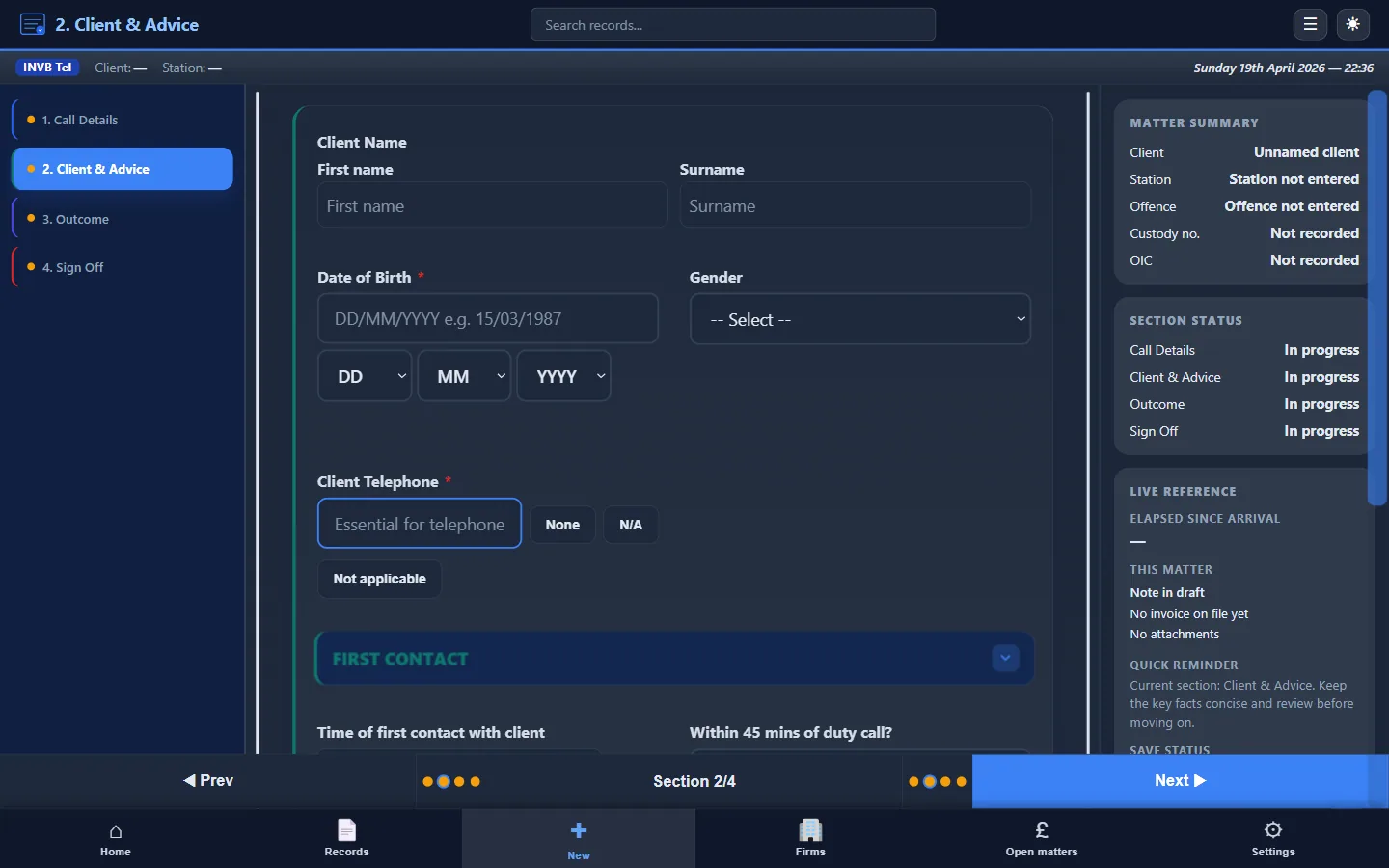
The attendance note for telephone advice should capture the same core information as any other attendance note, adapted for the remote context:
- Date and time. Record the date, the time the call started, and the time it ended. If there were multiple calls, record each separately.
- Client details. Name, date of birth, and any reference number. If the call was from or about a detained person, note the custody number and police station.
- Source of the instruction. How did the call arise? Was it a call from the custody suite, a CDS Direct referral, a follow-up from a previous attendance, or an unsolicited call from the client?
- The client's situation. What did the client (or the custody sergeant) tell you about the circumstances? What alleged offence is involved? What stage has the matter reached?
- Advice given. Record the substance of the advice, not just "advised client". What did you tell the client about their rights, the process, the strength of the evidence, the options available, and the recommended course of action?
- Client's response. Did the client accept the advice? Did they ask questions? Did they instruct you to attend in person?
- Outcome. What was agreed? Will you attend the station? Is the matter concluded? Is further advice needed?
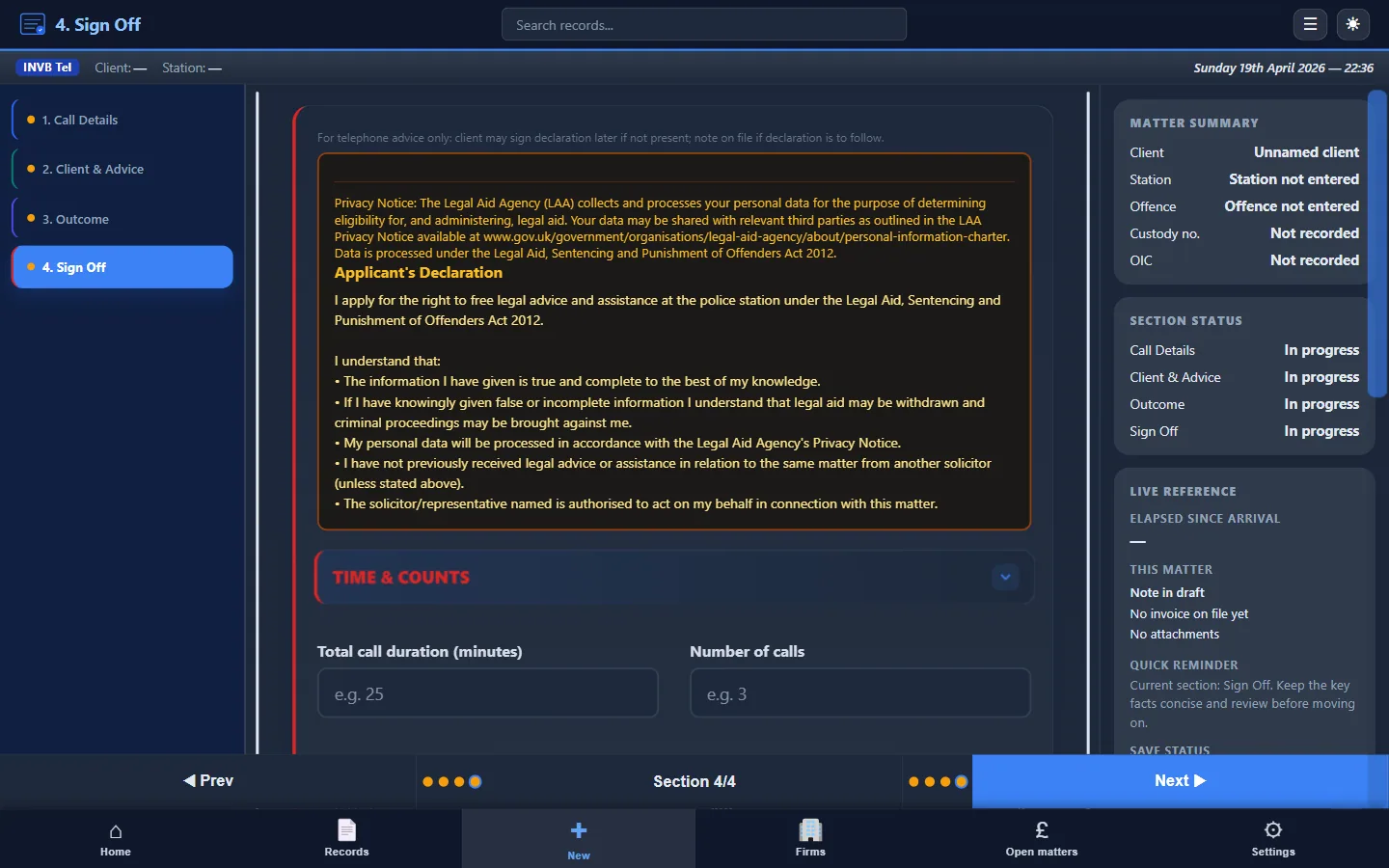
- Duration. The total time spent on the call, recorded in minutes.
Time recording for billing
Accurate time recording is essential for telephone advice. Unlike a custody attendance where waiting time can be substantial, telephone advice tends to be shorter, but the time must still be recorded precisely. Don't round up generously or estimate after the fact.
Record the start and end time of each call. If you spent time before or after the call reviewing the file, preparing advice, or making follow-up calls, record that time separately with a clear description of what you did. Aggregating all telephone work into a single block entry obscures the detail that billing teams and auditors need.
LAA billing for telephone advice
Telephone advice at the police station is a claimable activity under legal aid. The specific claim code and rules depend on the current Crime Contract and Standard Crime Contract Specification. As a general principle, the claim must be supported by an attendance note that records the date, time, duration, the client's circumstances, the advice given, and the outcome.
Where telephone advice leads to a decision not to attend in person, the attendance note is the only evidence of the work done. If the note is incomplete or lacks detail, the claim is vulnerable to reduction or rejection on assessment. The LAA expects the same standard of record-keeping for telephone advice as for in-person attendances. Brevity isn't an excuse for omission.
Practitioners should consult the current contract specification and any LAA guidance notes for the precise claim codes and requirements applicable to telephone advice. These rules are updated periodically, and compliance depends on the terms in force at the time of the work.
Common mistakes in telephone advice notes
- No time recorded. A note that says "telephoned client, advised on rights" without a start time, end time, or duration is unbillable and unsupervisable.
- Generic advice entries. Recording "advice given" without specifying what the advice was. If the matter later goes to trial and the client says they weren't advised about their right to silence, a vague entry won't help.
- Failing to record the source of the call. Whether the call came from CDS Direct, the custody suite, or the client directly affects the claim type and the context of the advice.
- Not recording the outcome. Did the client accept the advice? Did they ask you to attend? Was the matter resolved? Without an outcome, the note is incomplete.
- Combining multiple calls into one entry. If you spoke to the client twice (once for initial advice and once after the interview), record each call separately with its own times and content.

How Custody Note helps with telephone advice notes
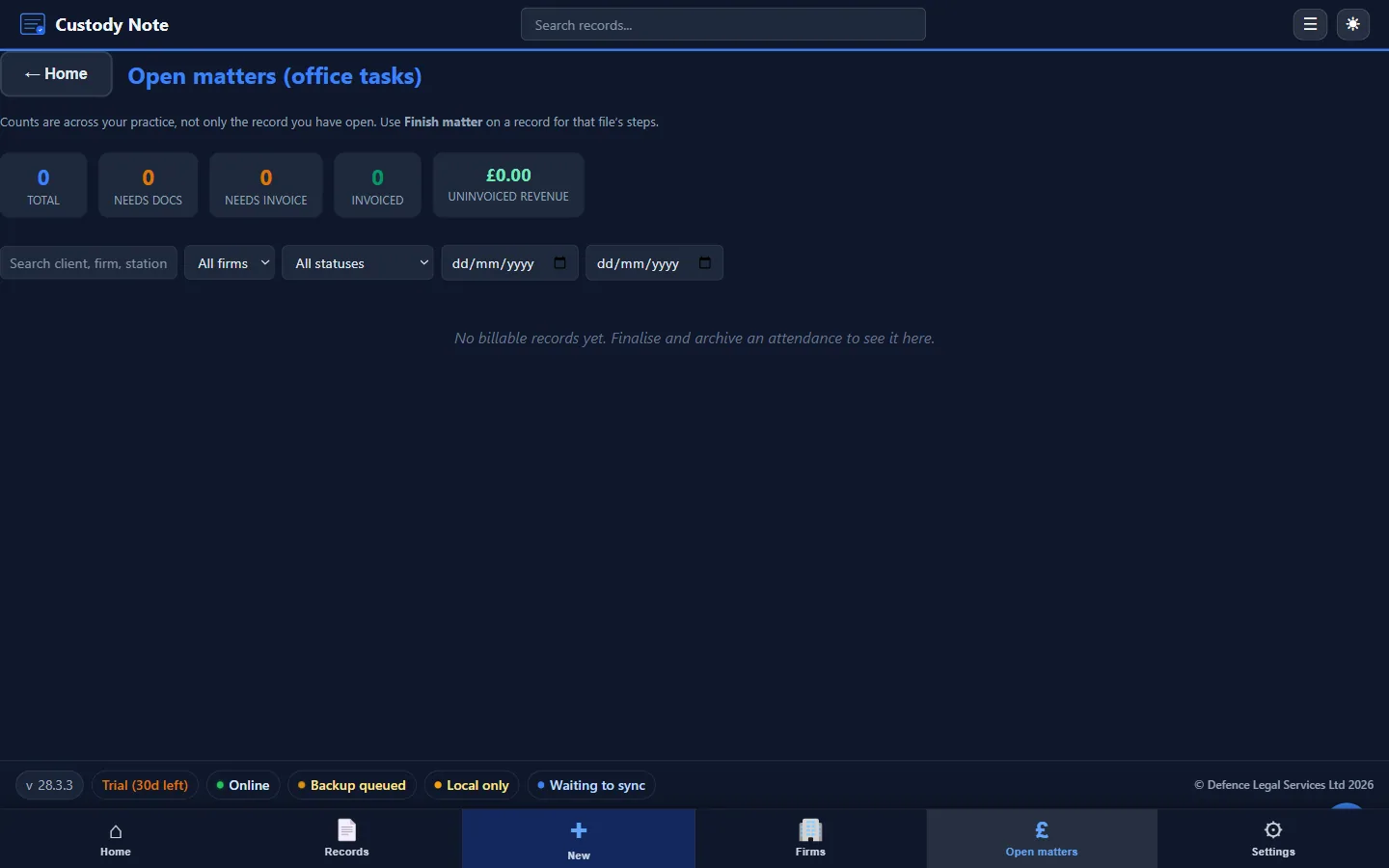
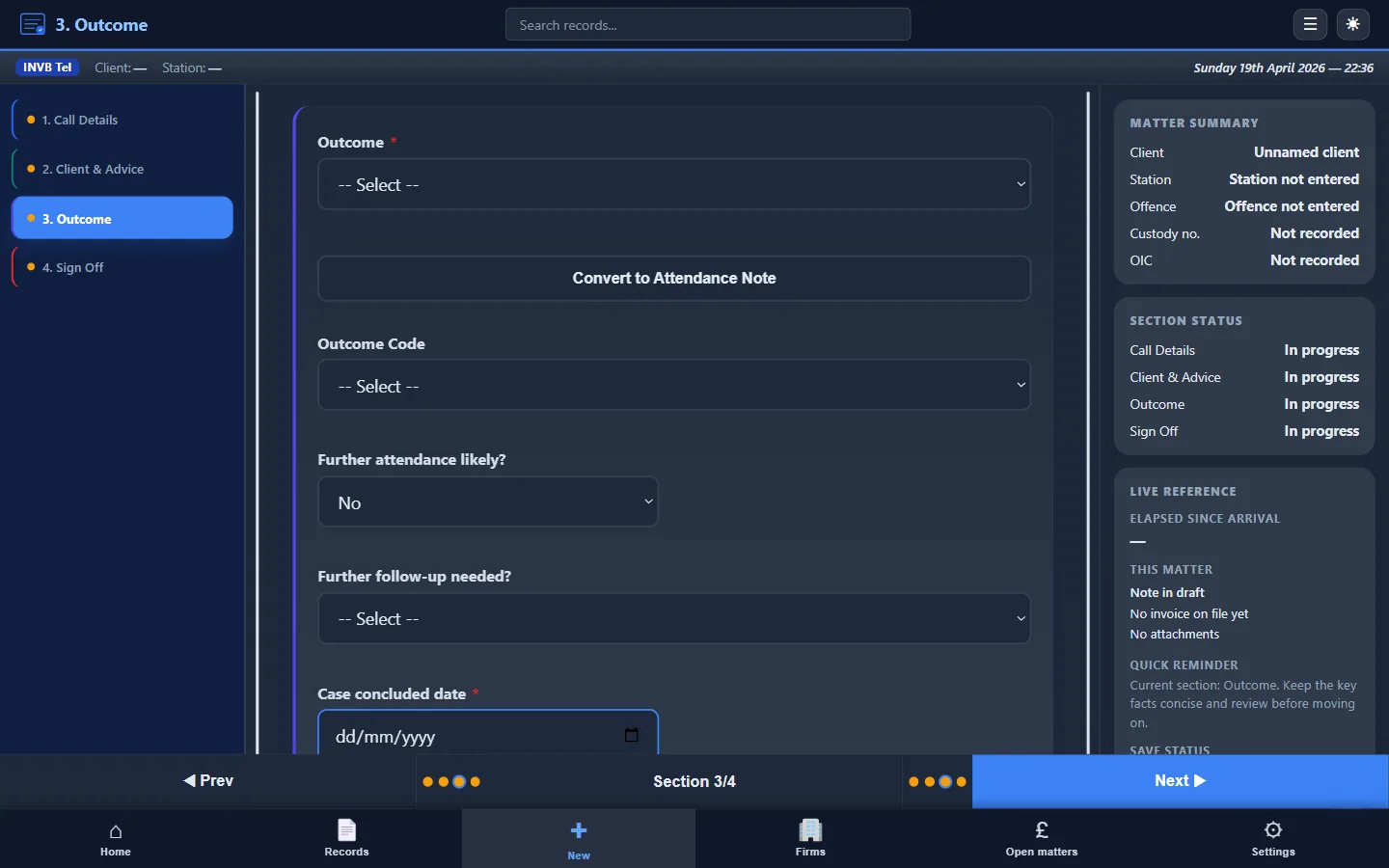
Custody Note provides structured fields for recording telephone advice alongside custody and voluntary interview attendances. The software prompts you to capture the date, time, duration, source of the instruction, client details, the substance of the advice, the client's response, and the outcome. Built-in time recording fields reduce the risk of incomplete billing entries.
Because Custody Note works offline and stores notes with AES-256 encryption, you can record telephone advice from any location, including at a police station between attendances, without relying on internet connectivity or risking unencrypted data on a shared device. When the note is complete, export a formatted PDF for the firm file.
Download free or download Custody Note for Windows.
Frequently asked questions
Is telephone advice always billable under legal aid?
Telephone advice in connection with police station work is generally a claimable activity, but the precise rules depend on the current Crime Contract and the circumstances of the call. Always check the current contract specification for the applicable claim codes and any conditions.
How detailed does a telephone advice note need to be?
The note must record the same core information as any attendance note: who, when, what was discussed, what advice was given, and what was agreed. The LAA expects sufficient detail to evidence the work done, even for a brief call. A one-line entry is rarely adequate.
Should I record telephone advice separately from a custody attendance?
If the telephone advice is part of the same matter, for example initial advice by telephone followed by an in-person attendance, it can form part of the same attendance note, provided the times and content of each element are recorded distinctly. If the telephone advice relates to a separate instruction, record it as a separate note.
What if the client doesn't want me to attend after telephone advice?
Record the advice given, the client's decision not to request attendance, and the reasons if given. The attendance note should demonstrate that the client made an informed decision and that you fulfilled your duty to advise. This protects both the client and you.
Can I use Custody Note for telephone advice notes only?
Yes. Custody Note supports custody attendances, voluntary interview notes, and telephone advice notes. You can use it for any combination of these, or for telephone advice alone if that's your workflow.
For broader guidance, see Police Station Attendance Notes (UK Guide), LAA Attendance Notes Explained, and Attendance Notes for Legal Aid Billing.