Voluntary Interview Notes: What to Record and Why
A voluntary interview attendance note records a solicitor's or representative's work during a voluntary interview under section 29 of the Police and Criminal Evidence Act 1984. Unlike custody attendances, the client isn't detained, but the attendance note must still cover the instruction, consultation, disclosure, interview record, advice given, and outcome.
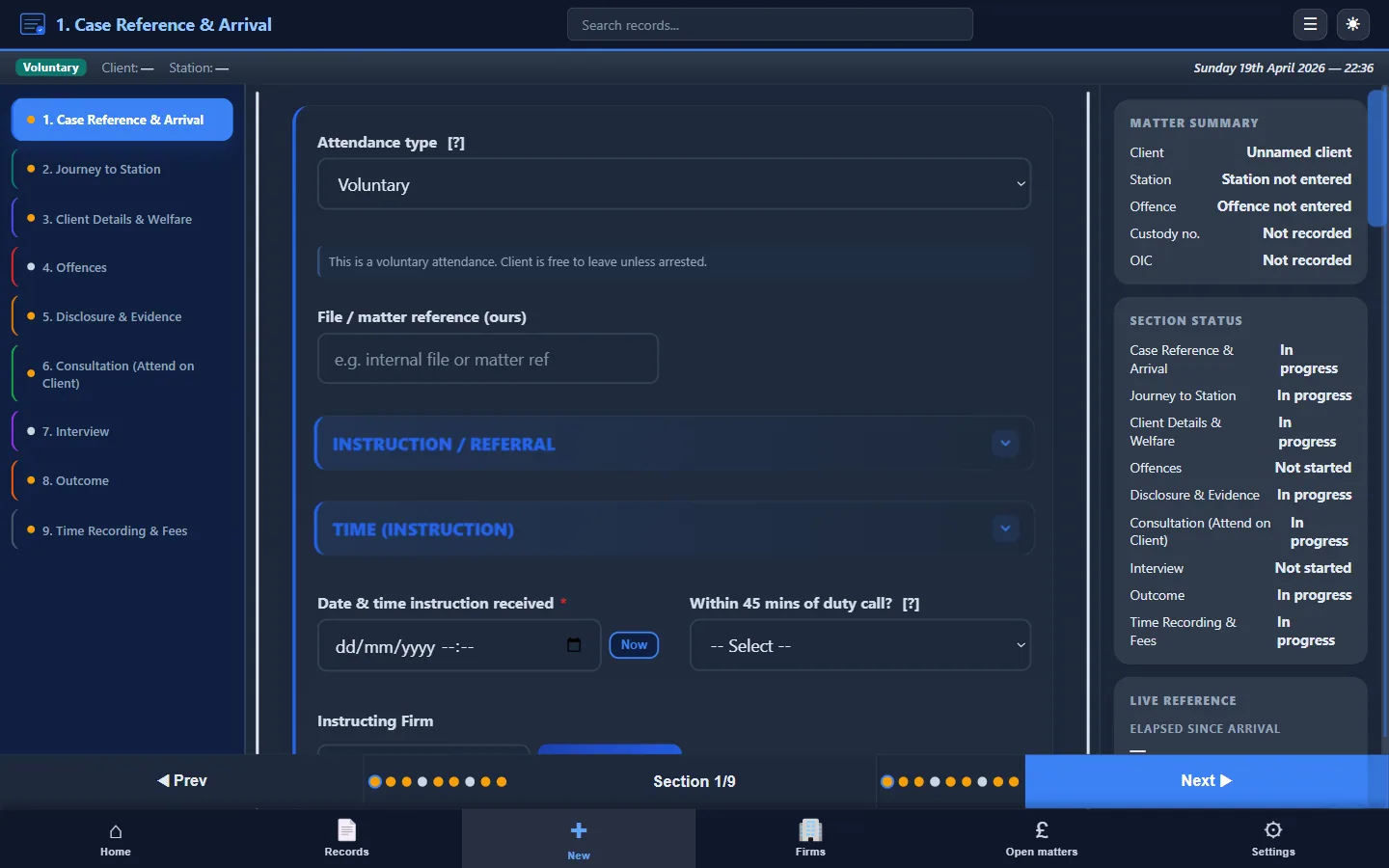
If you're advising a client invited to a voluntary interview, or representing them at the police station, the attendance note is the primary record of the work done. It must be thorough enough to withstand peer review, satisfy supervisors, and support any legal aid claim. This guide covers what a voluntary interview is, how the attendance note differs from a custody attendance, what to record at each stage, and common mistakes that create problems downstream.
What is a voluntary interview?
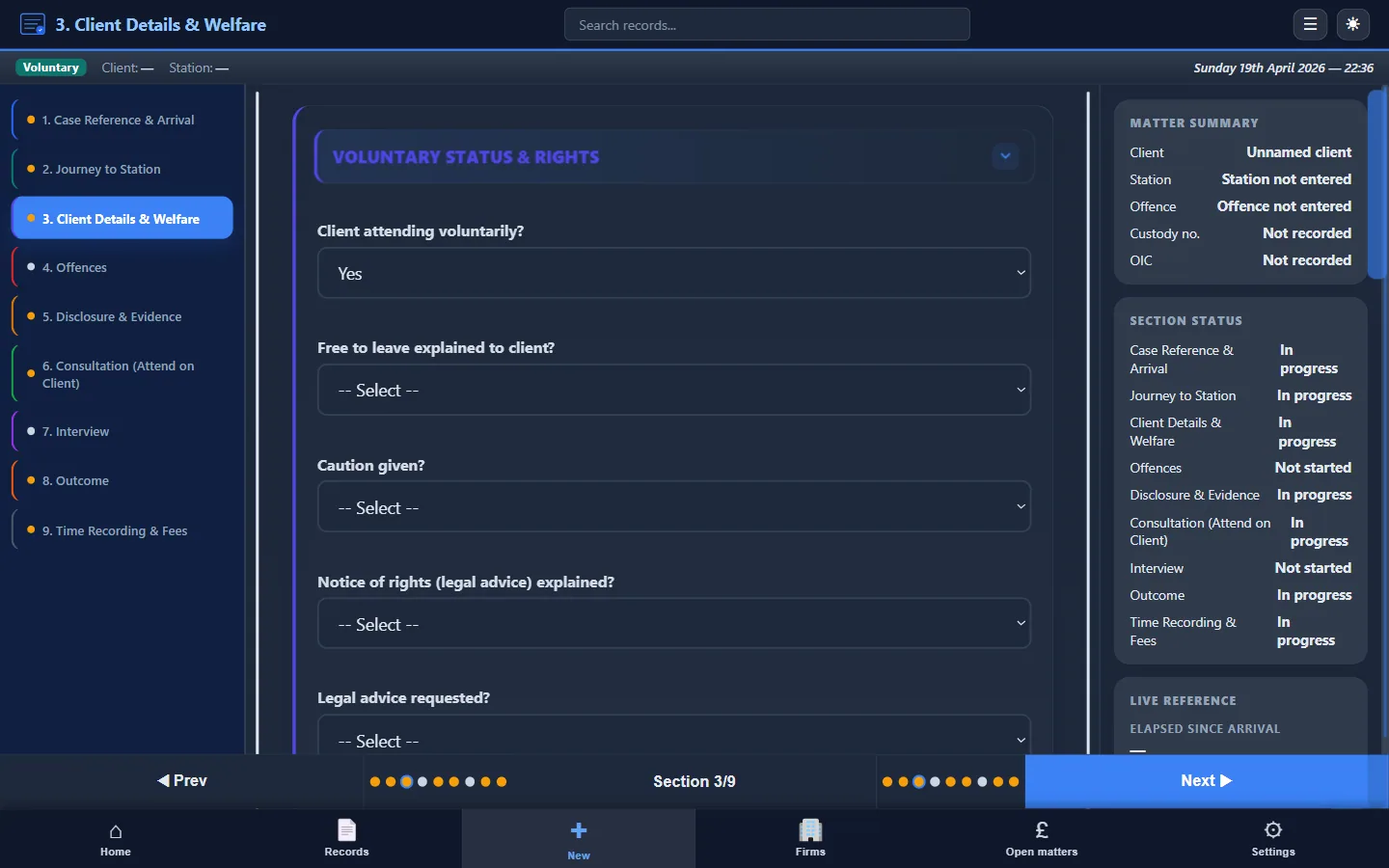
A voluntary interview, sometimes called a section 29 interview or a caution-plus-three interview, is a police interview conducted without arresting the suspect. The individual attends the police station (or another location) by arrangement rather than under compulsion. PACE Code C, paragraph 3.21, applies: the person must be told they are free to leave at any time and is entitled to free legal advice.
Voluntary interviews have become increasingly common in England and Wales. Forces use them to manage custody time limits, reduce the number of arrests, and deal with less serious alleged offences without the procedural overhead of detention. For practitioners, the key difference is that there's no custody record, no detention clock, and no formal review by an inspector. The client walks in and can walk out.
How a voluntary interview differs from a custody attendance
In a custody attendance, the solicitor or representative is working within the framework of the custody record: the client has been booked in, rights have been given, a detention clock is running, and the inspector will conduct reviews. The attendance note mirrors that structure. In a voluntary interview, much of this framework is absent. There's no booking-in process to record, no detention clock to note, and no inspector reviews.
However, the core elements of the attendance note remain the same: the instruction, the initial consultation, the disclosure obtained, the advice given, a record of the interview itself, any further consultation, and the outcome. The attendance note for a voluntary interview should still demonstrate that you provided competent, timely advice and that the client understood their rights, including the right to leave.
What to record: step by step
1. The instruction
Record how and when you received the instruction. Was it a direct request from the client, a referral from the duty solicitor scheme, or an instruction from your firm? Note the date and time you were contacted, the client's name, the alleged offence or reason for the interview, and the police station or location.
2. Pre-interview consultation
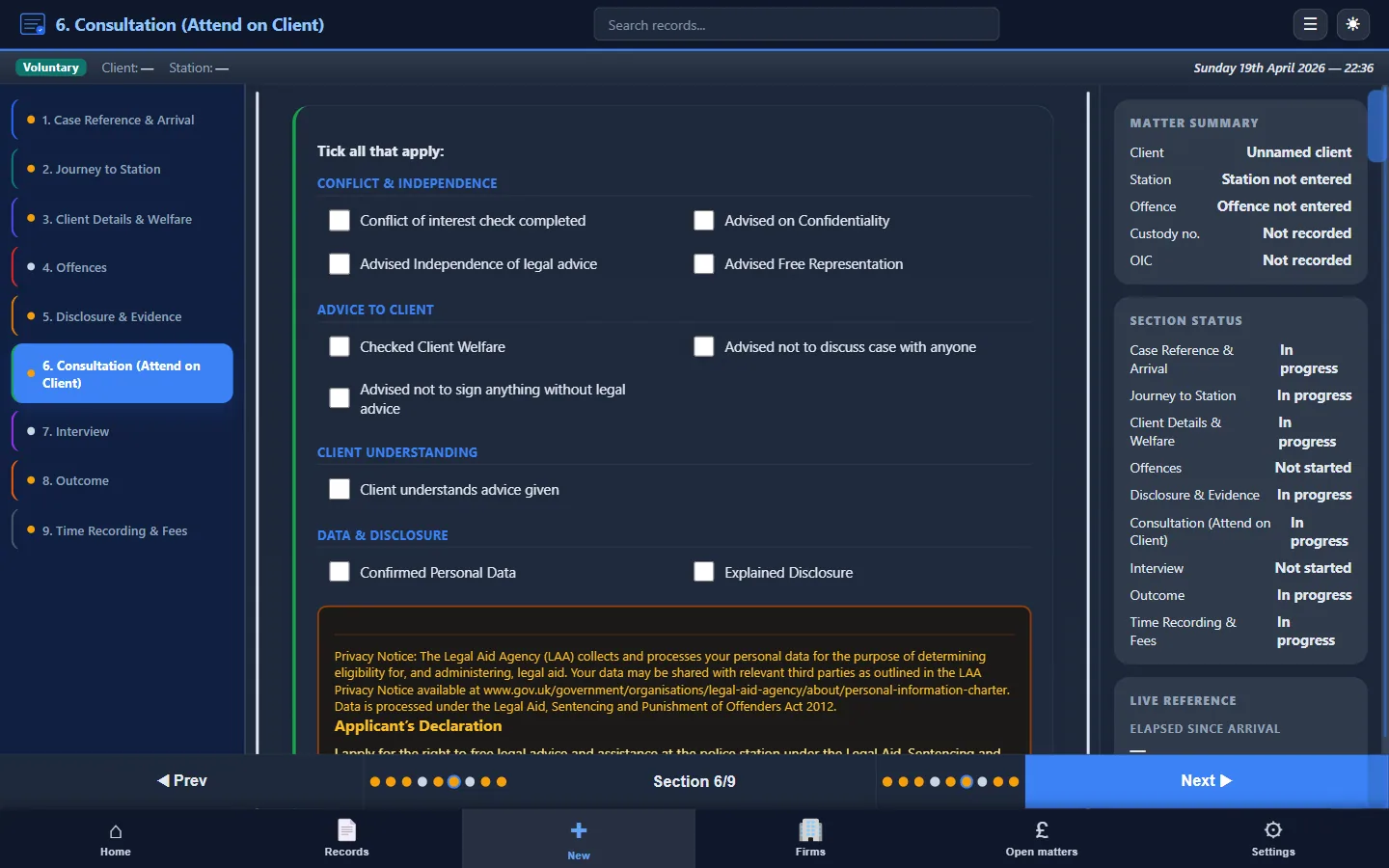
Before the interview, you should have a private consultation with your client. Record:
- The time the consultation started and ended
- The client's account of events
- Any relevant personal circumstances (vulnerabilities, language needs, mental health)
- The advice you gave about the interview process, the right to silence, and the caution
- Whether the client understood the advice and agreed to the proposed approach
- The fact that you explained the client is free to leave at any time
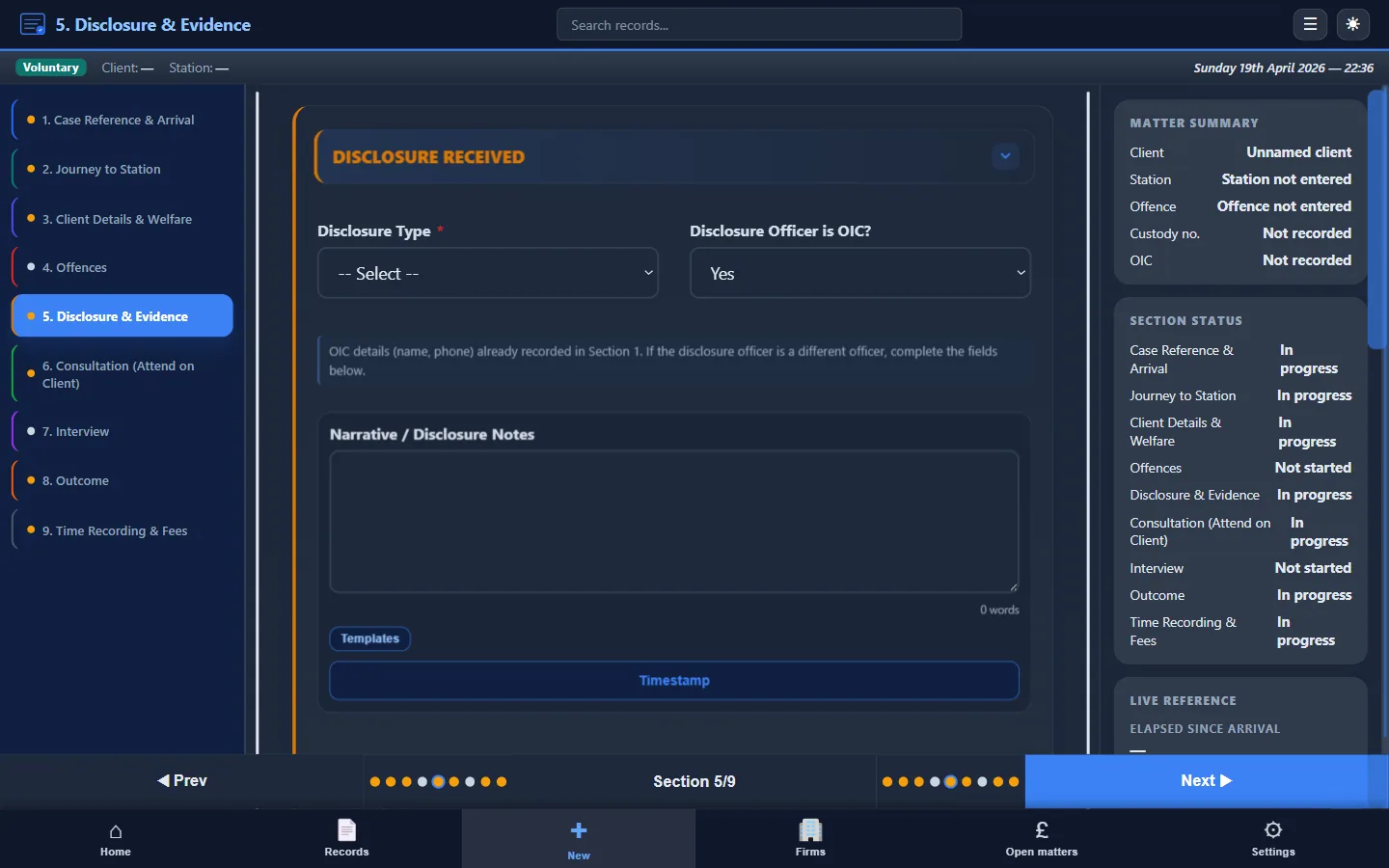
3. Disclosure
Note what disclosure the police provided before the interview. In voluntary interviews, disclosure is often minimal, but whatever was offered (or refused) should be recorded. If the police provided no advance disclosure, record that fact explicitly. If they gave a written summary, note its contents. This section is important both for the quality of your advice and for any subsequent argument about the fairness of the process.
4. The interview record
During the interview, record the start and end times, the officers present, the caution given, and a contemporaneous note of questions asked and answers given (or "no comment" responses). If the interview is audio or video recorded, note that fact. If it isn't recorded, your contemporaneous note becomes the primary evidence of what happened.
Note any interventions you made, any breaks requested, any objections to questions, and any issues with the conduct of the interview. If your client became distressed or unwell, record how you responded and whether the interview was paused.
5. Post-interview consultation and advice
After the interview, record any further consultation with the client. What was the outcome communicated by the police? Was the client released under investigation, given a caution, charged, or told no further action would be taken? Record the advice you gave about next steps, any bail conditions or reporting requirements, and the time the matter concluded.
6. Time recording
For legal aid billing, the attendance note must record time accurately. Note the time you were contacted, the time you arrived (or began work remotely), the duration of each consultation and the interview, and the time the matter concluded. Waiting time should be recorded separately. Accurate time recording is essential for claims submitted through CCMS and for internal file management.
Common mistakes in voluntary interview notes
- Treating it as less important than a custody note. The attendance note for a voluntary interview must be just as thorough. The absence of a custody record means your note is often the only record of the instruction, advice, and outcome.
- Failing to record that the client was told they could leave. This is fundamental to the voluntary nature of the interview. If it's not in your note, there's no evidence you covered it.
- Omitting disclosure details. Even if the police gave no disclosure, record that fact. A blank space is ambiguous.
- Incomplete time recording. Voluntary interviews often involve less waiting time than custody attendances, but the time spent must still be accurate. Rounding or estimating undermines billing accuracy and can invite challenge.
- No record of the outcome. The note should state what happened at the end: released under investigation, no further action, charge, or caution. Without this, the note is incomplete.
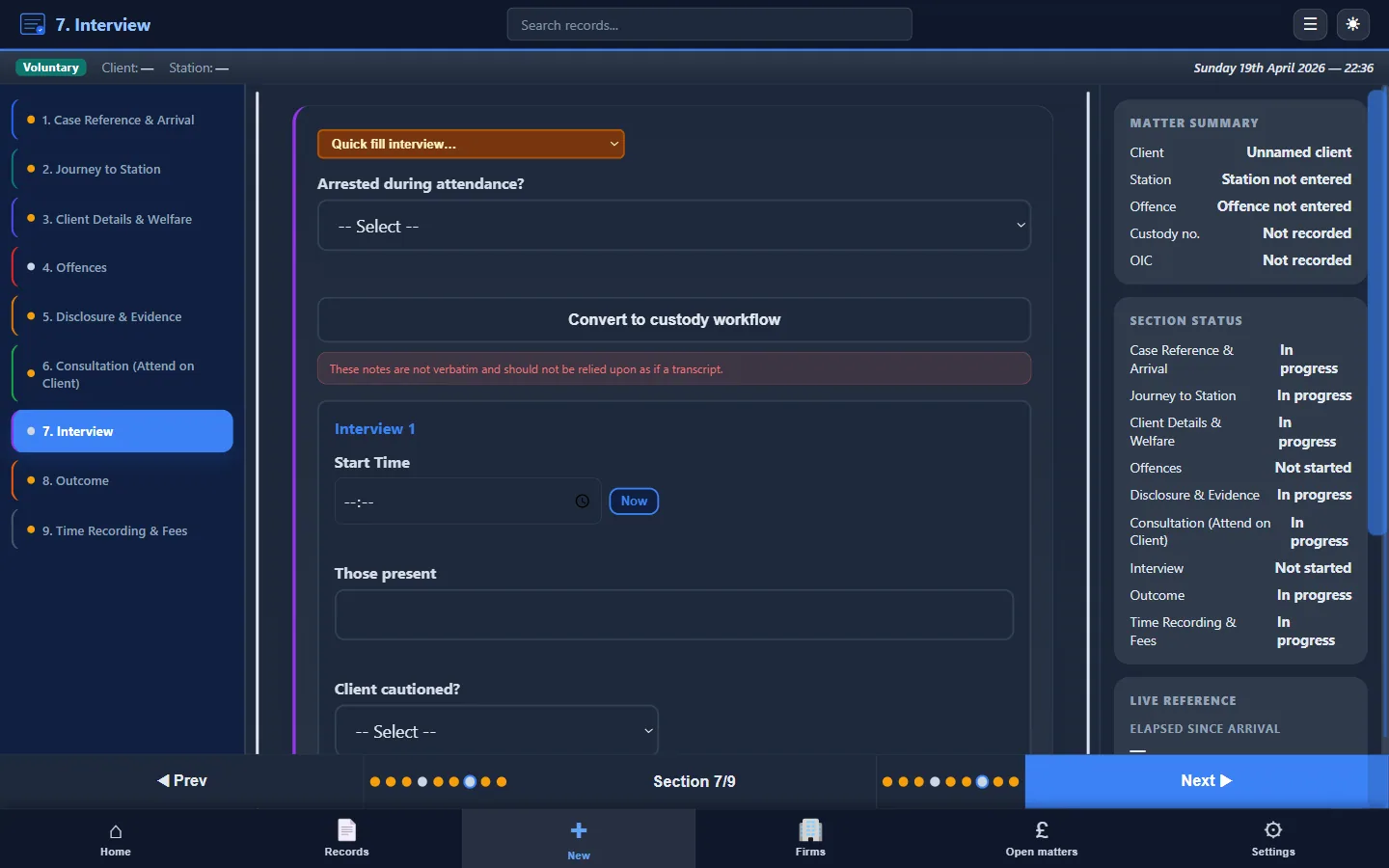
Voluntary interview attendance note checklist
- Date, time, and location of the interview
- Client name, date of birth, and contact details
- How the instruction was received
- Alleged offence or reason for the interview
- Pre-interview consultation: time, duration, client's account, advice given
- Confirmation that the client was told they are free to leave
- Disclosure: what was provided or refused
- Interview record: times, officers, caution, questions and answers, interventions
- Post-interview consultation and advice on next steps
- Outcome: released under investigation, NFA, charge, caution, or other
- Time recording: arrival, consultation, interview, waiting, departure
- Any follow-up actions agreed
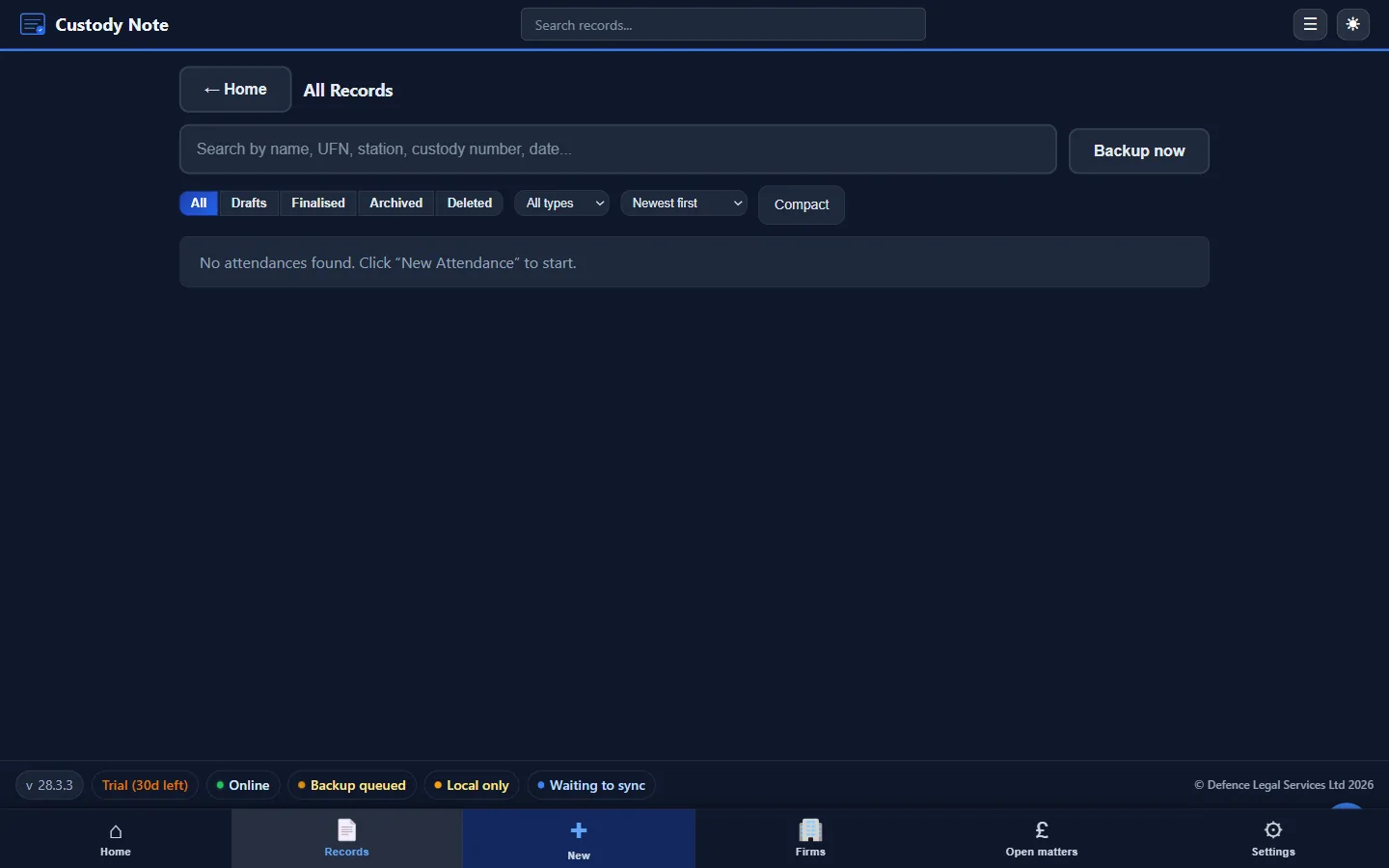
How Custody Note helps with voluntary interview notes
Custody Note provides a structured template that guides you through each section of the attendance note. Rather than relying on memory or a blank Word document, each field prompts you to record the information that supervisors, billing teams, and peer reviewers expect to see. The software works offline (useful at police stations with poor connectivity) and stores your notes with AES-256 encryption.
When the attendance is complete, you can export a formatted PDF for your firm's file. Time recording fields are built in, reducing the gap between what happened and what reaches the billing system. For practitioners who handle both custody and voluntary attendances, Custody Note provides a consistent workflow for both.
Download free or download Custody Note for Windows.
Frequently asked questions
Is the client entitled to legal advice during a voluntary interview?
Yes. PACE Code C confirms that a person attending a voluntary interview is entitled to free and independent legal advice, just as a detained person would be. The right applies before and during the interview.
Can the client leave during the interview?
Yes. Because the client hasn't been arrested, they are free to leave at any time. If the police prevent them from leaving, the interview may become a de facto arrest, and the protections of PACE detention apply. Your attendance note should record that the client was informed of their right to leave.
Is a voluntary interview claimable under legal aid?
Voluntary interview attendances can be claimed under legal aid where the relevant criteria are met. The attendance note must record the work done, the time spent, and the outcome, in the same manner as a custody attendance. Check current LAA guidance for claim codes and any specific requirements, as these can change.
Do I need to record the same level of detail as a custody attendance?
Yes. The absence of a custody record makes your attendance note the primary evidence of the work done. Supervisors, peer reviewers, and the LAA expect the same standard of record-keeping regardless of whether the client was detained or attended voluntarily.
What if the voluntary interview turns into an arrest?
If the police arrest the client during or after the voluntary interview, your attendance note should record the point at which the arrest occurred, the reason given, and the transition to the custody process. The note then continues as a custody attendance note from that point forward.
For broader guidance, see Police Station Attendance Notes (UK Guide) and How to Write Attendance Notes. For a template made for voluntary interviews, see Custody Note for Voluntary Interviews.