The 5 Minutes After the Interview That Most Reps Waste
The interview is over. The tapes are off. The client is taken back to the cell while the officers decide what happens next. You have a window, five minutes, maybe ten, before the next thing demands your attention. What you do in that window defines the quality of your attendance note.
Most police station reps waste this time. They check their phone, chat to the custody officer, or simply wait. Experienced practitioners use it differently. They know that the five minutes immediately after the interview are the highest-value note-taking time in the entire attendance, and that everything they don't capture now will be harder, less accurate, or impossible to reconstruct later.
The critical window
Memory fades fast. In my experience, you lose the most detail in the first hour after an interview. For a police station interview, which may have lasted thirty minutes to two hours, covering multiple topics under pressure, the degradation is even faster. Specific questions, the order of topics, the client's exact words, the officer's demeanour, that moment where the client nearly answered before you intervened, all of these fade within minutes.
If you wait until you're in the car, you'll lose detail. If you wait until you're back at the office, you'll lose more. If you wait until the next day, as many reps do, you'll be writing fiction dressed up as a contemporaneous record.
What to capture immediately
You don't need to write a polished narrative in five minutes. You need to capture the raw data that will make the narrative accurate when you write it up properly. Focus on:
- Interview duration: exact start time, end time, and any breaks. Check these against the clock or your phone. Don't rely on memory for times; write them down within sixty seconds of the interview ending.
- Topics covered: a bullet-point list of the main areas the interviewing officer explored, in order. You don't need verbatim questions yet, just enough to reconstruct the flow.
- Client's responses: did they go no comment? Give a prepared statement? Answer some questions and not others? Note any answers that surprised you or deviated from the agreed strategy.
- Key moments: any point where you intervened, any question you objected to, any disclosure given mid-interview, any change in the client's demeanour or willingness to engage.
- Concerns: anything that felt wrong: an improperly cautioned interview, a vulnerable client without an appropriate adult, oppressive questioning, or a failure to provide adequate disclosure before the interview.
- Your advice post-interview: what you told the client after the interview, particularly if the situation changed (e.g., additional evidence was disclosed, or a second interview was proposed).
For a full guide to recording interview content, see Police Station Interview Notes.
The mistake most reps make
The most common approach, and the most damaging, is to leave the attendance note until after the attendance is over. The rep finishes at the station, drives home or back to the office, and then sits down to “write it up.” By this point, hours have passed. The note becomes a summary of what the rep remembers, not a record of what actually happened.
Some practitioners write notes in the car. This is better than waiting until the next day, but it's still a reconstruction rather than a contemporaneous record. The car-park note typically lacks times, skips the consultation section, and compresses the interview into a few sentences.
The worst version of this mistake is the rep who writes nothing at the station, nothing in the car, and then creates a note two or three days later for the file. At that point, the note is unreliable, and if it is ever tested in court or at audit, its credibility is minimal.
For more on what goes wrong and why, see Common Mistakes in Attendance Notes.
How experienced practitioners use those five minutes
Watch an experienced duty solicitor after an interview and you'll notice a pattern. While the client is being taken back to the cell, the solicitor is already writing. Not a full narrative, just structured data capture:
- Open the interview section of their attendance note (whether paper, Word, or software)
- Record the start time, end time, and any break times from their handwritten jottings or phone
- List the interview topics in order, one line each
- Note the client's overall approach (no comment / prepared statement / answered questions) and any deviations
- Flag any PACE concerns while the memory is fresh
- Record their post-interview advice to the client
This takes three to five minutes. It doesn't produce a finished attendance note, but it produces an accurate skeleton that can be fleshed out later. The critical data, times, topics, approach, concerns, is locked in.
Impact on billing
Your attendance note is the primary evidence for your billing claim. The LAA assesses police station claims against the time breakdown and the work described in the note. If the interview lasted 90 minutes but your note says “interview conducted, no comment throughout” with no further detail, the assessor may query the time claimed.
A detailed interview section (topics covered, representations made, interventions, post-interview advice) supports the time recorded. It shows the assessor that the time was spent on substantive work, not passive attendance. That's particularly important for escape fee claims where every minute of recorded time contributes to the threshold calculation.
For the full picture on billing and attendance notes, see How to Write Attendance Notes.
Impact on the case
If the matter proceeds to trial, months or years later, your attendance note may be the only detailed record of what happened during the police station interview. The interview recording exists, but your note captures context the recording can't: what disclosure was given before the interview, what advice you gave in the private consultation, why a particular strategy was adopted, and what your professional assessment was at the time.
Defence counsel preparing for trial will rely on your note. If it's thin, they have less to work with. If it records concerns about interview conduct that were noted contemporaneously, those concerns carry far more weight than observations made months later.
How Custody Note helps
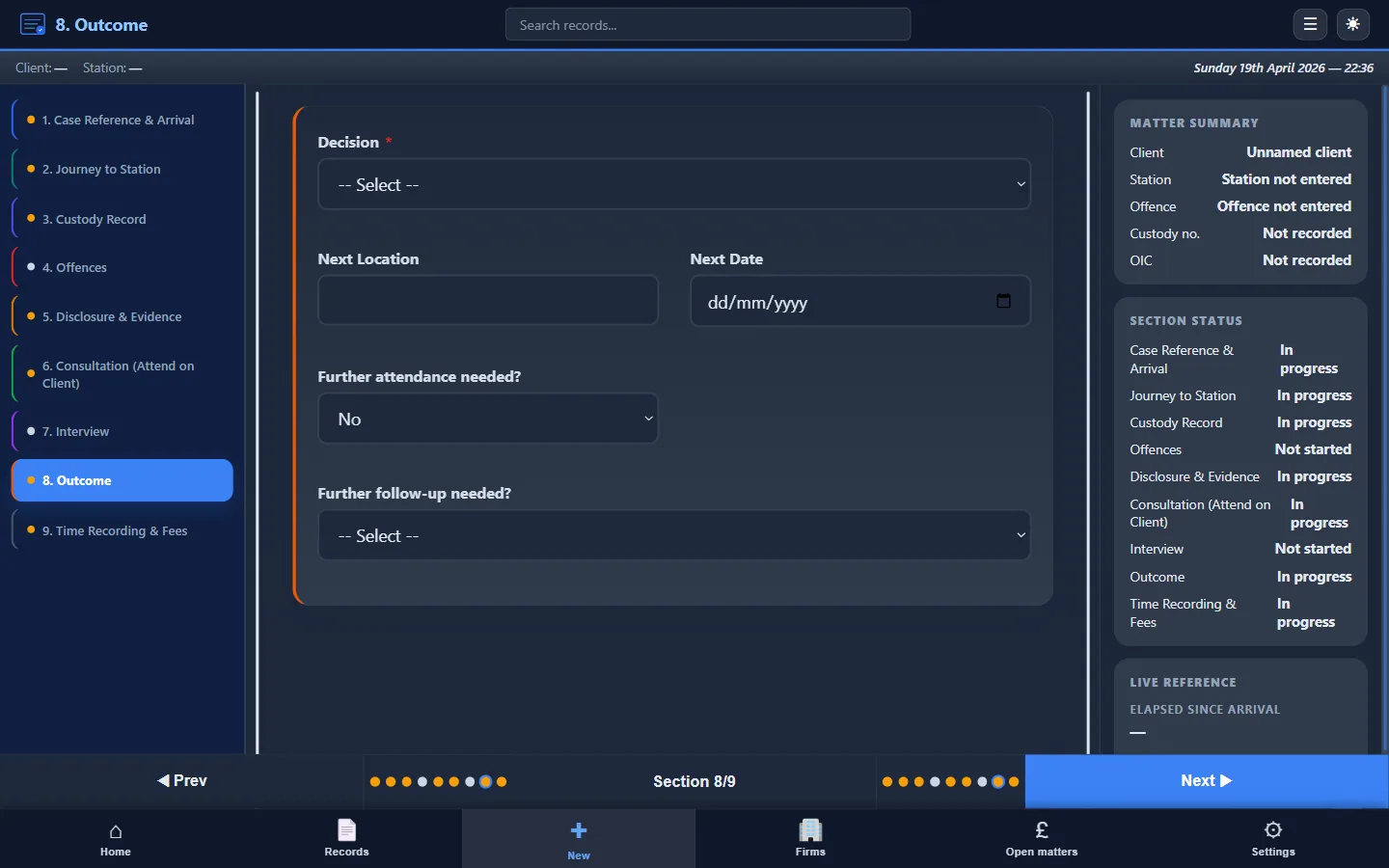
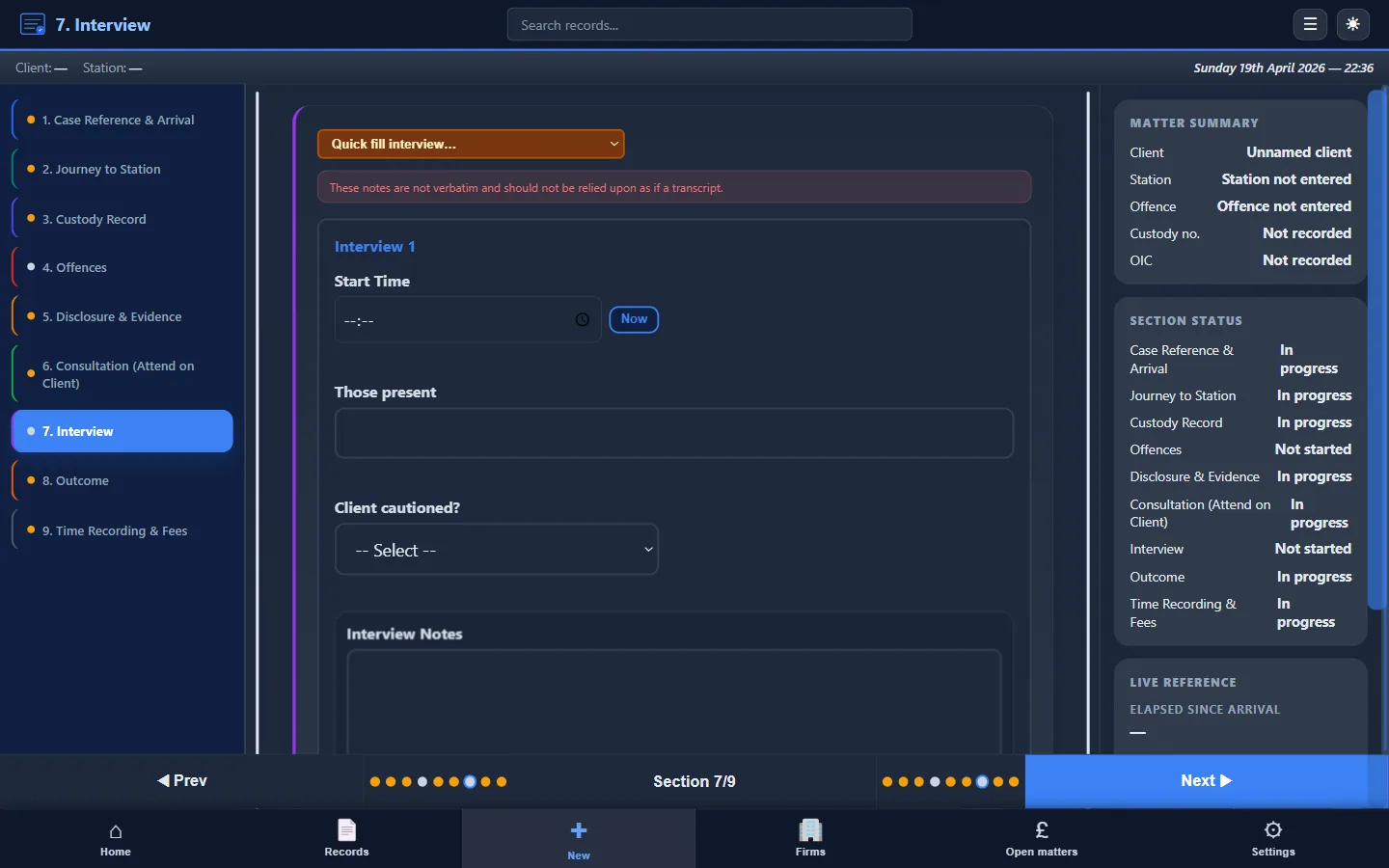
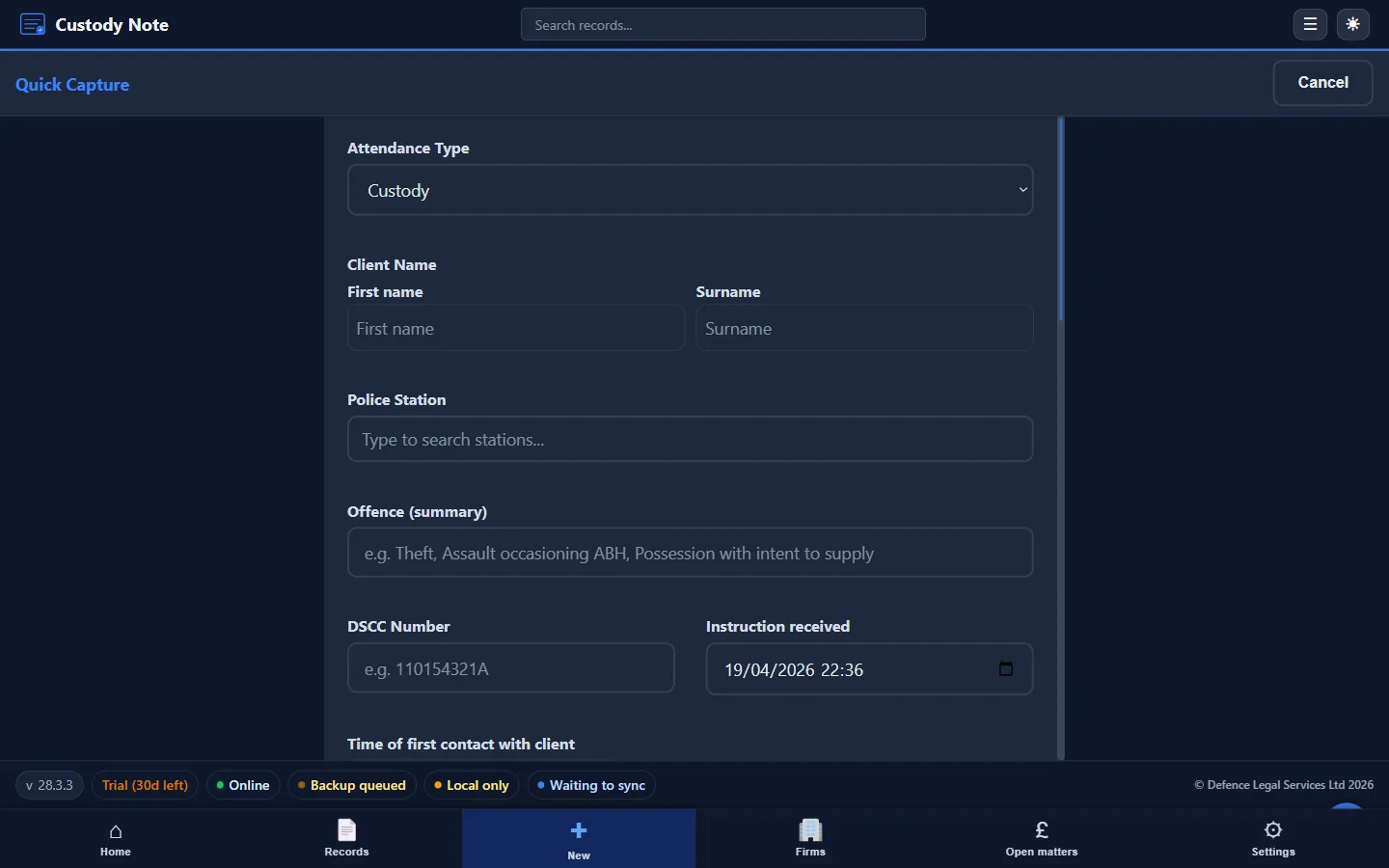
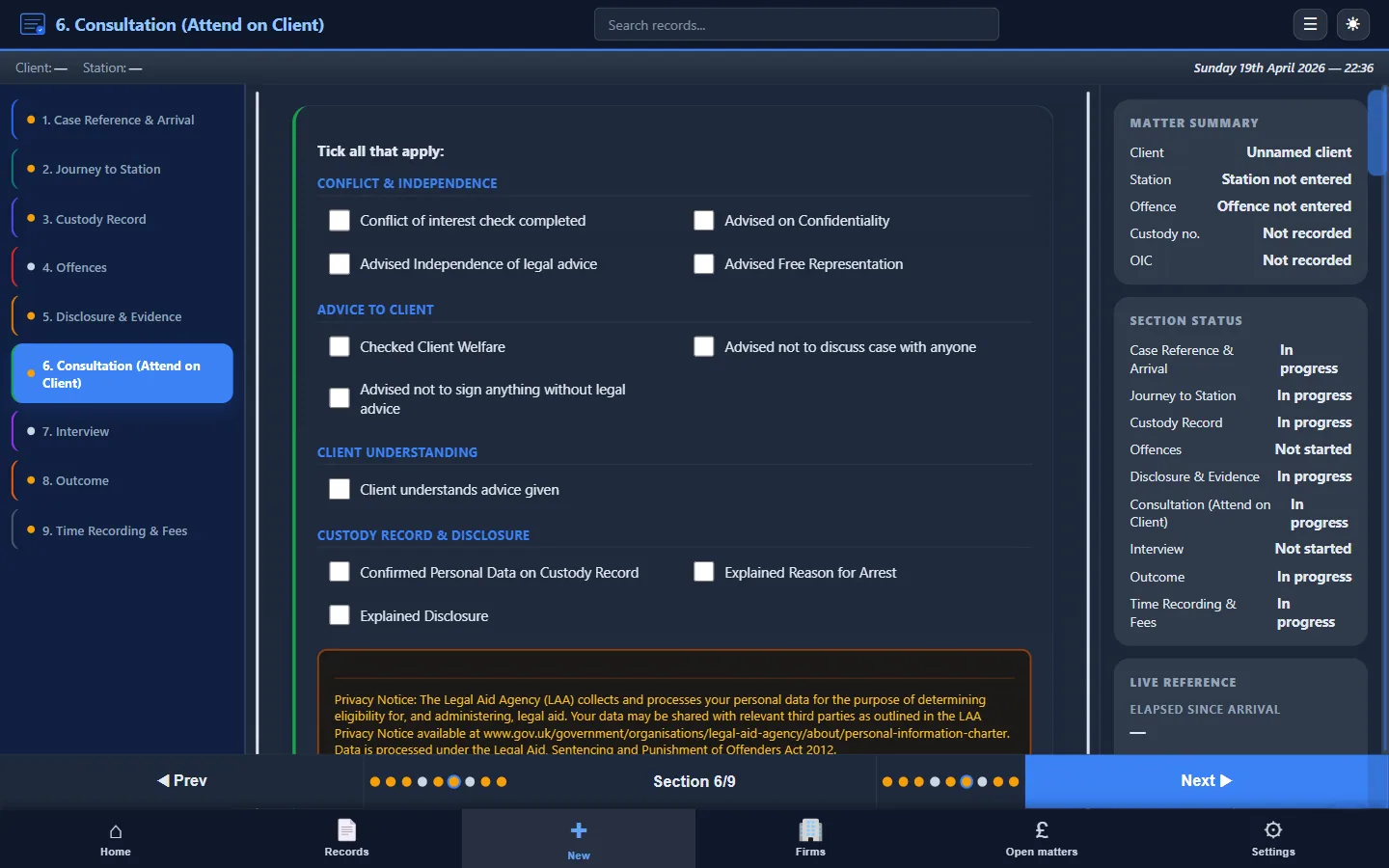
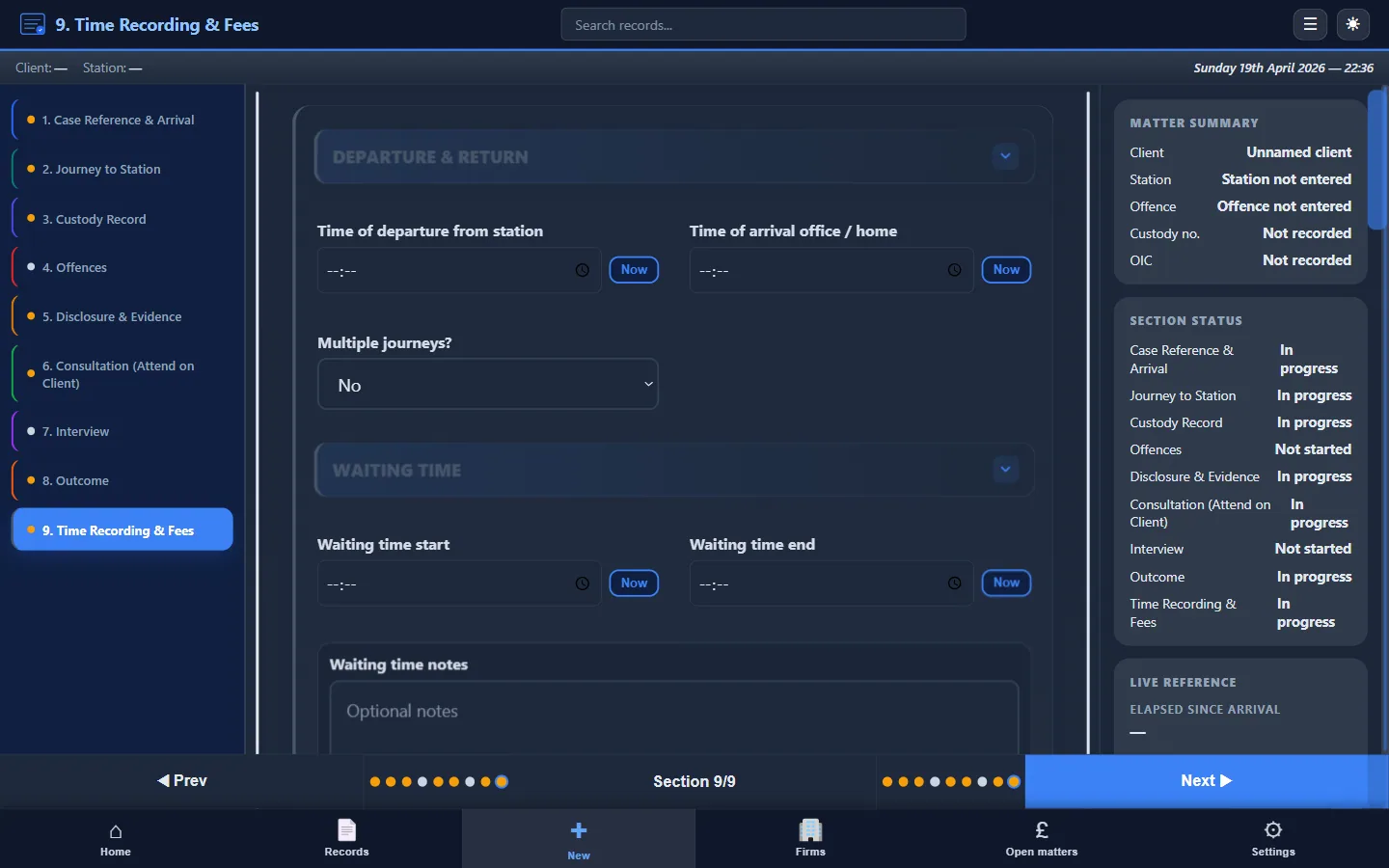
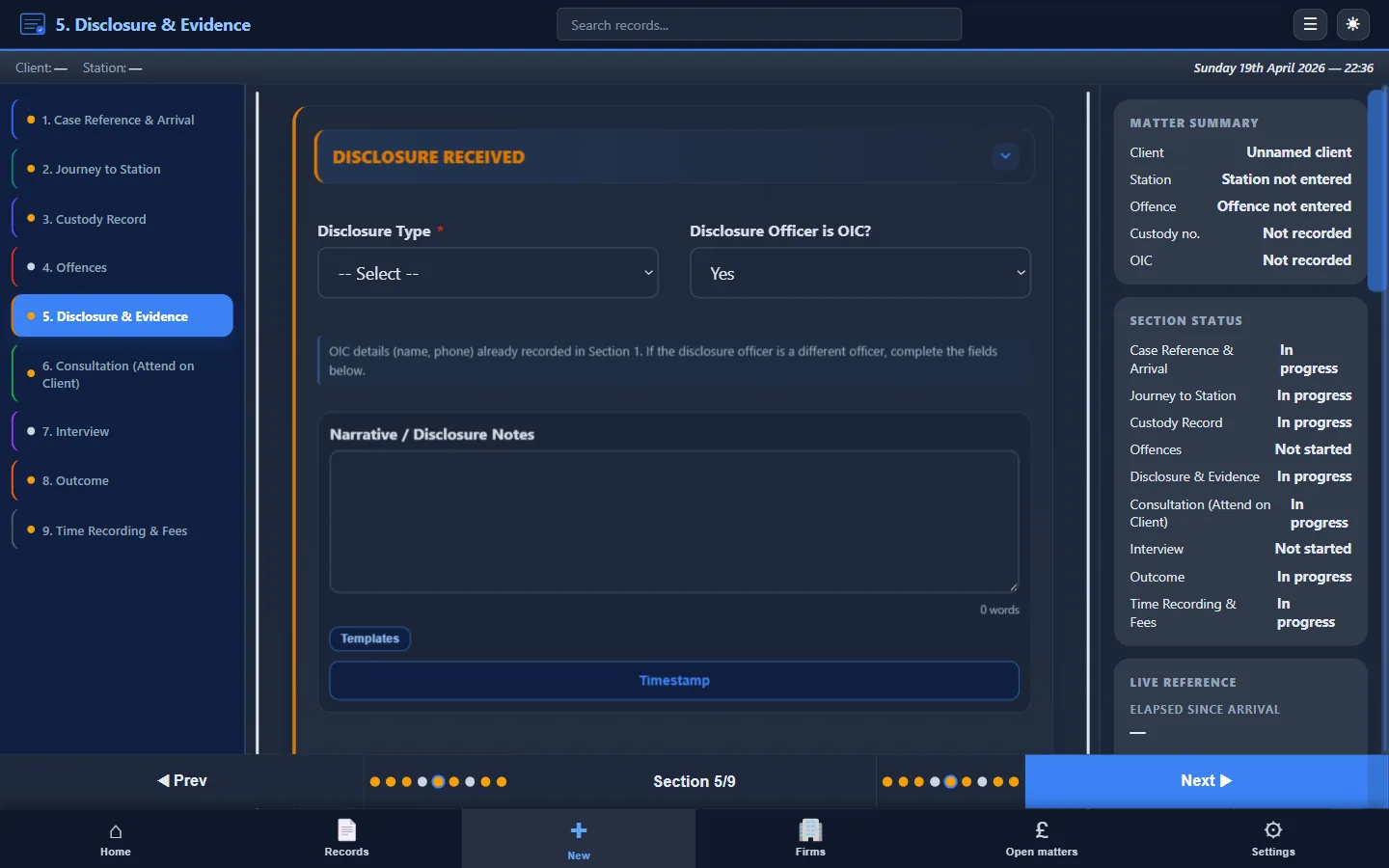
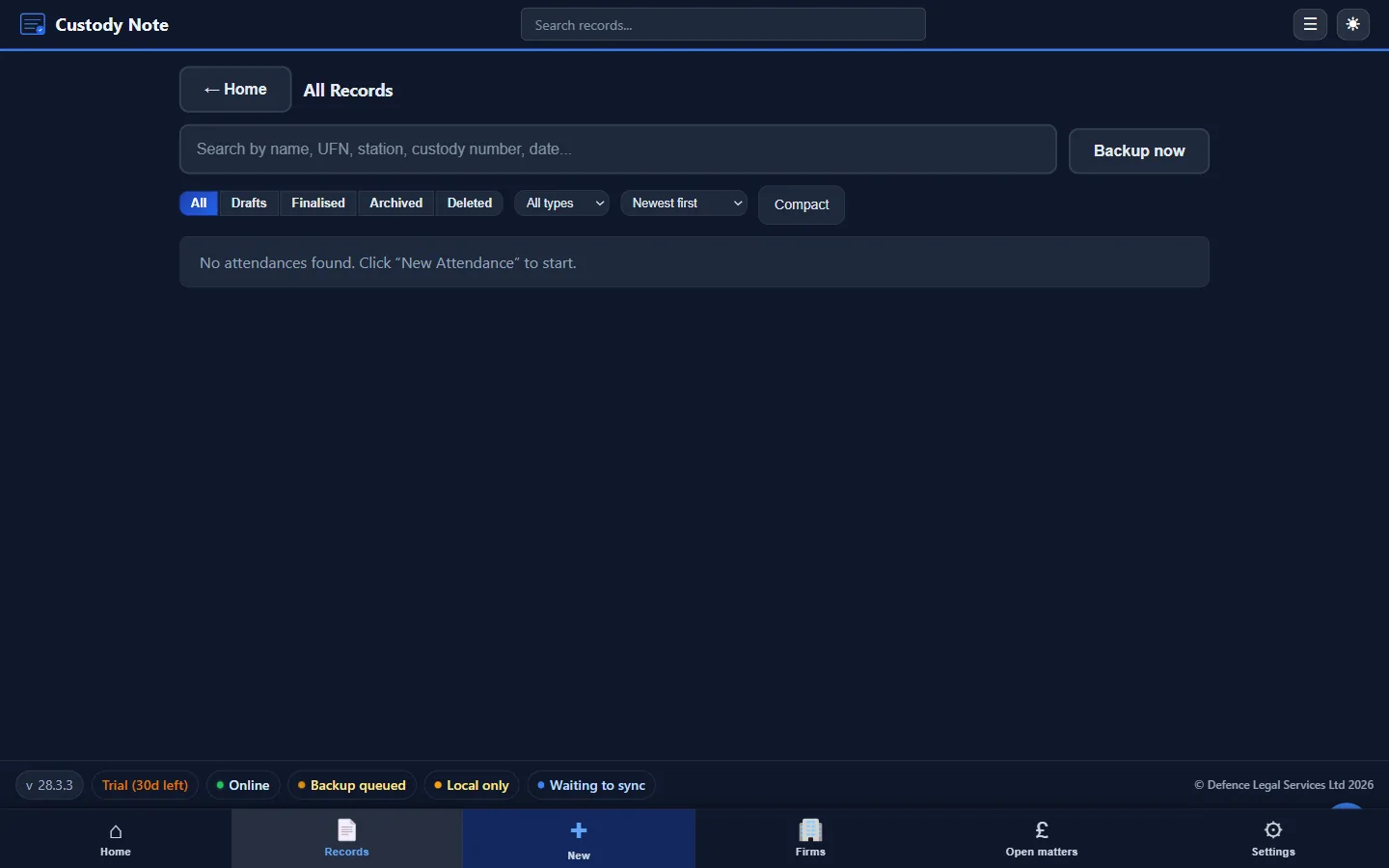
Custody Note follows exactly this workflow. The interview section is its own part of the attendance note, meant to be filled in at the station straight after each part of the interview. It prompts for start and end times, topics covered, the client's approach, any interventions, and post-interview advice: the same data experienced practitioners capture manually, but in a structured format that ensures nothing is missed.
Because Custody Note runs offline on your laptop, there's no dependency on Wi-Fi or mobile signal. You can complete the interview section while sitting outside the interview room, export to PDF when you're done, and file the note as soon as you have signal.
Summary
The five minutes after a police station interview are the most valuable note-taking time in the entire attendance. Use them to capture times, topics, the client's approach, and any concerns, in whatever format you have available. Don't wait until the car. Don't wait until the office. The detail you lose in those first minutes is the detail you'll need most at trial, at audit and on file review.
Capture interview details before they fade
Custody Note's structured interview section prompts you for the times, topics, approach and any concerns while you're still at the station. Free during beta.
Download freeRelated articles from the blog
Police Interviews
No Comment Interviews: What Your Notes Must ShowPolice Interviews
Do You Always Need a Solicitor in Interview?App Features
Custody Note for Windows is on the Microsoft Store (UK)