No Comment Interviews: What Your Notes Must Show
Advising a client to go no comment is one thing. Recording it properly is another. Your attendance note must show the advice given, the reasoning, and what happened during the interview.
The decision to advise a no comment interview is among the most consequential a criminal defence solicitor makes at the police station. If the case proceeds to trial, the prosecution may invite the court to draw adverse inferences under section 34 of the Criminal Justice and Public Order Act 1994. The defence will need to explain why the client didn't mention facts later relied upon, and the attendance note is the primary contemporaneous evidence of that advice.
Yet many attendance notes record no comment interviews in a single line: “interview conducted, client went no comment.” That isn't enough. Below is what your note needs when you advise no comment, why each part is there, and the recording mistakes that put cases at risk.
When no comment is appropriate
No comment isn't a default strategy. It's a professional decision based on the circumstances of the case, the disclosure provided, and the client's instructions. The main situations in which a no comment interview may be appropriate include:
- Inadequate disclosure: the police haven't provided sufficient information about the evidence or the case for the solicitor to give informed advice. Without knowing what the prosecution case is, it may be impossible to advise the client safely on which facts to mention.
- Complex or serious allegations: where the case involves multiple counts, co-defendants, or serious charges, and the client needs time to consider the evidence before committing to an account.
- Client vulnerability: where the client's mental state, intoxication, fatigue, or other vulnerability means they can't give a reliable account in interview.
- Risk of self-incrimination on other matters: where answering questions about the alleged offence would expose the client to risk on separate matters.
- Client's instructions: the client may simply instruct that they wish to go no comment, in which case the solicitor should record the advice given, the client's decision, and whether a prepared statement was considered as an alternative.
For a full explanation of no comment interviews and their legal implications, see No Comment Interview: Glossary.
What your attendance note must record
A properly recorded no comment interview requires entries at three stages: before the interview, during the interview, and after the interview. Each stage serves a different purpose.
Before the interview: the advice
Your attendance note must record:
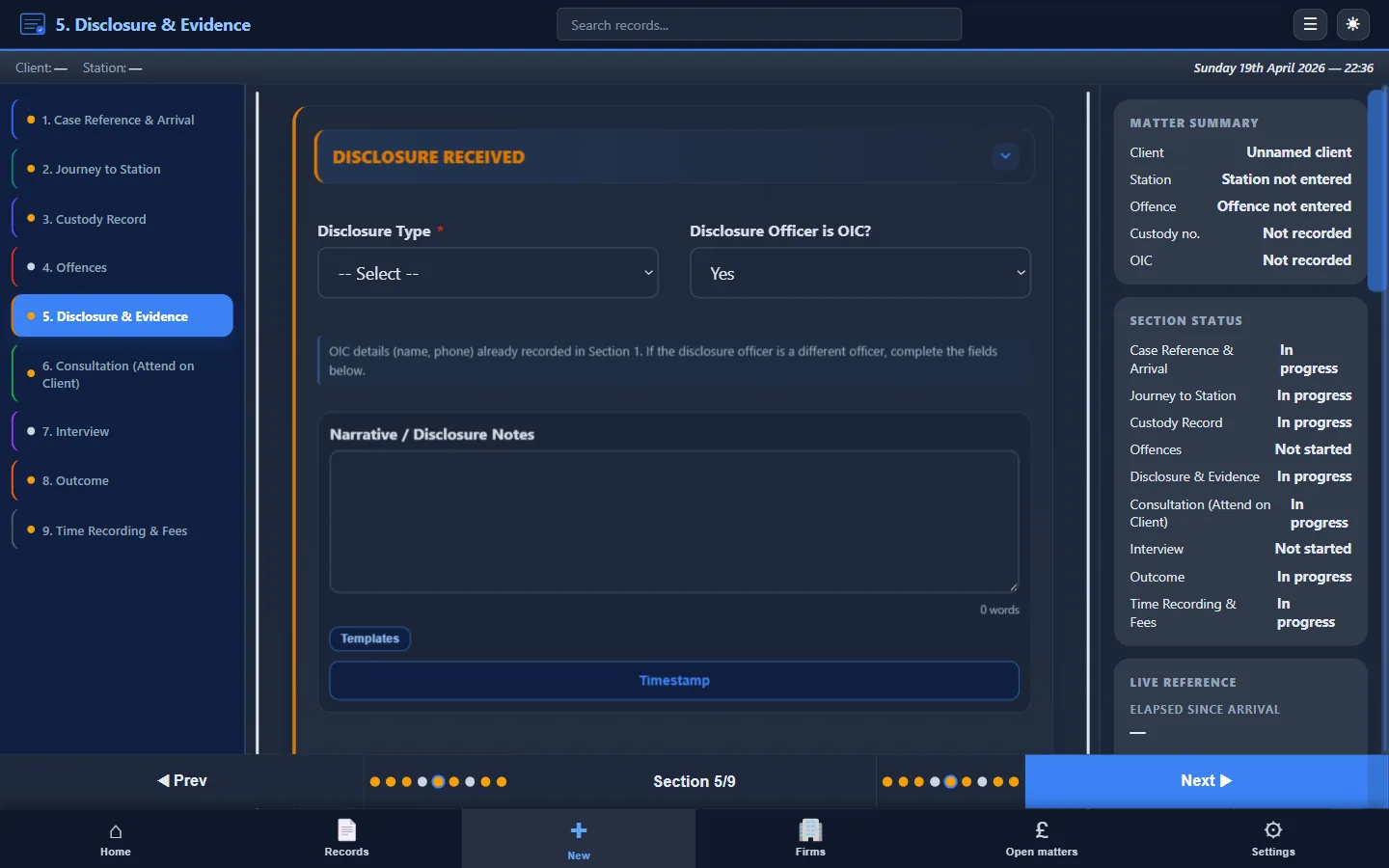
- The disclosure received from the police and your assessment of its adequacy (see our guide on police station interview notes)
- The advice you gave the client: specifically, that you advised no comment and the reasons for that advice
- Whether a prepared statement was considered and, if so, why it was or wasn't adopted
- The client's instructions in response: did they agree with the advice, or did they reach the no comment decision independently?
- Any explanation you gave to the client about the risk of adverse inferences under section 34 CJPOA 1994
- The time the consultation took place and its duration
This pre-interview record is the most important part of the note in a no comment case. If the matter goes to trial and adverse inferences are sought, the defence will need to show that the decision to go no comment was made on proper legal advice, that the solicitor had considered the implications, and that the client was informed of the risks.
During the interview: what happened
Even in a no comment interview, there's content to record:
- Start and end time of the interview (and any breaks)
- Who was present: interviewing officers, any appropriate adult, interpreter, or other third party
- Topics and questions: the areas the interviewing officer covered, even though the client didn't answer. This is important because it shows what the prosecution put to the suspect and what facts the client declined to address.
- Significant silences: any question where the client appeared to hesitate or consider answering before maintaining the no comment position
- Interventions: any point where you intervened as solicitor, whether to object to a question, request a break, or clarify a procedural point
- Officer conduct: any concerns about oppressive questioning, improper suggestions, or attempts to pressure the client into answering
- New disclosure during interview: if the officer disclosed new evidence during the interview (photographs, statements, forensic results), record what was shown and when
After the interview: the review
After a no comment interview, record:
- Any further consultation with the client: did you review the interview with them, discuss whether the strategy should change for a second interview, or consider a prepared statement at that stage?
- Any representations made to the custody officer or interviewing officer about the conduct of the interview or the adequacy of disclosure
- The outcome: charge, bail, NFA, or further detention for additional interviews
Adverse inferences: why your record is important
Section 34 of the Criminal Justice and Public Order Act 1994 allows the court to draw adverse inferences where the defendant fails to mention, when questioned under caution, any fact which they later rely on in their defence and which they could reasonably have been expected to mention at the time.
The key defence to an adverse inference application is that the defendant had good reason not to mention the fact at the time. Legal advice is one such reason, but the court will scrutinise whether the advice was genuine, whether it was based on proper assessment of the disclosure and the case, and whether the client was informed of the consequences.
Your attendance note is the evidence for all of this. A note that records the disclosure assessment, the reasoning behind the no comment advice, the client's understanding of the adverse inference risk, and the agreed strategy provides the court with a contemporaneous basis for accepting that the advice was properly given. A note that simply says “no comment interview” provides nothing.
For further guidance on what your attendance notes should contain, see How to Write Attendance Notes.
The attendance note protects the solicitor
No comment advice is sometimes challenged, by the client, by the court, or by a subsequent solicitor who argues that the advice was wrong. If the case goes badly at trial and adverse inferences contribute to a conviction, the client may blame the police station solicitor.
Your attendance note is your defence. If it records that disclosure was inadequate, that you advised no comment on proper grounds, that you explained the risks, and that the client agreed to the strategy, you have a contemporaneous record that demonstrates competent practice. If the note is silent on these points, you're relying on memory, which is neither reliable nor persuasive months or years after the event.
Common recording errors in no comment cases
- No record of the advice given: the note records the no comment interview but not the consultation that preceded it. This is the most damaging omission.
- No record of the reasoning: the note says “advised no comment” but not why. The reasoning, usually linked to inadequate disclosure, is the core of any adverse inference defence.
- No mention of prepared statements: if a prepared statement was considered and rejected, that should be recorded. If it wasn't considered at all, that may itself be a point of criticism.
- No record of questions asked: the note doesn't describe the topics covered during the interview. Without this, there is no record of what the client was asked and declined to answer.
- No adverse inference warning recorded: the note doesn't confirm that the client was advised about the risk of adverse inferences before going no comment.
How Custody Note helps
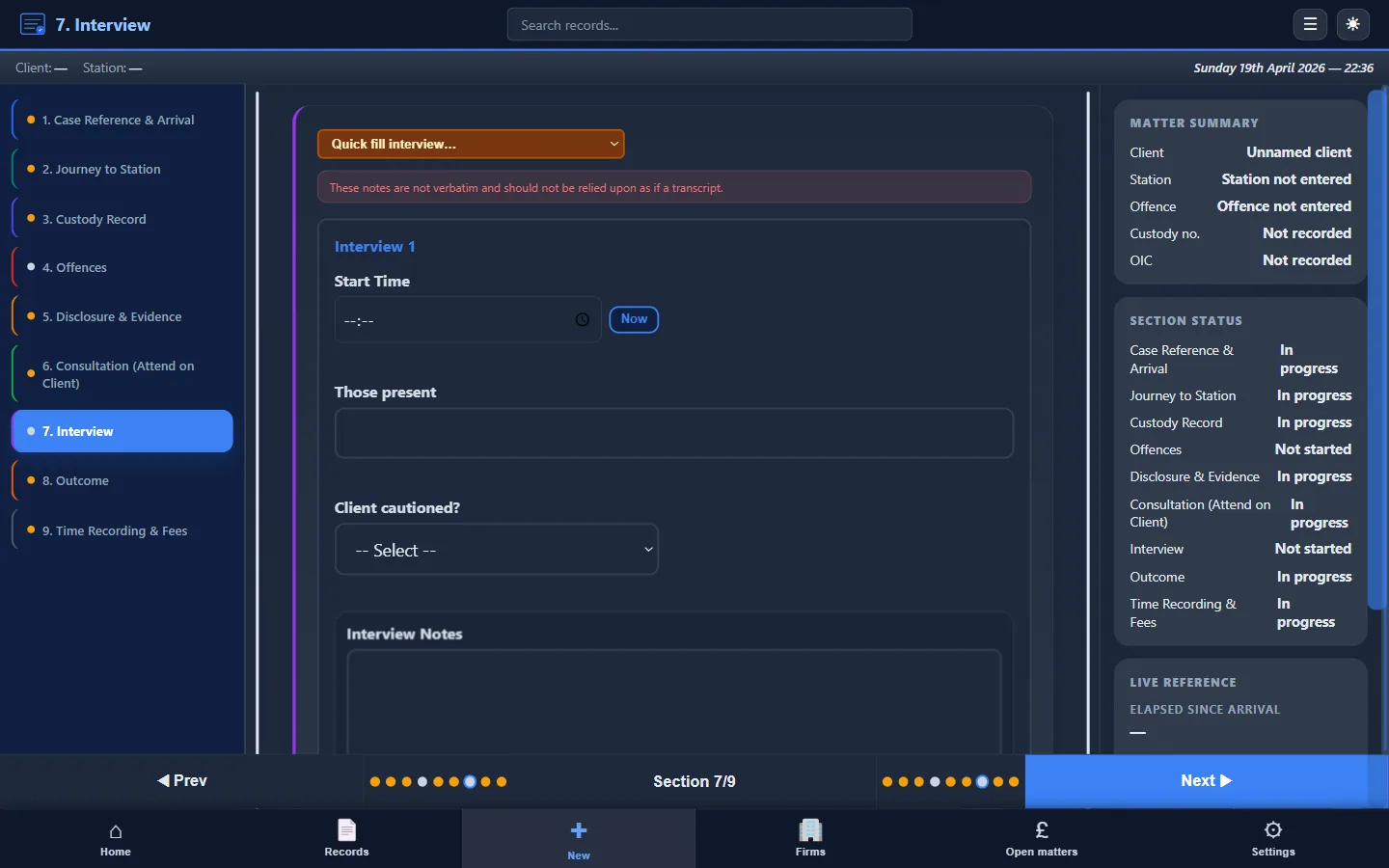
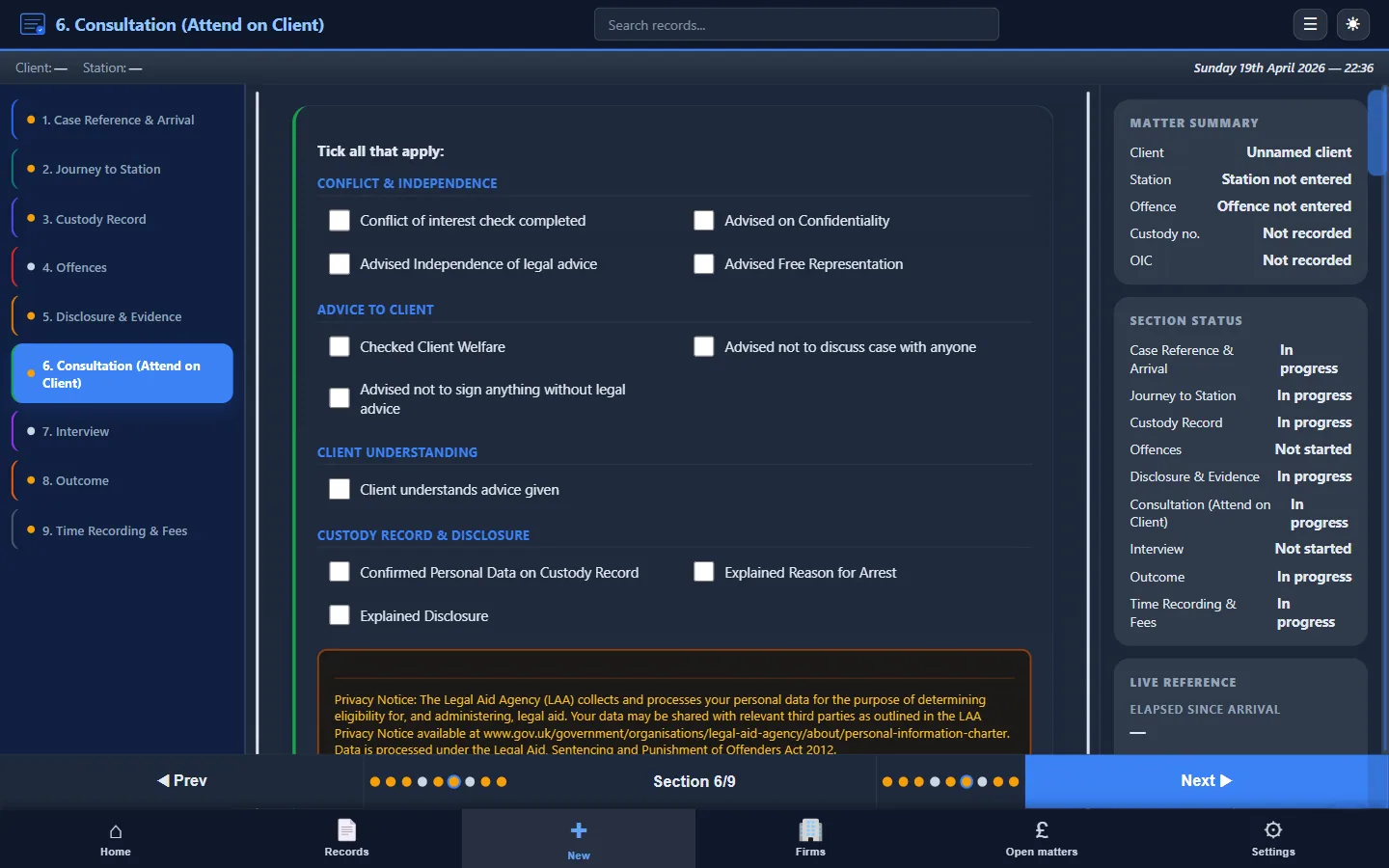
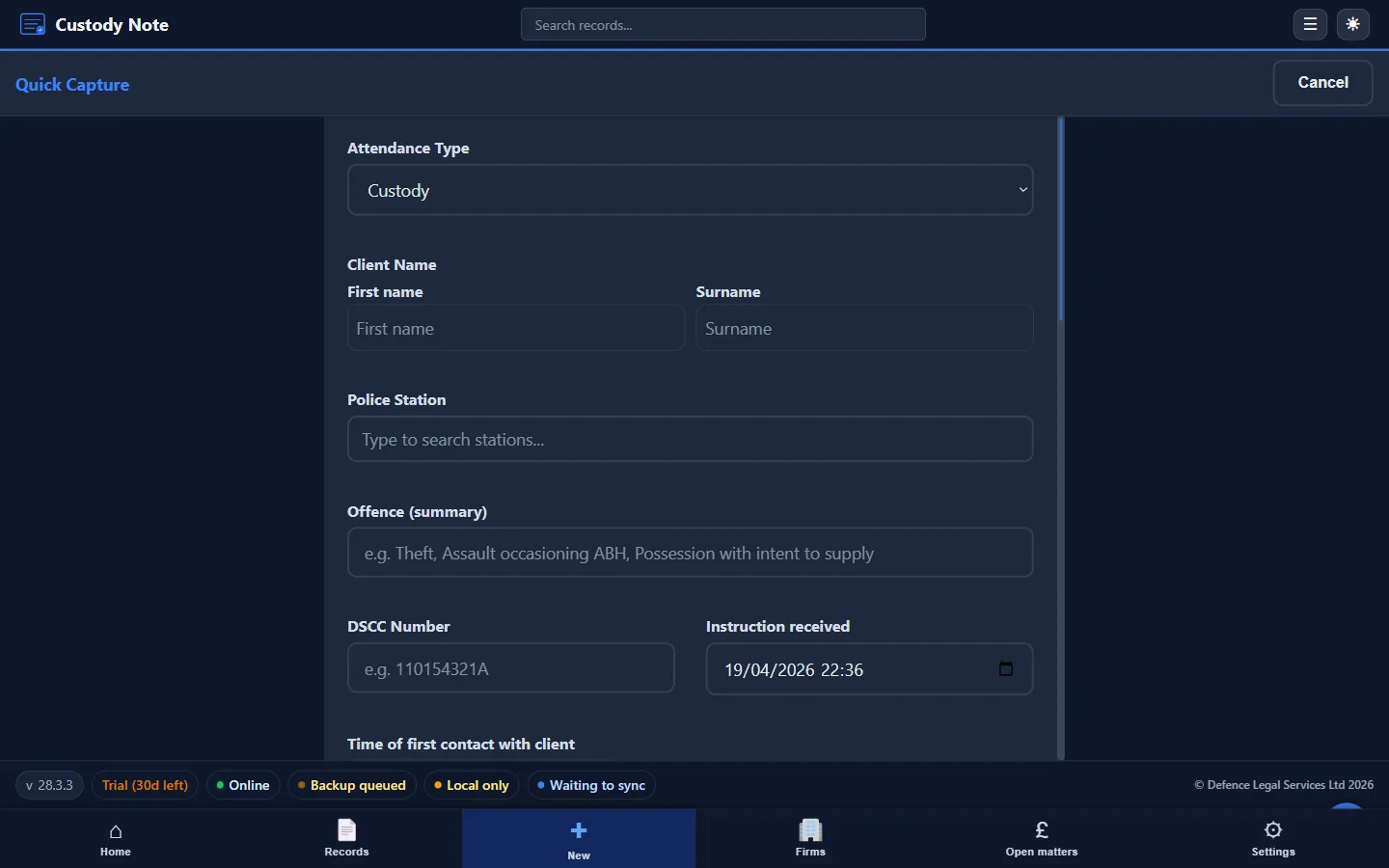
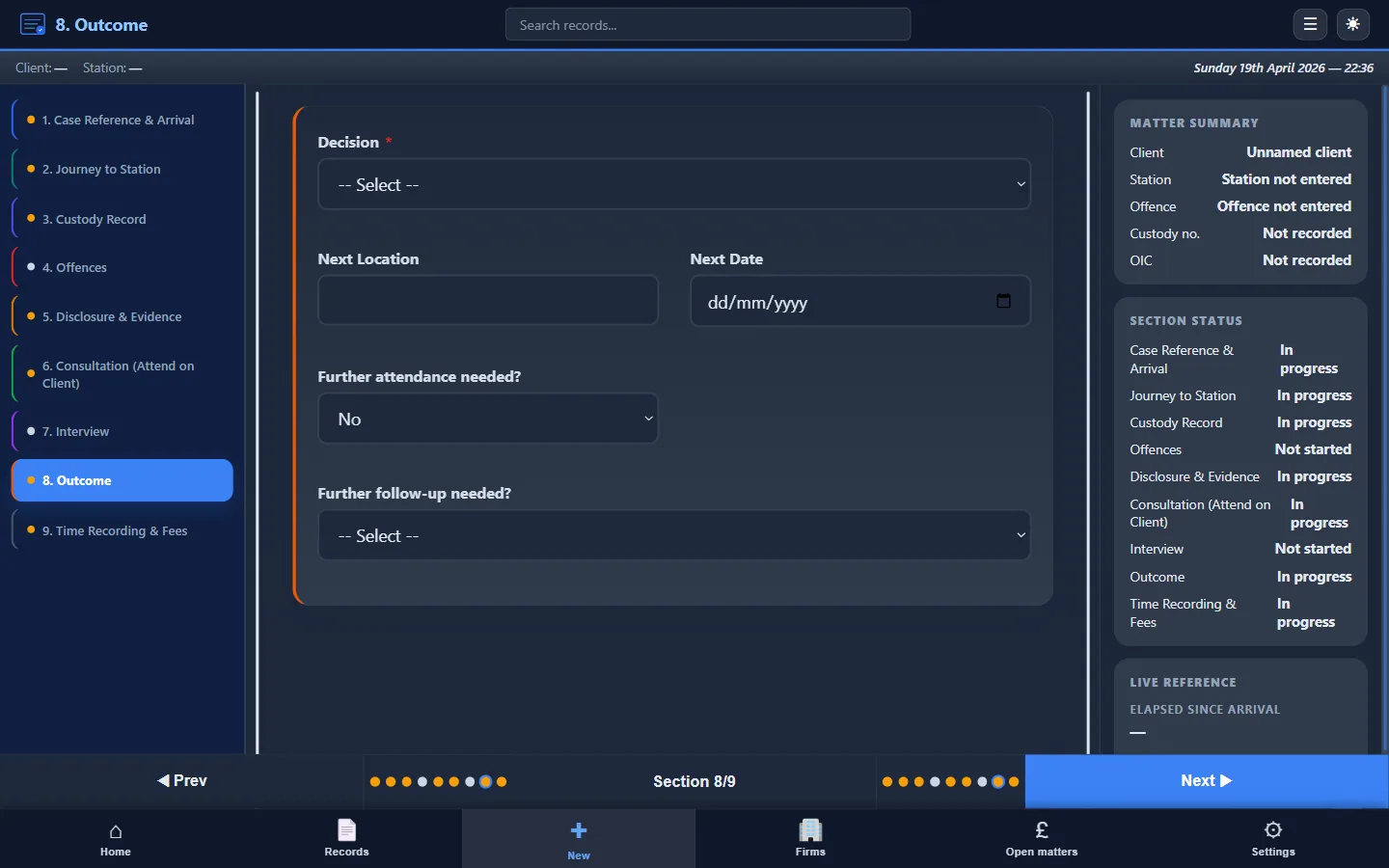
Custody Note's attendance note structure includes dedicated fields for pre-interview advice, the client's chosen strategy (no comment, prepared statement, or full account), and the reasoning behind the advice. The interview section captures topics, duration, persons present, and any interventions, even where the client gave no substantive answers. This ensures that the critical elements of a no comment attendance are recorded as the attendance progresses.
Because the structure prompts for advice and strategy before the interview section, practitioners record the reasoning at the right point in the chronology, before the interview, not as an afterthought during write-up.
Summary
A no comment interview requires more detailed recording than many practitioners provide. Your attendance note must show the disclosure received, the advice given and why, whether a prepared statement was considered, the client's informed decision, what happened during the interview (including topics and any concerns), and your post-interview review. This record protects the client at trial, protects the solicitor against complaint, and supports the billing claim. Without it, a no comment interview is a note-taking failure regardless of whether the advice was sound.
Frequently asked questions
Should I record the questions the police asked even though the client said “no comment” to all of them?
Yes. Record the topics and key questions, even though the client didn't answer. This creates a contemporaneous record of what the prosecution put to the suspect, which is relevant if adverse inferences are sought at trial. You don't need a verbatim transcript (the audio recording exists for that) but a summary of the main areas covered is essential.
What if the client goes no comment against my advice?
Record clearly that you advised a different strategy (and what that strategy was), that the client instructed you that they wished to go no comment regardless, and that you informed them of the potential consequences including adverse inferences. The client's right to make their own decision should be respected, but your record should show that proper advice was given.
How does a prepared statement interact with a no comment interview?
A prepared statement allows the client to put their account on record without submitting to questioning. It's often used alongside a no comment approach: the statement is read at the start of the interview, and the client then declines to answer further questions. Your note should record whether a prepared statement was considered, whether one was given, its substance, and the basis for the combined strategy. For more on interview recording, see Download free to explore how Custody Note handles this workflow.
Record no comment advice properly, every time
Custody Note prompts for pre-interview advice, strategy reasoning, and interview content so your no comment record is complete before you leave the station. Free during beta.
Download freeRelated articles from the blog
Police Interviews
The 5 Minutes After the Interview That Most Reps WastePolice Interviews
Do You Always Need a Solicitor in Interview?App Features
Custody Note for Windows is on the Microsoft Store (UK)