LAA Billing for Police Station Work: What Changed in 2026
The Legal Aid Agency has made significant changes to police station billing this year. Whether you handle a handful of cases a month or run a busy duty rota, these changes affect how you record, submit, and get paid for your work.
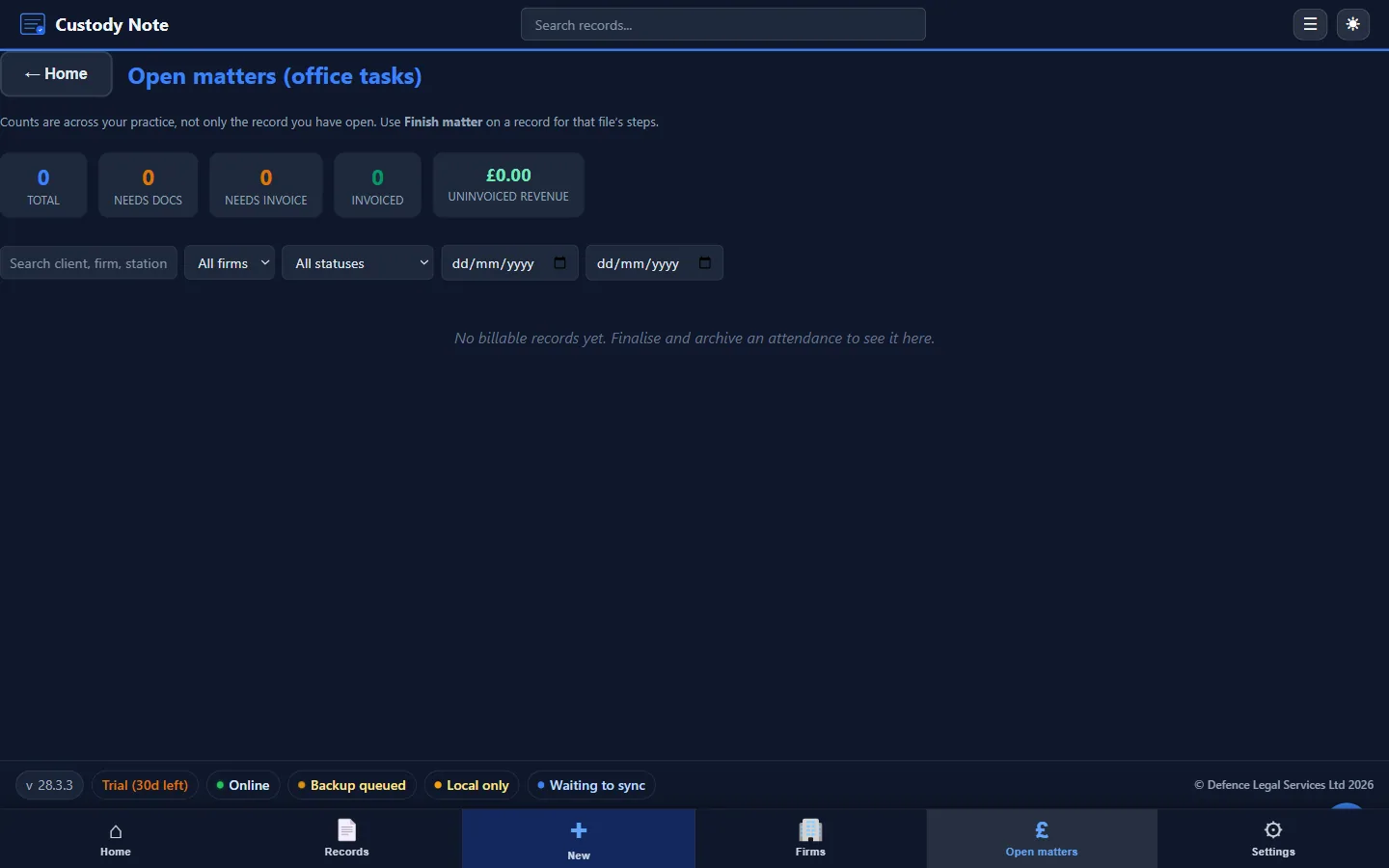
Below are the main changes for 2026, how the fixed fee scheme works day to day, and why your attendance notes now count for even more when it comes to getting paid.
The SaBC bulk upload portal
Since February 2026 the Legal Aid Agency's Submit a Bulk Claim (SaBC) system has been the primary route for submitting police station and magistrates' court claims. SaBC replaces the older CWA desktop client for most firms and introduces a structured upload format that requires claim data to follow a fixed schema.
In practice this means the data behind every claim must be clean, consistent, and complete before it reaches the portal. Free-text narratives that worked in the CWA era are no longer sufficient. SaBC validates fields like the DSCC reference, custody record number, offence codes, and time breakdowns against expected formats. If any field is missing or malformed the claim is rejected at upload, before it even reaches an assessor.
For firms that have been recording these details in their attendance notes all along, the transition is straightforward. For firms that relied on administrators to piece together billing data from loose narratives, SaBC has exposed the gaps.
Fixed fee scheme recap
Police station work in England and Wales is paid under a fixed fee scheme. The standard fixed fee is currently £320.46 per matter, regardless of how long the attendance takes. The fee covers travel, waiting, consultation, interview, and any post-interview work at the station.
Most attendances fall within the fixed fee. Short telephone-only matters attract a lower fee. The fixed fee applies whether the matter takes ninety minutes or six hours, which is why accurate time recording matters when a case crosses the escape threshold.
When cases escape the fixed fee
A case “escapes” the fixed fee when profit costs at Schedule 4 hourly rates exceed the £650 escape threshold (excluding VAT, from 22 December 2025). The claim is then the £320 fixed fee plus the hourly excess over £650 — not the full hourly total instead of the fixed fee. (Older guidance referred to three times the fixed fee; that threshold table is historic.)
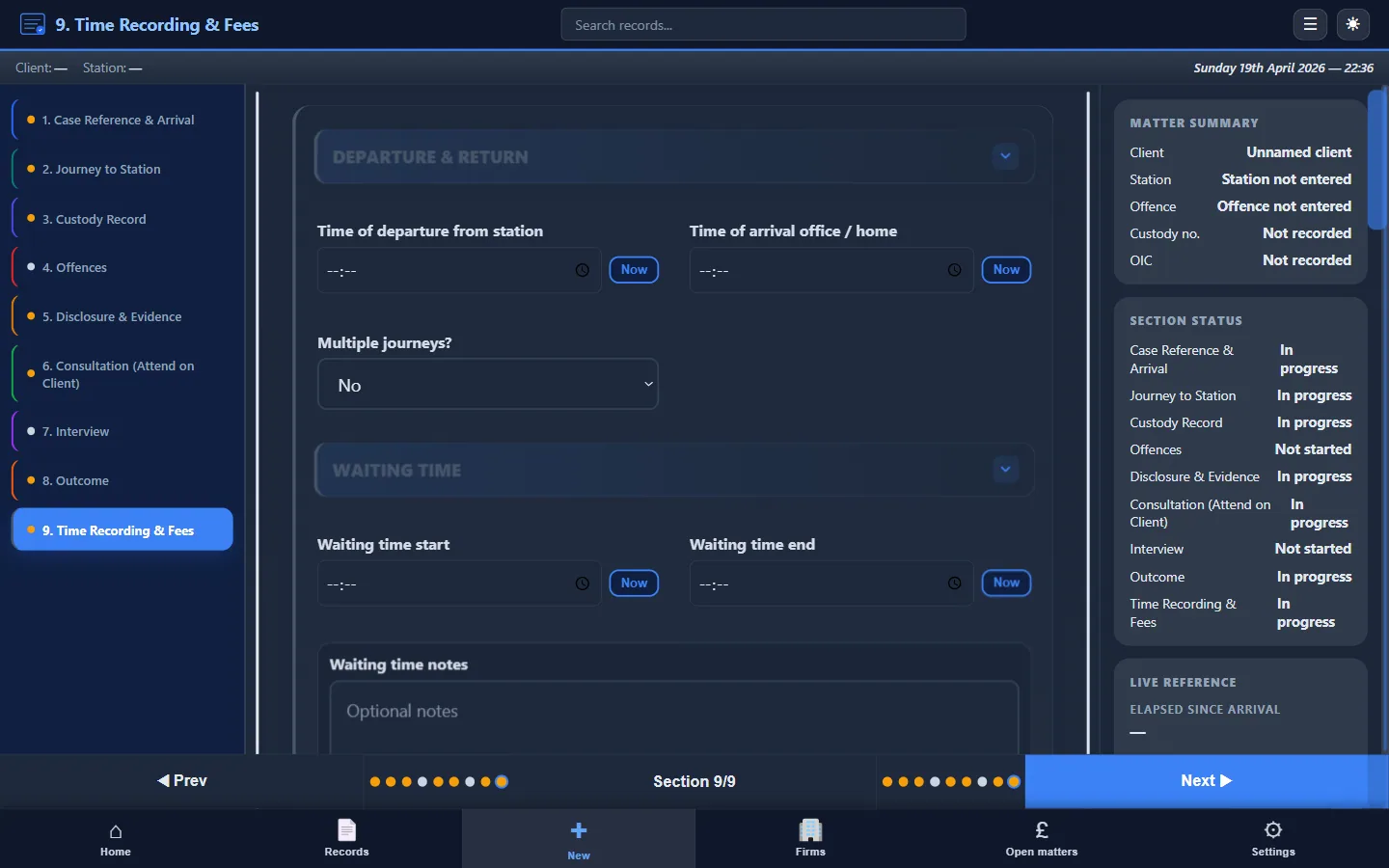
Escape cases are where your attendance note becomes critical billing evidence. The LAA will assess the claim against the time breakdown in your note. If your note records a single lump sum, say “6 hours total”, with no breakdown, the assessor has no basis to allow the escape. You need travel time, waiting time, consultation time, interview time, and post-interview time recorded separately, ideally in six-minute units.
Firms that lose escape fee claims almost always lose them because the attendance note doesn't support the time claimed. The work was done; it just wasn't recorded properly.
How attendance notes affect billing outcomes
Your attendance note is the primary evidence for every police station claim. It supports:
- Time breakdown: the LAA expects travel, waiting, attendance (consultation + interview), and any additional time to be recorded separately
- Complexity justification: for escape fee claims, the note must explain why the matter required more time than usual
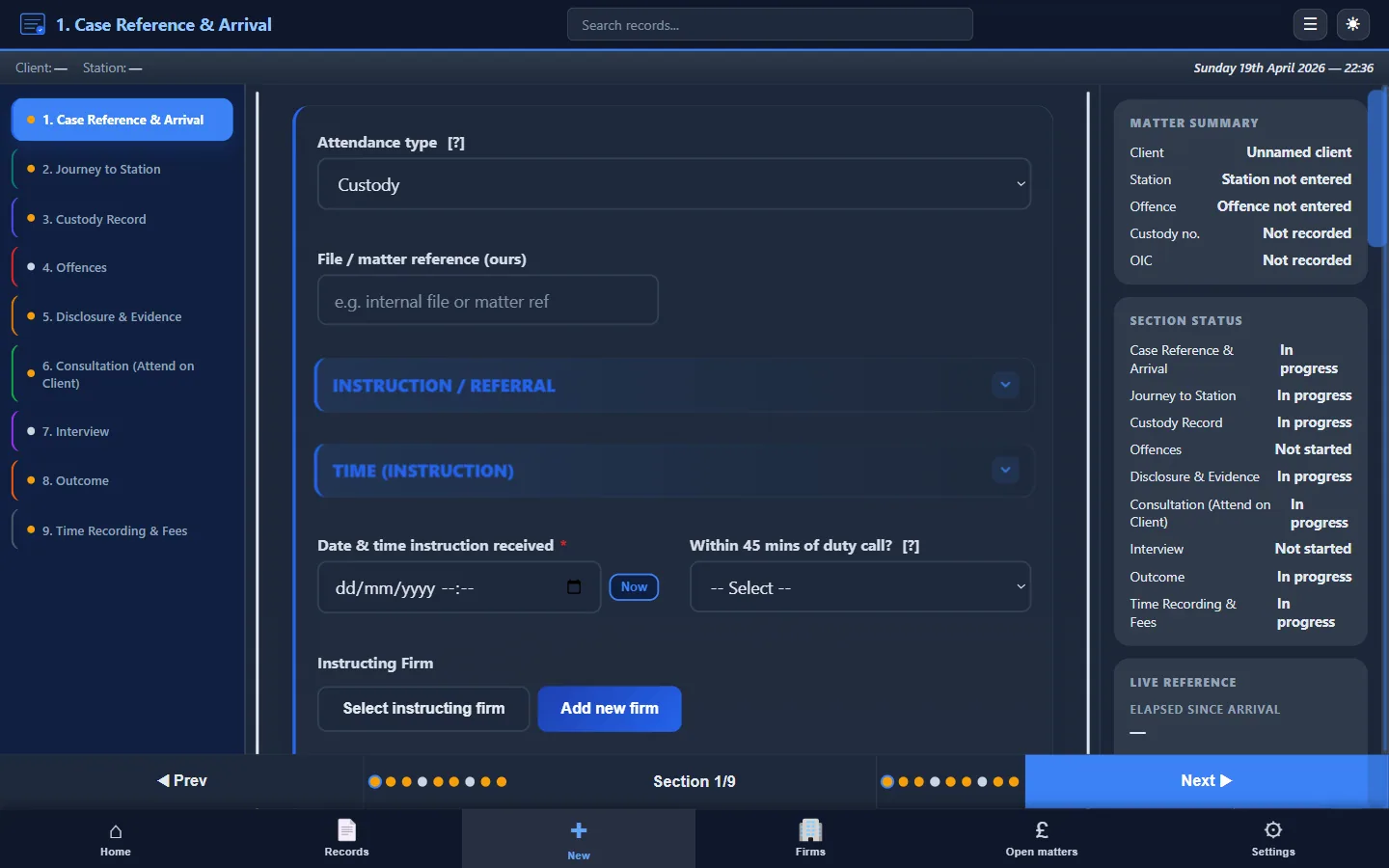
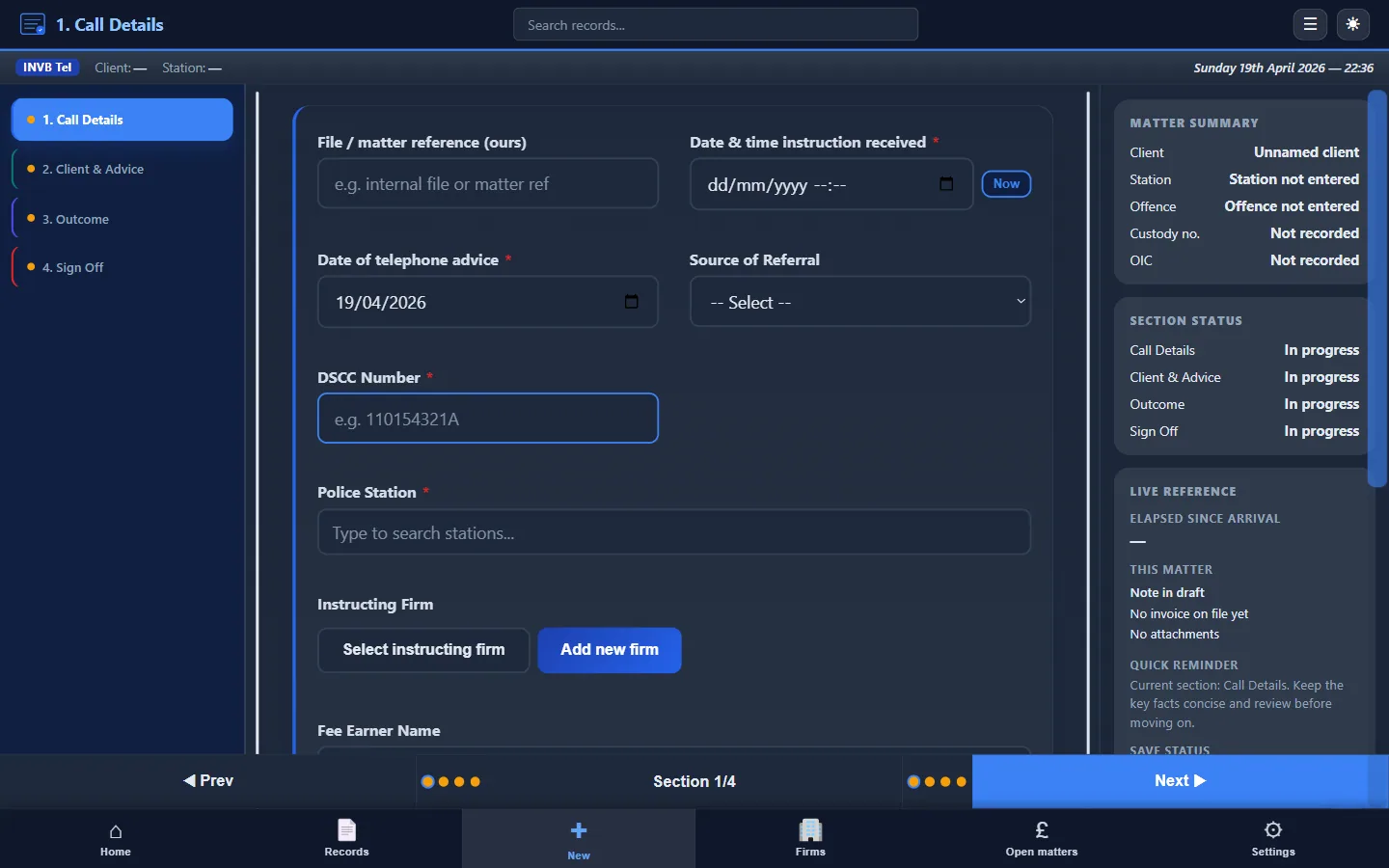
- DSCC reference: the reference number that ties your claim to the Defence Solicitor Call Centre notification, required for every own-client and duty matter
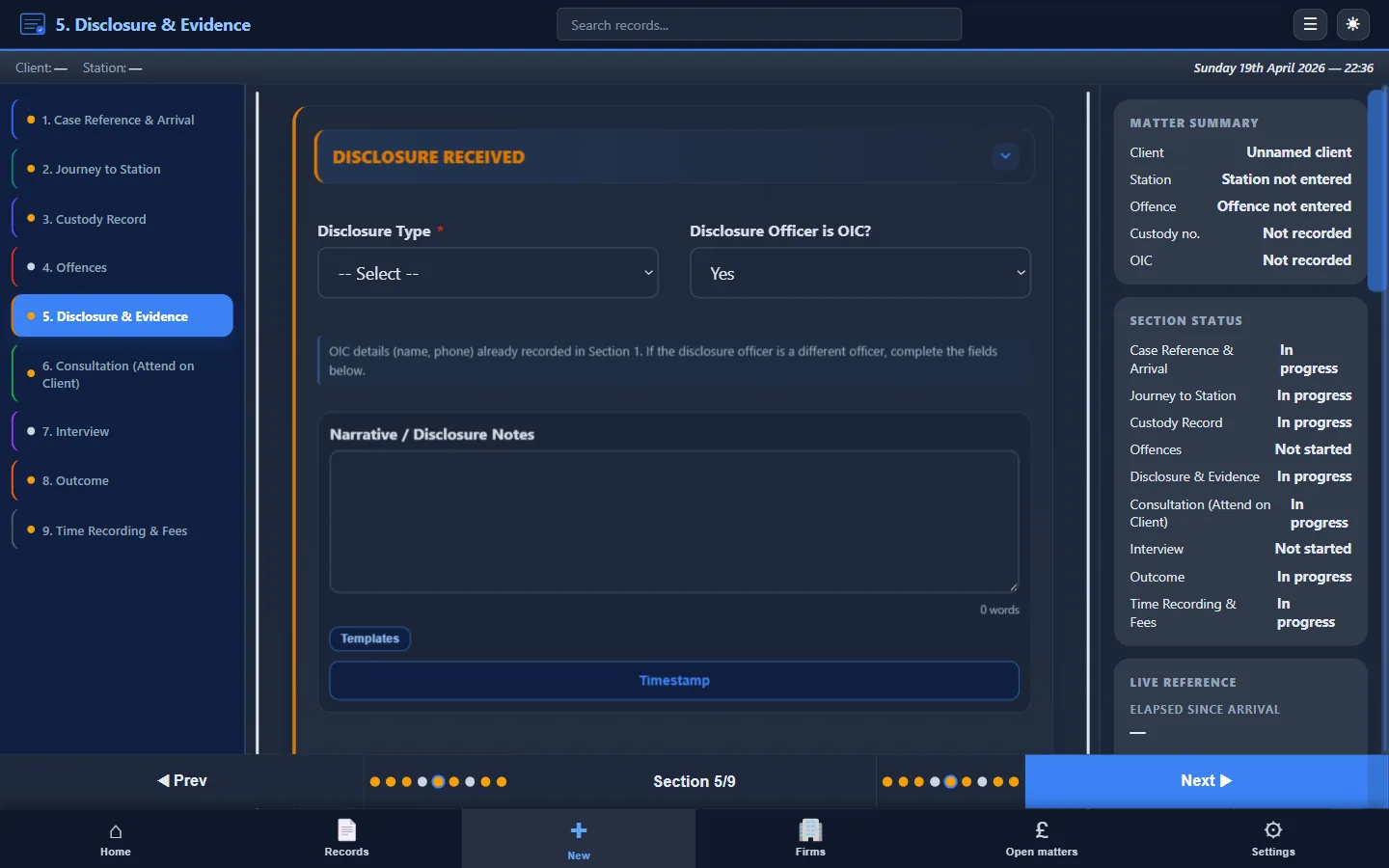
- Offence details: the offence(s) under investigation, which determine the claim category
- Outcome: NFA, charge, bail, or RUI, which affects how the claim is assessed
For a full guide to attendance notes and legal aid billing, see Attendance Notes for Legal Aid Billing.
Common reasons the LAA rejects claims
Rejections and queries from the LAA follow predictable patterns. The most common issues on police station claims are:
- Missing DSCC reference: if you can't evidence that the DSCC was notified, the claim may be refused entirely
- Inadequate time records: a single total with no breakdown, or times that don't add up, will trigger an assessor query
- No attendance note on file: surprisingly common, especially where the note was written on paper and never typed up or where a digital note was never exported to the case file
- Insufficient detail for escape claims: the note must explain what was done during each period, not just state the duration
- Wrong offence category: miscategorising the offence can mean the wrong fee scheme is applied
Many of these issues trace back to the attendance note. For a broader look at note-writing pitfalls, see Common Mistakes in Attendance Notes.
Habits that make notes ready to bill
Adopting a few habits makes the difference between a note that supports your claim and one that creates problems:
- Record in six-minute units: this is the standard billing increment. Round each activity to the nearest six minutes and record start and end times for every stage.
- Use structured sections: separate headings for travel, waiting, consultation, interview, and post-interview. Assessors shouldn't have to read a prose narrative to extract the time data.
- Log the DSCC reference at the start: capture it as soon as you receive the notification, before you get absorbed in the case.
- Record the outcome before you leave: NFA, charge, bail conditions, or RUI. If you wait until later, this detail often gets lost.
- Export and file the note the same day: whether you use paper, Word, or software, the note should be on the case file within hours, not days.
How digital tools help
The shift to SaBC and the increasing scrutiny of escape fee claims both favour structured, consistent note formats. Tools that enforce the right sections, rather than relying on the practitioner to remember every field at 2 a.m. in a custody suite: reduce the risk of incomplete claims.
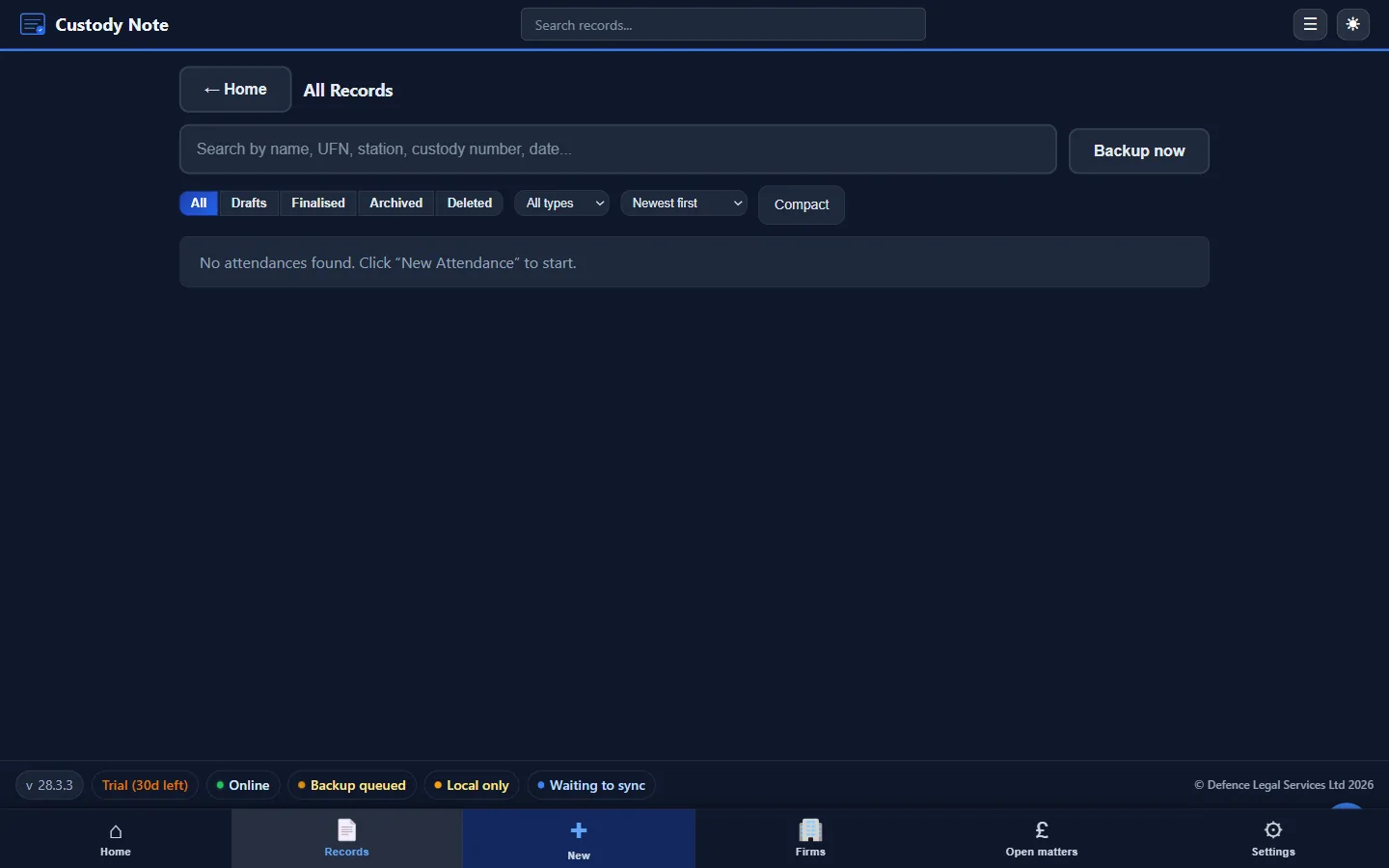
Custody Note addresses this by providing dedicated sections for each billing-relevant field: DSCC reference, offence details, time breakdown by activity, and outcome. The sections are built into the workflow so they are captured as the attendance progresses, not reconstructed afterwards. Notes export to PDF and can be filed immediately.
For more on how the LAA uses attendance notes in its assessment process, see LAA Attendance Notes Explained.
Summary
The 2026 billing landscape demands more structured data than ever. The SaBC portal rejects incomplete claims automatically. Escape fee assessments depend on time breakdowns that only your attendance note can provide. The firms that will bill efficiently this year are the ones whose practitioners write structured, contemporaneous notes at the station, not the ones reconstructing billing data from memory a week later.
Want billing-ready attendance notes from every attendance?
Custody Note captures DSCC references, time breakdowns, and outcomes as you work: offline, encrypted, with instant PDF export. Free for 30 days.
Download free