Police Station Escape Fees in 2026: The Note That Supports the Claim
Most police-station attendances stay on the fixed fee. When profit costs at the prescribed hourly rates go past the escape threshold, the Legal Aid Agency assesses the actual work. The attendance note is the evidence. Confirm every figure against the current LAA fee scheme on GOV.UK before you bill.
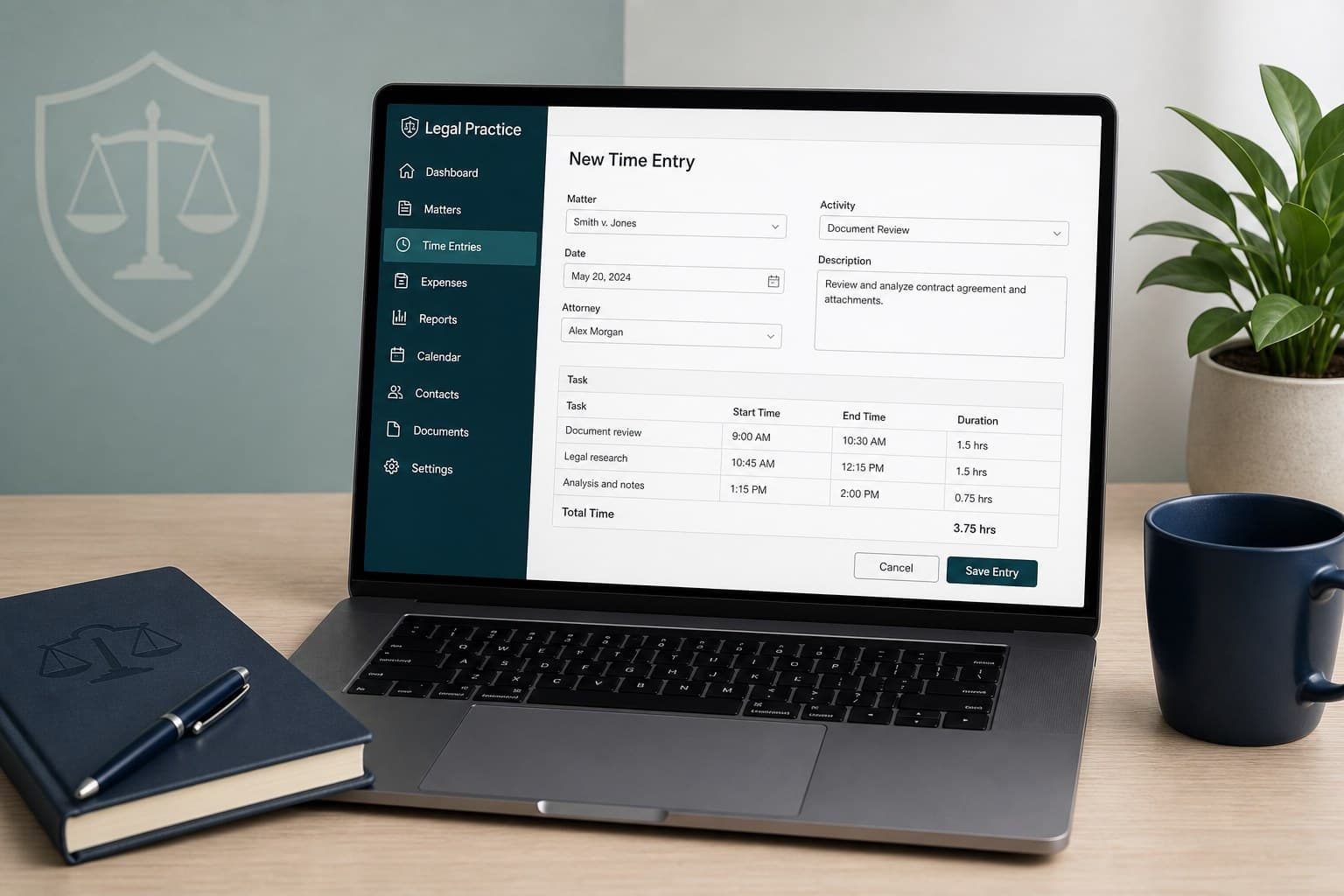
What an escape fee is
One fixed fee covers the police station attendance: travel, waiting, advice, and interview. A matter escapes that fixed fee when the recorded work (costed at the prescribed hourly rates) exceeds the escape threshold. The threshold is a costs figure, not a clock figure. Travel and waiting are rated differently from preparation. Police station Legal Aid fees aren't graded: there's one fixed fee, and on escape one preparation hourly rate and one travel-and-waiting hourly rate, whoever attended.
Your attendance note supports an escape claim. It doesn't win one on its own. Assessors still decide whether the recorded work is reasonable. Without a note that breaks the attendance into clear blocks, there's often nothing defensible to assess.
What changed for 2026
SI 2025/1251 set a £320 fixed fee and a £650 escape threshold (both ex VAT) for all Police Station Schemes. Confirm the live figures on the current LAA fee scheme published on GOV.UK before you submit. The change applies to Unique File Numbers from 22 December 2025. Older guidance that talked about “three times the local fixed fee” belongs to previous tables: don't use that multiplier for new UFNs under the current scheme.
The Standard Crime Contract 2025 and SaBC bulk-claim processes still expect clean references and a note that can be reconciled to the claim. Fee scheme numbers move; the evidence standard doesn't. If your firm still templates claims from the old 3× rule, update the template before the next duty weekend.
What the note must show
Treat the note as the primary evidence file for the claim. As a minimum it should show who attended; the start and end of each work block; travel versus waiting versus disclosure versus consultation versus interview; what happened in each block; and why that block took the time it did. Carry the identifiers that tie the attendance to the claim: UFN, DSCC reference where required, station, offence, and outcome.
- Who attended: name and role of the representative or solicitor who did the work. Grades don't change the police station fee, but identity still matters for the file.
- Block times: start and end for each distinct period, not a single “arrived / left” pair with a narrative in between.
- Activity type: separate travel, waiting, disclosure, consultation, and interview so the correct hourly rate can be applied when costing for escape.
- Substance: what was disclosed, advised, or done in interview, at a level that explains the duration without privileged oversharing.
- Case anchors: UFN, DSCC, station, offence under investigation, and outcome (NFA, charge, bail, RUI, or other).
Times often missed
Escape assessments fail as often from omitted blocks as from weak narratives. Return travel is routinely left off. Waiting needs a reason: “waiting” with no cause invites reduction. Disclosure that arrives in pieces should be timed as separate reviews, not folded into a vague pre-interview lump. Each interview needs its own start and end. Identifiers that look administrative (UFN, DSCC, custody number) are what stop the claim bouncing before anyone reads the note.
If you only write up the “interesting” middle of the attendance, you have written the part that feels important and omitted the part that often tips the costed total over the threshold.
Treat every attendance as a potential escape case
You rarely know at instruction whether a matter will escape. A second interview, late disclosure, or extended waiting can change the arithmetic. The practical habit is to record every attendance as if it might be assessed: contemporaneous blocks, clear activity labels, and identifiers captured before you leave the suite. That discipline costs little on a short fixed-fee job and is decisive when the £650 threshold is in play.
For related guidance on audit-ready structure, see why attendance notes fail an LAA audit and LAA billing changes for police station work in 2026. Confirm rates and thresholds against GOV.UK; this article is workflow guidance, not a substitute for the fee scheme.
Frequently asked questions
Is the escape threshold still 3× the local fixed fee for new UFNs?
No. For Unique File Numbers from 22 December 2025 under SI 2025/1251, the published escape threshold is £650 (ex VAT) with a £320 fixed fee (ex VAT) for Police Station Schemes. Confirm on GOV.UK. The old 3× local fixed fee language is from previous tables.
Do solicitor grades change police station fees?
No. Police station Legal Aid fees aren't graded. One fixed fee covers the attendance. On escape, cost the work at one preparation hourly rate and one travel-and-waiting hourly rate, whoever attended.
Does six hours automatically mean an escape?
No. Escape turns on costed work at prescribed rates versus the threshold, not on total hours alone. Travel and waiting are rated differently from preparation. Record the blocks so the arithmetic can be checked.
Sources
- SI 2025/1251: Criminal Legal Aid (Remuneration) (Amendment) (No. 2) Regulations 2025 (fixed fee and escape threshold figures; confirm live text on legislation.gov.uk / GOV.UK)
- Standard Crime Contract 2025
- Submit a Bulk Claim (SaBC): LAA claim submission process
Capture escape-ready time blocks at the station
Custody Note is desktop software for Windows and macOS. It gives you attendance notes that work offline, with structured time and billing fields. It isn't a CMS, not transcription, and not legal advice. Free during beta.
Download Custody Note