Attendance Notes for Juvenile Clients: Extra Requirements
When your client is under 18, your attendance note must record additional safeguards. Appropriate adults, welfare considerations, and modified interview procedures all need documenting.
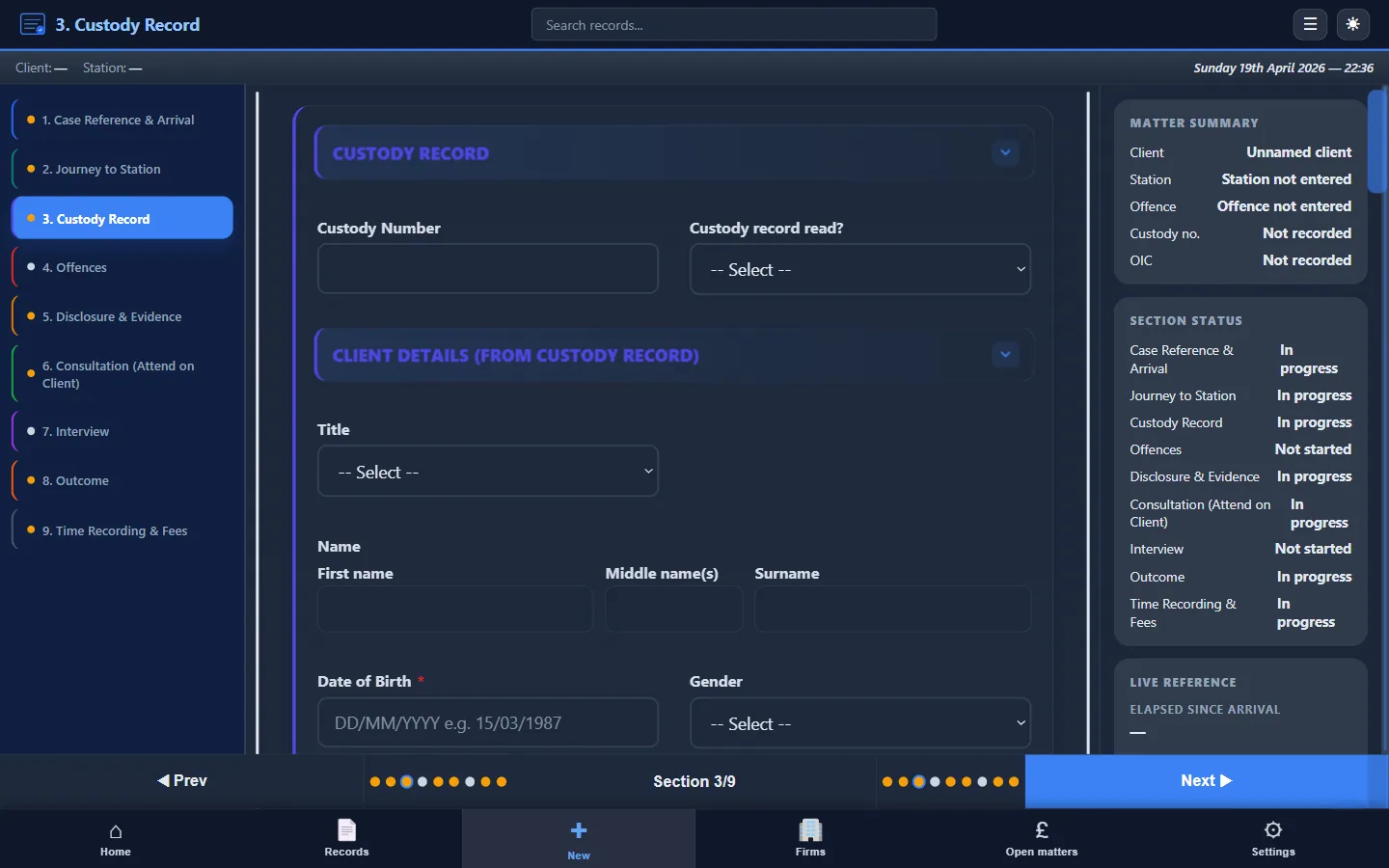
Representing a juvenile at the police station involves additional legal safeguards that don't apply to adult detainees. PACE Code C imposes specific requirements around appropriate adults, interview conditions, welfare, and overnight detention for anyone under 18. Your attendance note must record not only the standard elements of the attendance but also whether these additional safeguards were in place and properly applied.
I'll go through who counts as a juvenile under PACE, the appropriate adult rules, what your note needs at each stage, welfare, changes to the interview, overnight detention and the mistakes I see most often.
Who counts as a juvenile?
For the purposes of PACE Code C, a juvenile is any person who appears to be under 18 or is known to be under 18. If there's any doubt about the detained person's age, they should be treated as a juvenile until their age is established. The custody officer is responsible for making this determination, but your attendance note should record the client's stated age and date of birth, and whether there was any dispute or uncertainty about their age.
That's important because the entire regime of additional safeguards flows from the juvenile classification. If the police treated the detainee as an adult when they were in fact under 18, any interview conducted without an appropriate adult may be challenged under section 76 or section 78 of PACE.
Appropriate adult requirements
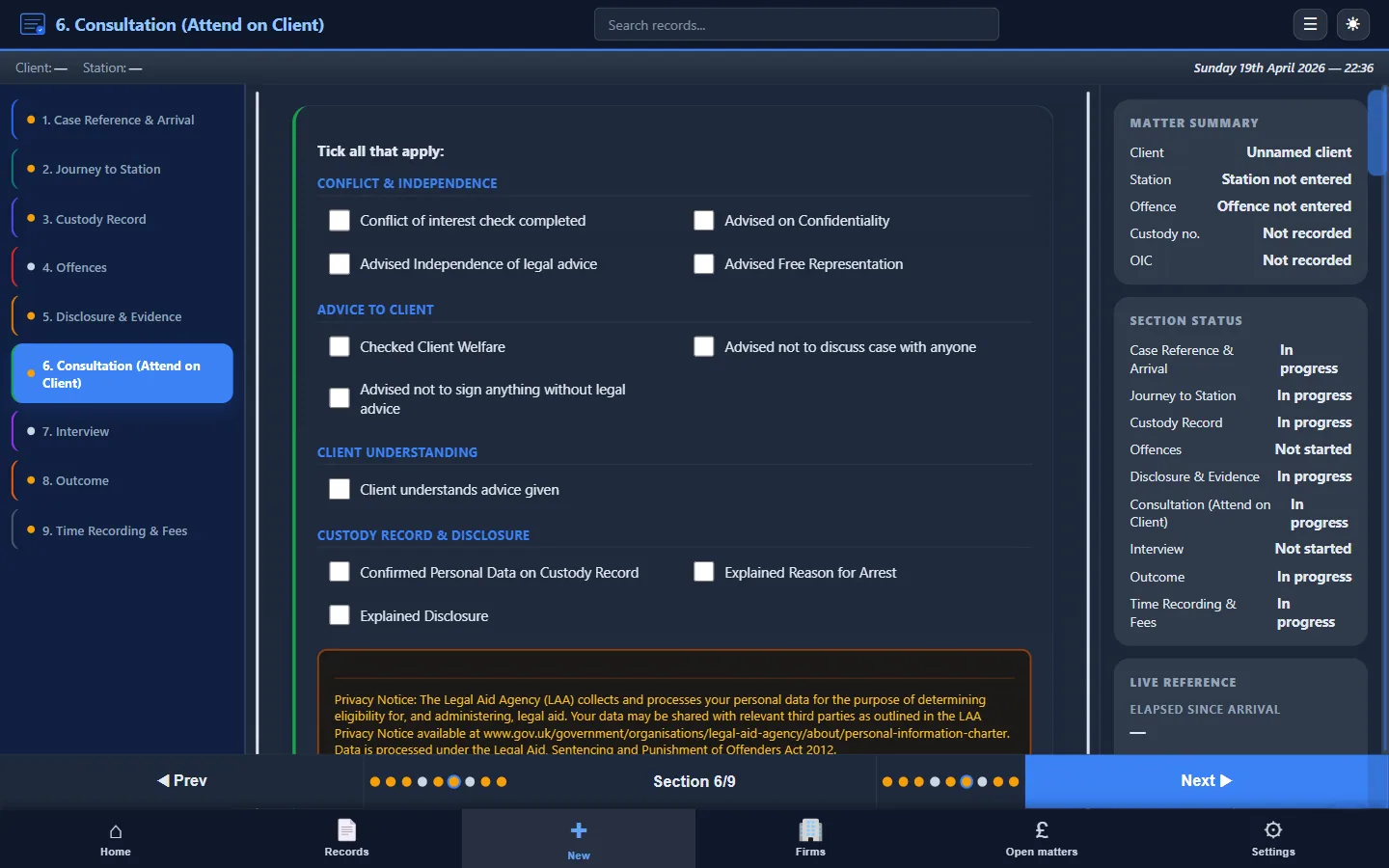
PACE Code C paragraph 1.5A provides that a juvenile must not be interviewed, asked to provide or sign a written statement, or asked to participate in an identification procedure without an appropriate adult being present (except in urgent cases under Annex C).
The appropriate adult for a juvenile is typically:
- A parent, guardian, or person with parental responsibility
- A social worker from the local authority children's services
- Another responsible adult aged 18 or over who isn't a police officer or employed by the police
Your attendance note must record:
- Who the appropriate adult is: their full name, relationship to the client (parent, social worker, other), and contact details
- When they arrived: the time the appropriate adult attended the station
- Whether they were present throughout: the appropriate adult must be present during any interview and when rights are explained. Record whether they were present at each relevant stage.
- Whether they appeared to understand their role: the appropriate adult isn't merely a passive observer. They are there to facilitate communication, ensure the interview is conducted properly, and observe whether it's being conducted fairly. Record whether the custody officer explained the role to them and whether they appeared to engage with it.
- Any concerns about suitability: if the appropriate adult appeared hostile to the client, was unable to communicate effectively, had a conflict of interest (for example, being the complainant or a co-suspect), or was otherwise unsuitable, record your concern and any representations you made.
What to record about welfare
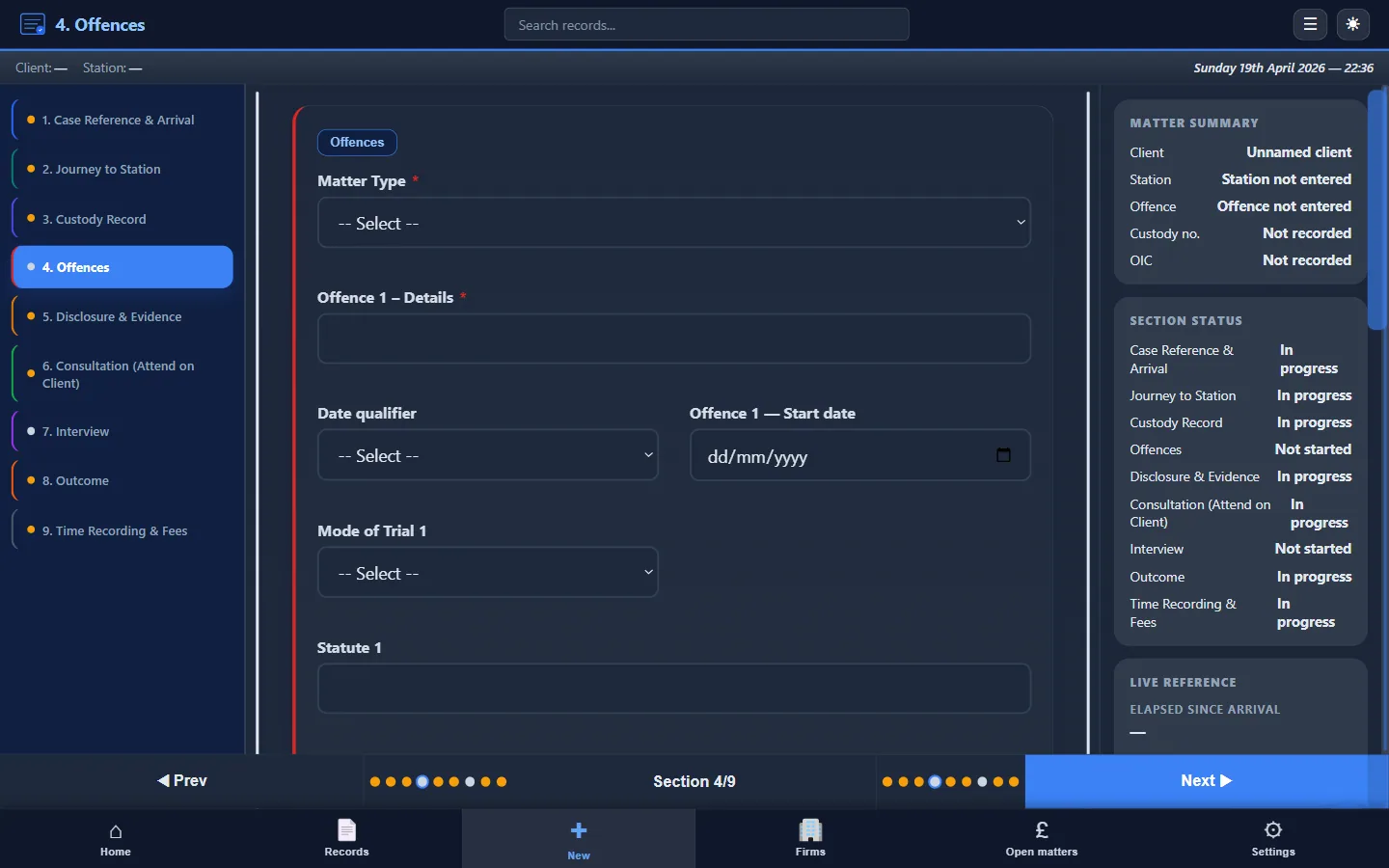
Code C imposes additional welfare requirements for juvenile detainees. Your attendance note should record:
- Physical welfare: was the client offered food, drink, and rest? Juveniles are entitled to the same provisions as adults, but in practice welfare needs may be greater, particularly for younger teenagers or those detained for extended periods.
- Emotional state: was the client distressed, frightened, or confused? If so, record your observations and any steps taken to address the situation.
- Fitness to be interviewed: if you had any concern that the juvenile was unfit to be interviewed due to tiredness, distress, intoxication, or other reasons, record the concern and any representations made. This is a professional judgement that should be recorded contemporaneously.
- Education and social services involvement: for younger juveniles or those in local authority care, the custody officer should notify the relevant authority. Record whether this happened and whether any social services representative attended.
- Medical needs: record any request for a healthcare professional, any assessment that took place, and the outcome.
Interview modifications for juveniles
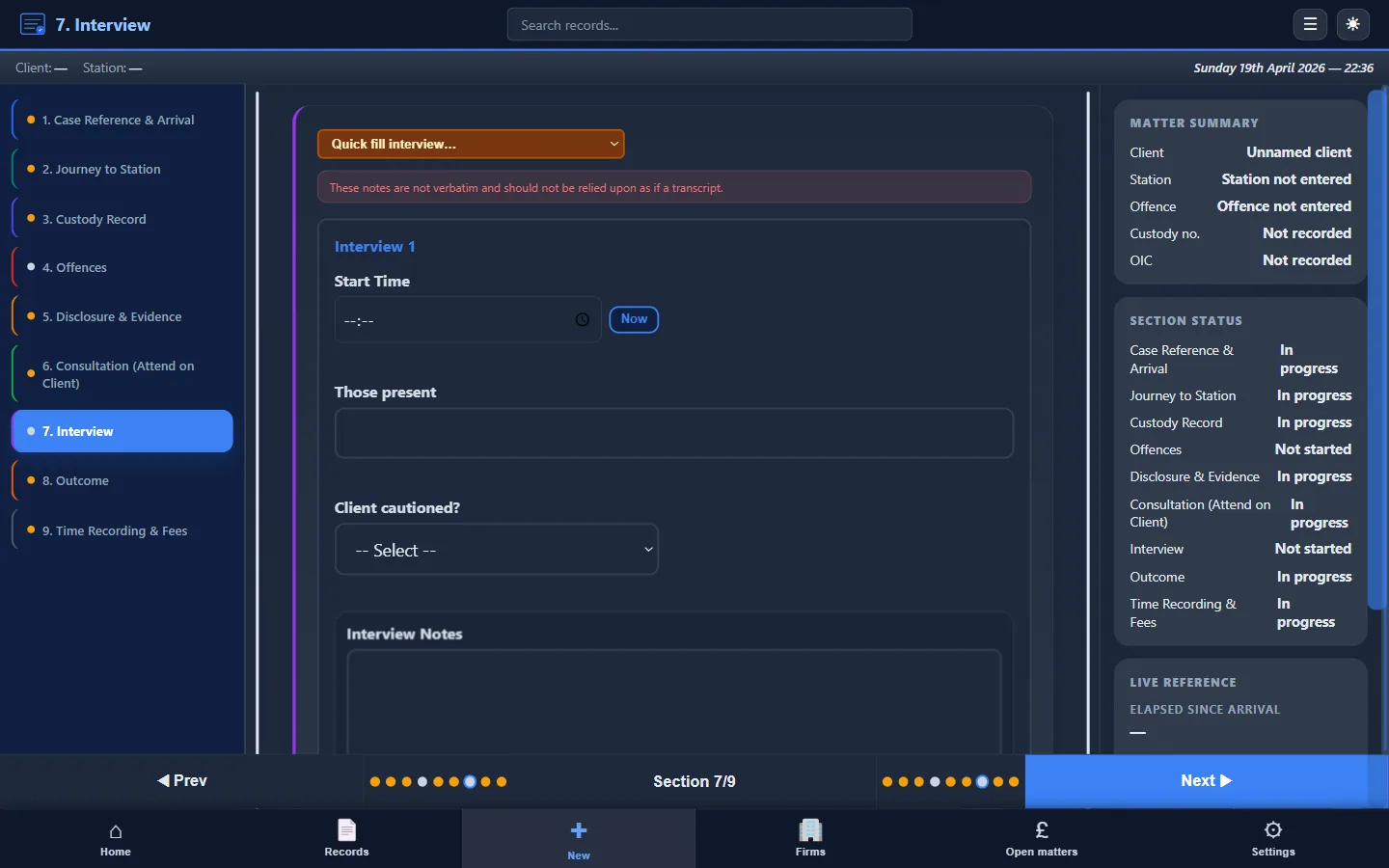
Interviews with juvenile suspects are subject to additional safeguards beyond the presence of the appropriate adult:
- Interview timing: interviews shouldn't take place at unreasonable hours unless there's an urgent need. For juveniles, this is particularly important. Record the time of any interview and whether you considered the timing appropriate.
- Interview duration and breaks: juveniles may require more frequent breaks than adult suspects. Record the duration of each interview segment and any breaks taken, noting whether you considered the pace and duration appropriate.
- Language and communication: the interviewing officer should adapt their language to the age and understanding of the juvenile. Record any concerns about the level of language used, and whether the juvenile appeared to understand the questions and the caution.
- Appropriate adult involvement during interview: record whether the appropriate adult was actively involved (facilitating communication, requesting breaks, raising concerns) or passive. If the appropriate adult intervened at any point, record what they said and the officer's response.
For general guidance on recording interview content, see Police Station Attendance Notes.
Overnight detention
PACE Code C paragraph 16.1 provides that a juvenile shouldn't be held in a police cell unless no other secure accommodation is available and the custody officer considers that the cell is the most appropriate option. The custody officer is expected to consider transferring the juvenile to local authority accommodation under section 38(6) of PACE.
If your client is detained overnight, your attendance note should record:
- Whether the custody officer considered alternatives to overnight detention in a cell
- Whether a transfer to local authority accommodation was discussed and, if refused, the reasons given
- Any representations you made about the appropriateness of overnight detention
- The conditions of detention: was the juvenile placed alone, in an appropriate environment, with access to the appropriate adult?
Overnight detention of a juvenile is a significant event. Your contemporaneous record may be relied upon if the detention conditions are later challenged, either in criminal proceedings or in a civil claim.
Common mistakes
The most frequent errors practitioners make when representing juveniles at the police station include:
- Not recording the appropriate adult's identity or role: the note mentions that an appropriate adult was present but doesn't record who they were or their relationship to the client.
- No record of welfare checks: the note contains no reference to the juvenile's physical or emotional welfare during what may have been a lengthy and distressing detention.
- Treating the attendance note as identical to an adult case: the note follows the standard structure but doesn't include any entries specific to the juvenile safeguards. An auditor or reviewer reading the note wouldn't know the client was under 18.
- No record of concerns about suitability of the appropriate adult: if the parent was hostile, the social worker was disengaged, or the appropriate adult had a conflict of interest, this must be recorded. Silence on suitability may be taken as acceptance.
- No record of overnight detention considerations: if the juvenile was detained overnight, the note should record whether alternatives were explored and what representations the solicitor made.
How Custody Note helps
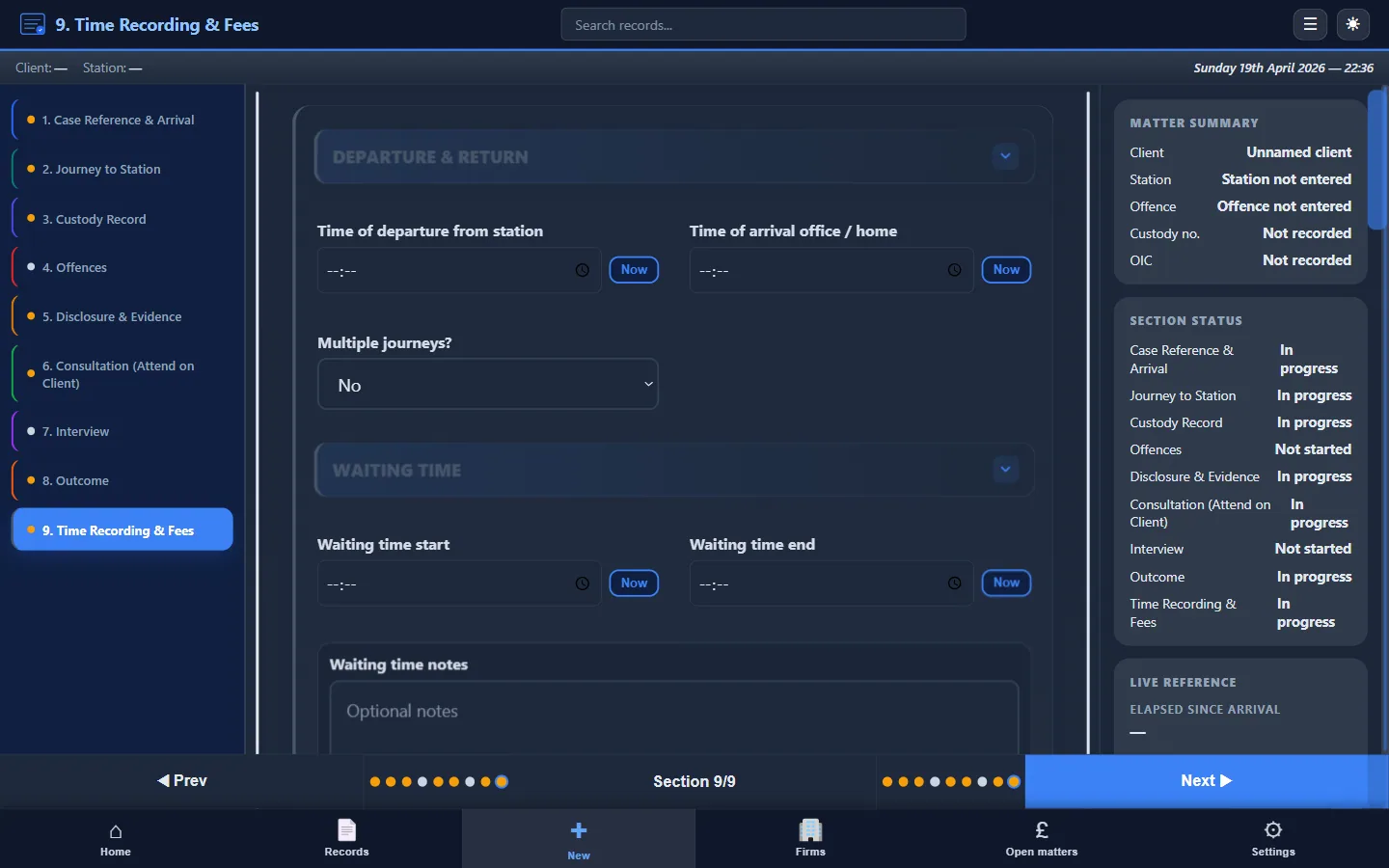
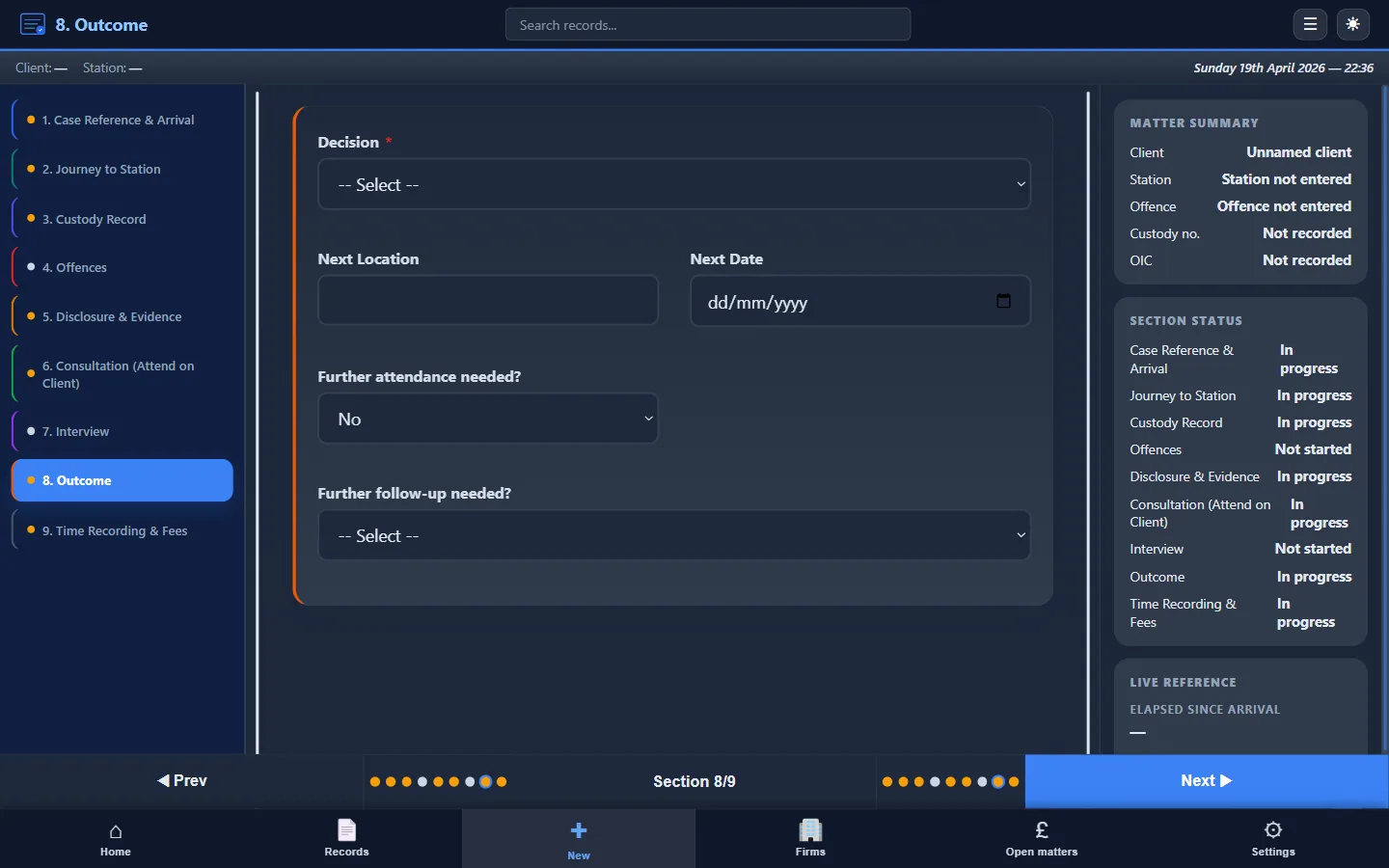
Custody Note includes specific fields for recording juvenile safeguards within the standard attendance note structure. When the client's date of birth indicates they are under 18, the software prompts for appropriate adult details, welfare observations, and interview modifications. This ensures that juvenile-specific data is captured as part of the natural workflow rather than being an afterthought.
For a comprehensive guide to what every attendance note must contain, see What Must Be Included in Attendance Notes, and for the PACE framework that underpins these requirements, see PACE Custody Note Requirements.
Summary
Representing a juvenile at the police station requires your attendance note to go beyond the standard structure. Record the client's age and any dispute about it, the appropriate adult's identity and role, welfare observations, interview modifications, and any overnight detention considerations. These entries aren't optional extras. They are essential for demonstrating that the additional safeguards required by PACE Code C were in place, and that you fulfilled your professional obligations to a vulnerable young client.
Frequently asked questions
What if no appropriate adult is available?
If the police can't secure an appropriate adult and propose to interview the juvenile without one, record this fact, the reasons given, and any representations you made. An interview conducted without an appropriate adult is vulnerable to challenge under sections 76 and 78 of PACE. Your contemporaneous record of the situation and your objections will be critical evidence if the interview is later challenged at trial.
Should I record the juvenile's demeanour during the attendance?
Yes. Recording your observations of the juvenile's emotional and physical state at different stages of the attendance, on arrival, during consultation, during interview, and at departure, provides important context. If the client was visibly distressed, exhausted, or confused, this supports any argument that they were unfit to be interviewed or that the interview conditions were unsuitable.
Do the same attendance note requirements apply to 17-year-olds?
Yes. Following the amendment of PACE Code C, 17-year-olds are treated as juveniles for all purposes including the appropriate adult requirement. Your attendance note should reflect the same safeguards for a 17-year-old as for a younger teenager. The full set of requirements applies until the detainee reaches 18. For more detail, see Download free to explore how Custody Note handles juvenile attendances.
Juvenile safeguards built into your workflow
Custody Note prompts for appropriate adult details, welfare observations, and interview modifications automatically when your client is under 18. Free during beta.
Download freeRelated articles from the blog
Attendance Notes
The Real Cost of Handwritten Attendance NotesAttendance Notes
Vulnerable Clients at the Police Station: Note-Taking EssentialsAttendance Notes
What Makes a Good Police Station Attendance Note?