Vulnerable Clients at the Police Station: Note-Taking Essentials
Vulnerable clients (those with mental health conditions, learning difficulties, communication needs, or other vulnerabilities) require additional safeguards at the police station. Your attendance note must record what those safeguards were and how they were applied.
Representing a vulnerable adult at the police station is among the most challenging work in criminal defence. The legal framework, primarily PACE Code C, provides a range of safeguards for vulnerable detainees, including the right to an appropriate adult, fitness-to-interview assessments, and communication support. But these safeguards only protect the client if they are properly applied and properly recorded.
Your attendance note is the contemporaneous evidence that safeguards were in place. If the case goes to trial and the admissibility of the interview is challenged, or if a complaint is made about the handling of a vulnerable detainee, the attendance note is the first document the court, the SRA or the LAA will look at. So here's what to record, when, and why.
Identifying vulnerability
Vulnerability at the police station isn't limited to diagnosed conditions. PACE Code C Note for Guidance 1G provides that a person may be vulnerable if there's any doubt about their mental state or capacity. In practice, the sources of vulnerability you may encounter include:
- Mental health conditions: diagnosed or suspected conditions including depression, anxiety disorders, psychosis, bipolar disorder, PTSD, and personality disorders
- Learning difficulties: conditions such as learning disability, autism spectrum conditions, ADHD, and specific cognitive impairments that affect the person's ability to understand questions or appreciate the significance of their answers
- Communication difficulties: language barriers (requiring an interpreter), speech and language conditions, hearing impairment, or literacy difficulties
- Substance misuse: intoxication from alcohol or drugs at the time of detention, or withdrawal symptoms during detention
- Physical health: medical conditions that affect the person's capacity to participate meaningfully in the process
- Situational vulnerability: acute distress, grief, exhaustion, or other temporary states that impair the person's ability to engage with the custody process
Your attendance note should record your own assessment of the client's vulnerability from the moment you first engage with them. This initial assessment (based on observation, conversation, and any information provided by the custody officer) informs every subsequent decision you make during the attendance.
PACE Code C provisions for vulnerable adults
The key Code C provisions affecting vulnerable adults are:
- Code C 1.4: defines a vulnerable person as anyone who may be vulnerable because of their mental health, mental disorder, learning disability, or physical disability
- Code C 1.5A: requires an appropriate adult to be present during interview, when the person is cautioned, and when rights are explained
- Code C 3.5 and Annex G: the custody officer must assess whether the detainee is vulnerable and, if so, arrange for an appropriate adult
- Code C 9: the custody officer must ensure that the detainee receives appropriate clinical attention if they appear to be suffering from physical or mental illness
- Code C 11.15: if a detainee's behaviour suggests they may be vulnerable and an appropriate adult hasn't been called, the interviewing officer must suspend the interview and arrange for an appropriate adult before continuing
- Code C 12: interview conditions must be appropriate for the detainee's needs, including adequate breaks and reasonable interview duration
For a thorough treatment of PACE requirements in attendance notes, see PACE Custody Note Requirements.
Appropriate adult requirements for vulnerable adults
The appropriate adult for a vulnerable adult detainee may be:
- A relative, guardian, or other person responsible for their care
- Someone experienced in dealing with vulnerable people (but not a police officer or employed by the police)
- If neither of the above is available, another responsible adult aged 18 or over
Your attendance note should record the same details as for juvenile cases: the appropriate adult's identity and relationship to the client, the time they arrived, whether they were present throughout the relevant stages, whether they understood their role, and any concerns about their suitability. Additionally, record:
- Whether the appropriate adult had any understanding of the client's specific vulnerability: a family member may understand the client's condition, while a generic volunteer may not
- Whether the appropriate adult was able to communicate effectively with the client
- Whether you raised any concerns about the appropriate adult's ability to fulfil the role, and the custody officer's response
Fitness to be interviewed
One of the most critical assessments in a vulnerable client attendance is whether the client is fit to be interviewed. This is a matter of professional judgement informed by:
- Your own observations of the client's mental state, responsiveness, and ability to understand and communicate
- Any healthcare professional assessment, if a doctor, nurse, or mental health practitioner has seen the client, record their assessment and any conditions attached (for example, that the interview should be limited in duration or conducted with an appropriate adult present)
- The custody officer's risk assessment and any flags raised during the booking-in process
- Information from the appropriate adult, family members, or carers about the client's usual state and any recent changes
Your attendance note should record your assessment of fitness clearly and contemporaneously. If you concluded the client was fit to be interviewed, record why. If you had concerns, record the concerns, any representations made to the custody officer or interviewing officer, and the outcome. If you requested a healthcare professional assessment and it was granted or refused, record that too.
If the client was assessed as unfit and the interview was postponed, record the assessment, the time, and any conditions attached to a later interview (for example, “fit for interview of no more than 30 minutes with regular breaks and an appropriate adult present”).
Communication difficulties
Vulnerability frequently manifests as communication difficulty. This may require:
- An interpreter: for non-English speakers or those with limited English proficiency. Record the interpreter's name, language, and the agency that provided them. Note whether the interpreter appeared competent and whether the client confirmed they could understand.
- A registered intermediary: for detainees with communication needs that go beyond language, such as learning disabilities or speech and language conditions. Intermediaries are less common at the police station than at court, but their use is growing. Record whether one was requested and, if so, whether the request was granted.
- Adapted communication: even without a formal intermediary, you should note whether you adapted your own communication style (using simpler language, visual aids, or more frequent checks of understanding) and whether the interviewing officer did the same.
For a broad overview of what attendance notes must include, see What Must Be Included in Attendance Notes.
Mental health considerations
Mental health conditions create specific note-taking requirements:
- Record any disclosed or observed mental health condition: what you were told by the custody officer, the client, the appropriate adult, or the healthcare professional
- Record medication: was the client on medication, had they taken it, was medication available at the station?
- Record any episodes during the attendance, if the client became agitated, confused, withdrawn, or exhibited symptoms of their condition, note what you observed and when
- Record any request for mental health support and whether it was provided
- Record how the mental health condition affected your advice, if vulnerability was a factor in recommending no comment or requesting a postponement, record the reasoning
These entries serve multiple purposes: they support any later challenge to the admissibility of the interview, they evidence the complexity of the attendance for billing purposes, and they demonstrate your professional compliance with the duty to safeguard a vulnerable client.
What to record at each stage
Vulnerable client attendances follow the same chronology as any other police station attendance, but each stage requires additional entries:
- Notification: record any vulnerability information provided by the DSCC or the police at the point of notification
- Arrival and custody record review: record any vulnerability flags on the custody record, the custody officer's risk assessment, and your own initial observations of the client
- Appropriate adult: identity, arrival time, role understanding, suitability, and presence at each stage
- Consultation: communication adaptations used, client's understanding of the process and the advice given, fitness assessment
- Interview: appropriate adult involvement, interview duration and breaks, communication difficulties observed, any interventions
- Outcome: representations about disposal (particularly around mental health diversion or referral), any ongoing safeguarding concerns
Common mistakes
- No vulnerability entry at all: the note reads identically to an adult attendance with no record of the additional safeguards. This is the most common and most serious omission.
- Recording the appropriate adult's presence but not their effectiveness: an appropriate adult who doesn't understand the role, can't communicate with the client, or is asleep during the interview isn't providing an effective safeguard. Record what you observed.
- No fitness-to-interview assessment: the note does not record whether the solicitor considered whether the client was fit to be interviewed. Even if the answer is “yes, fit,” the assessment should be recorded.
- Failing to record communication adaptations: if you used simpler language, checked understanding frequently, or requested additional support, record it. These entries evidence the additional work involved in representing a vulnerable client.
- No record of representations about safeguarding: if you raised concerns about the client's welfare, detention conditions, or fitness, and the custody officer or interviewing officer responded, all of this must be in the note.
How Custody Note helps
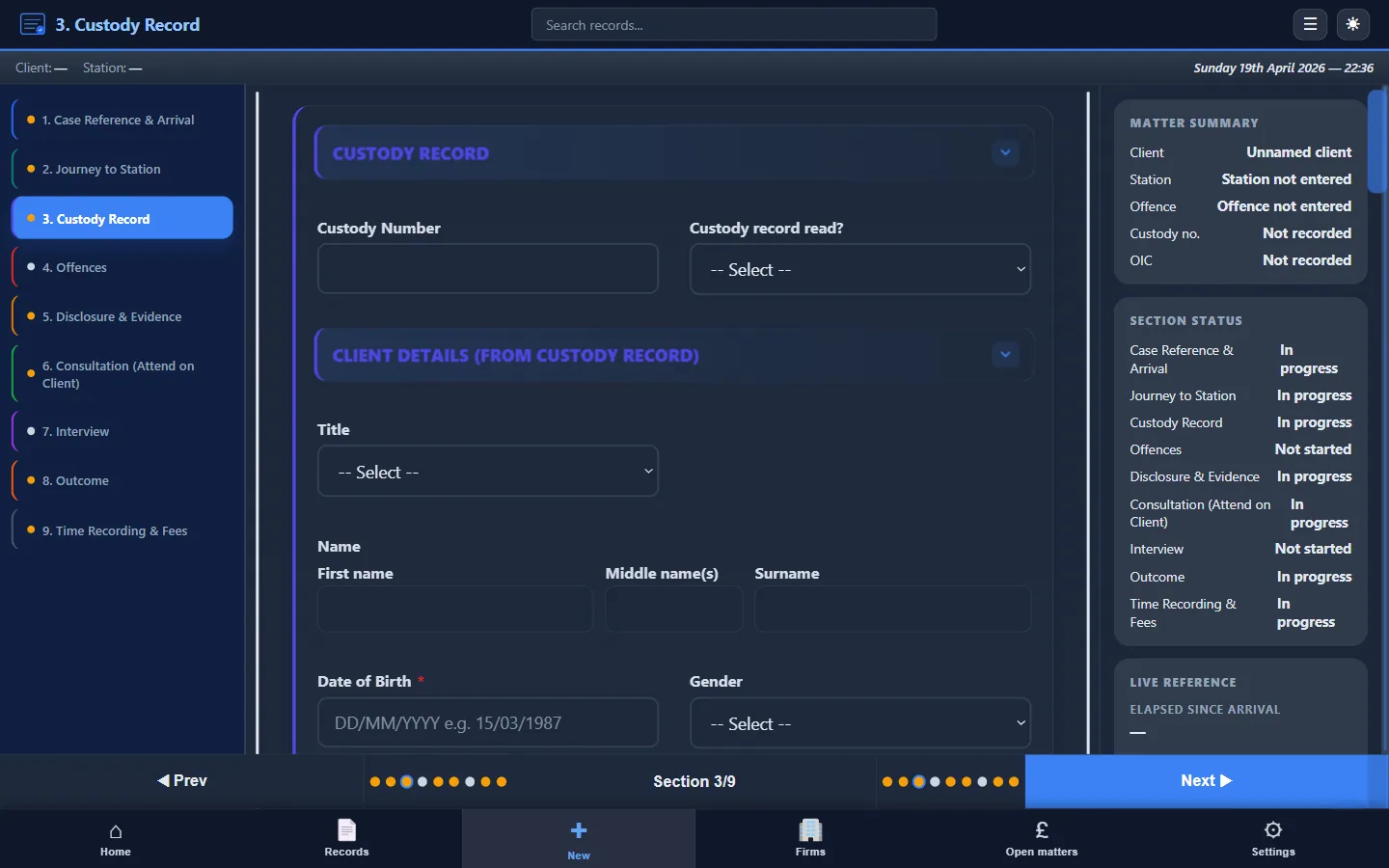
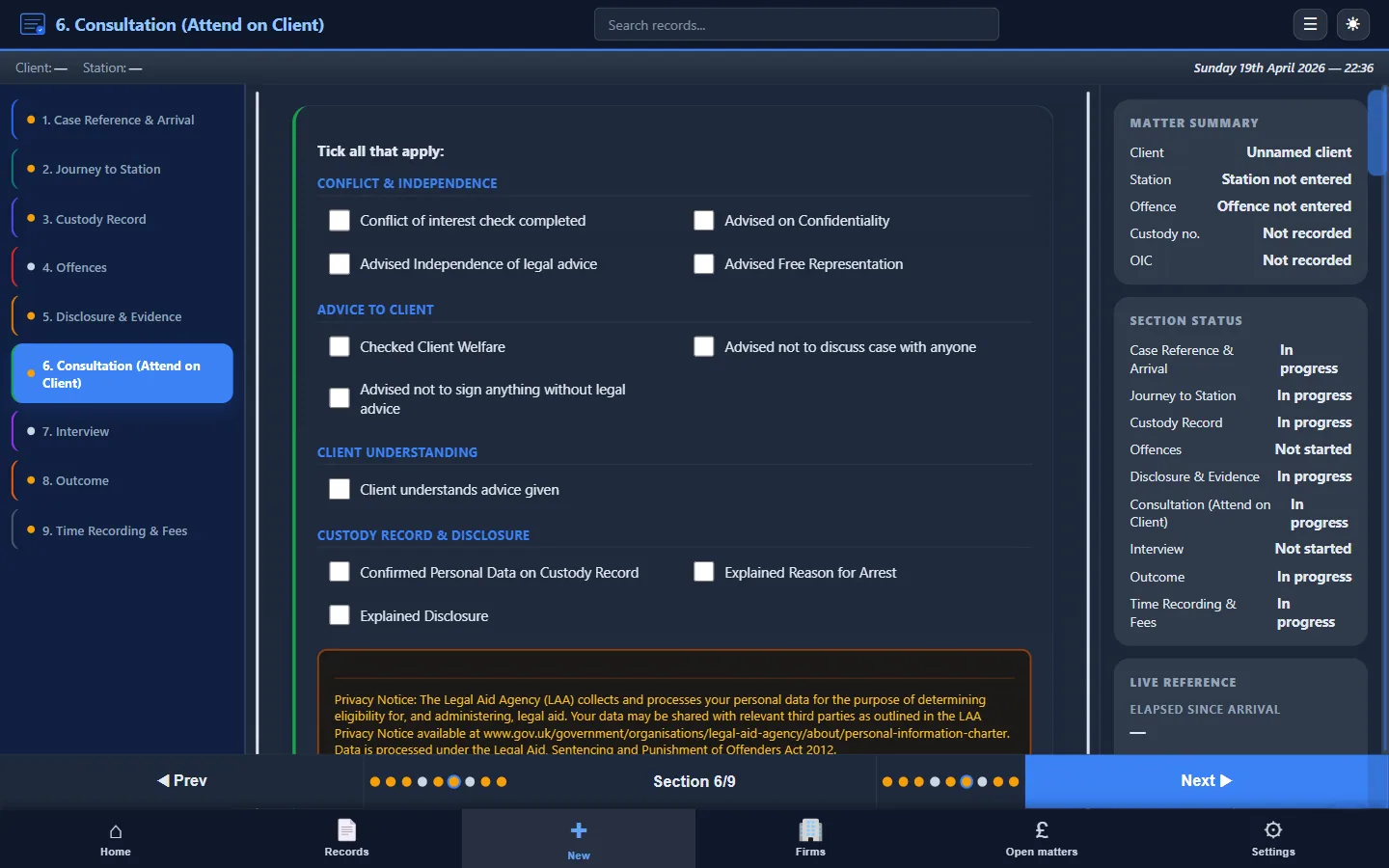
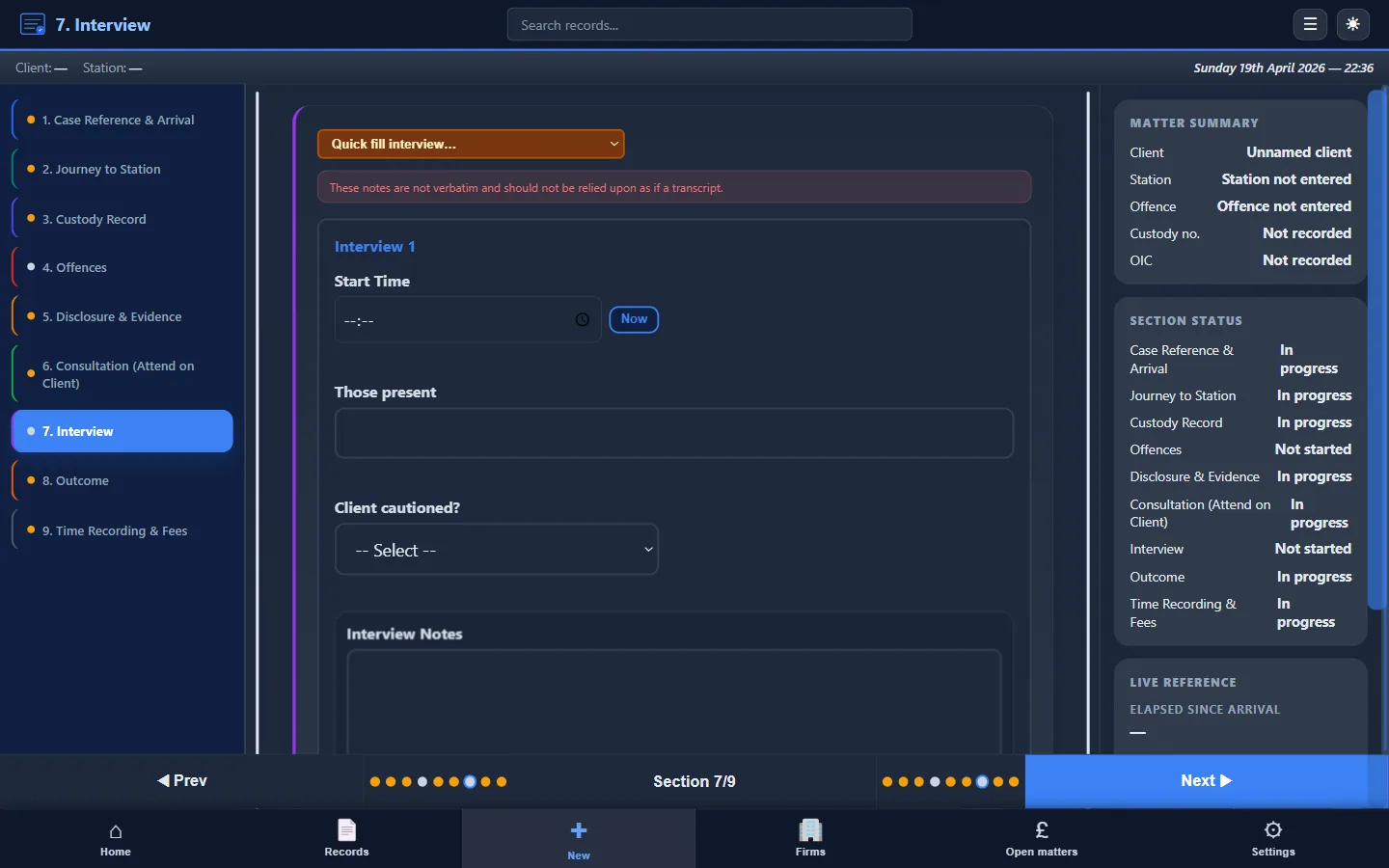
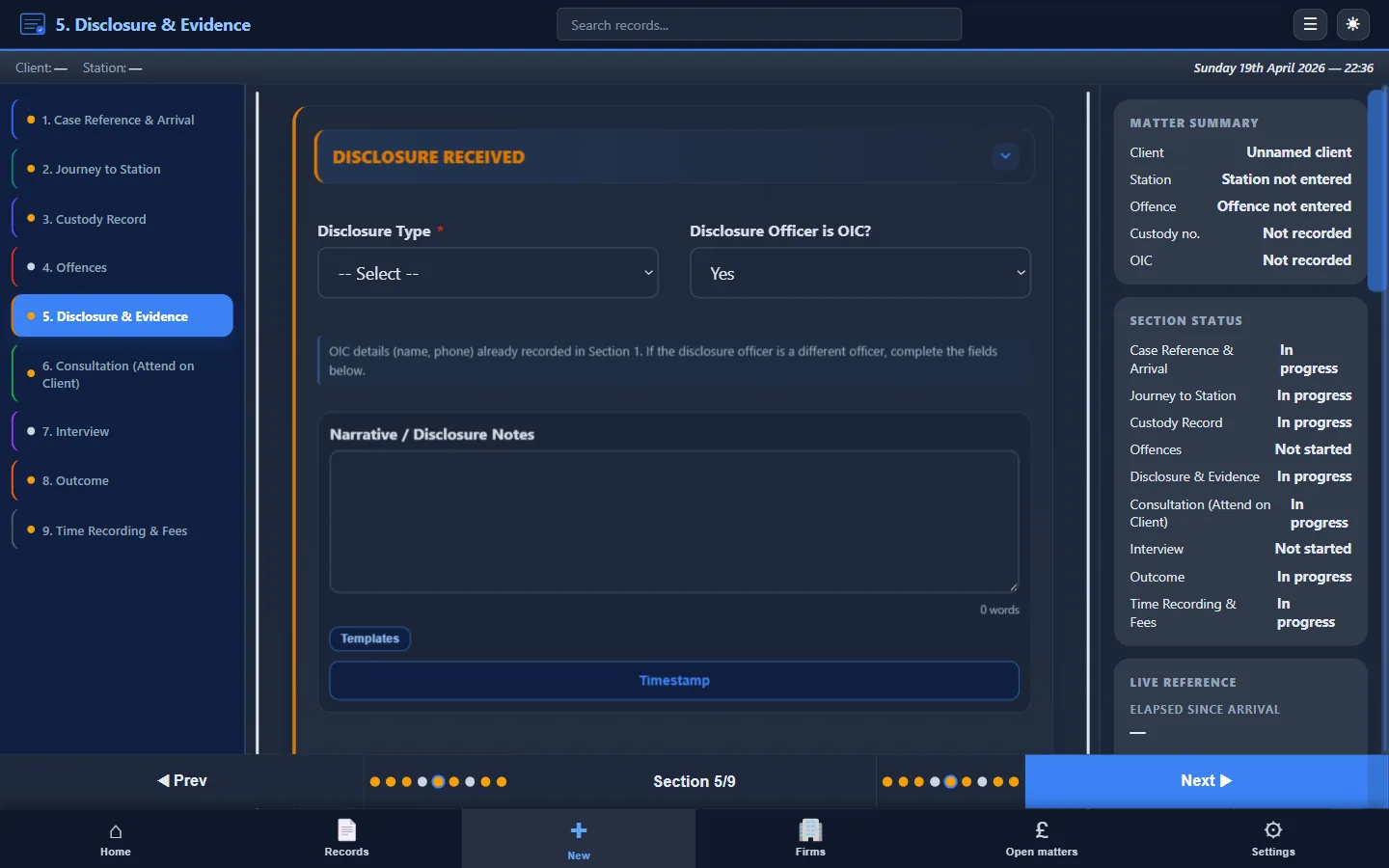
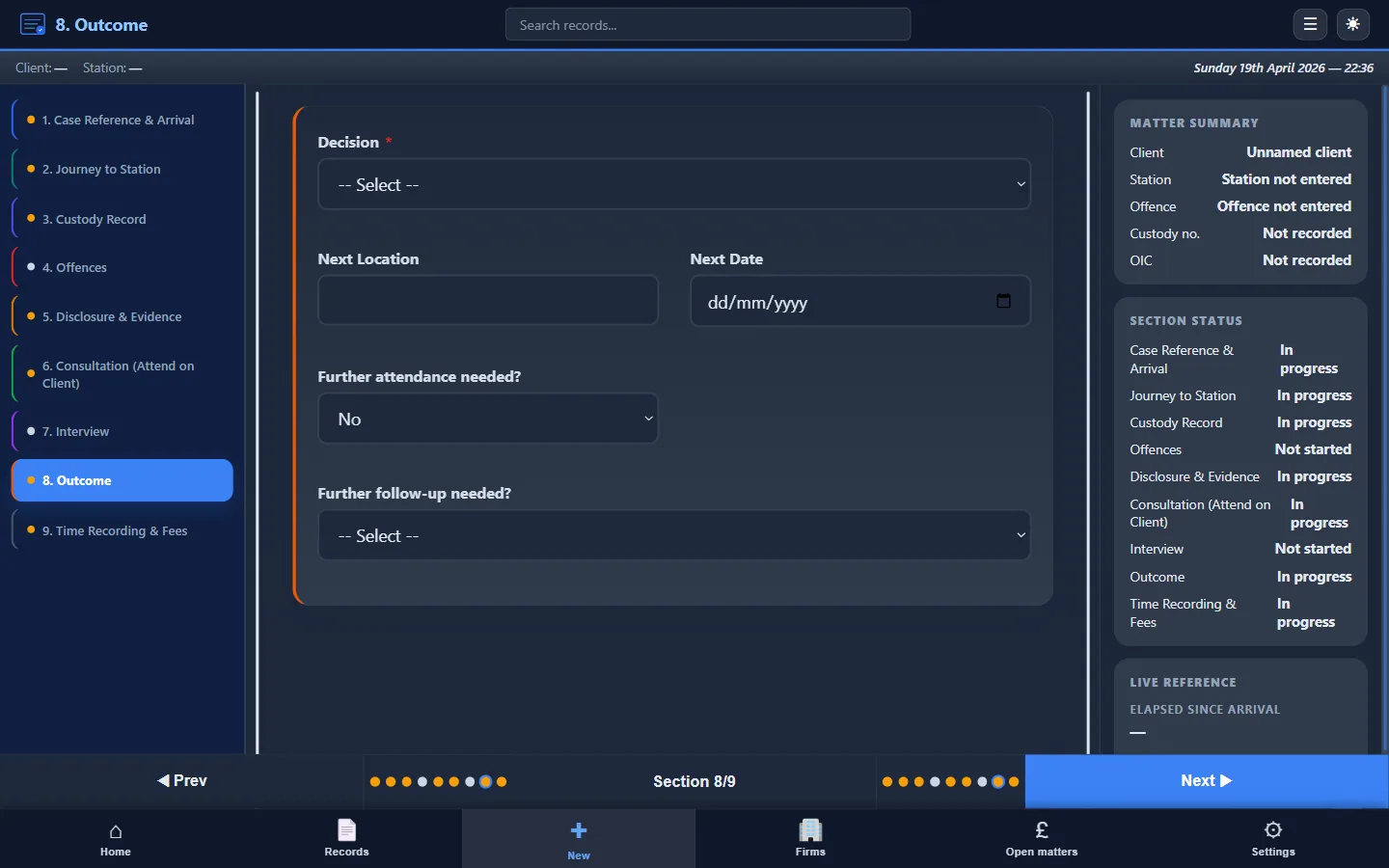
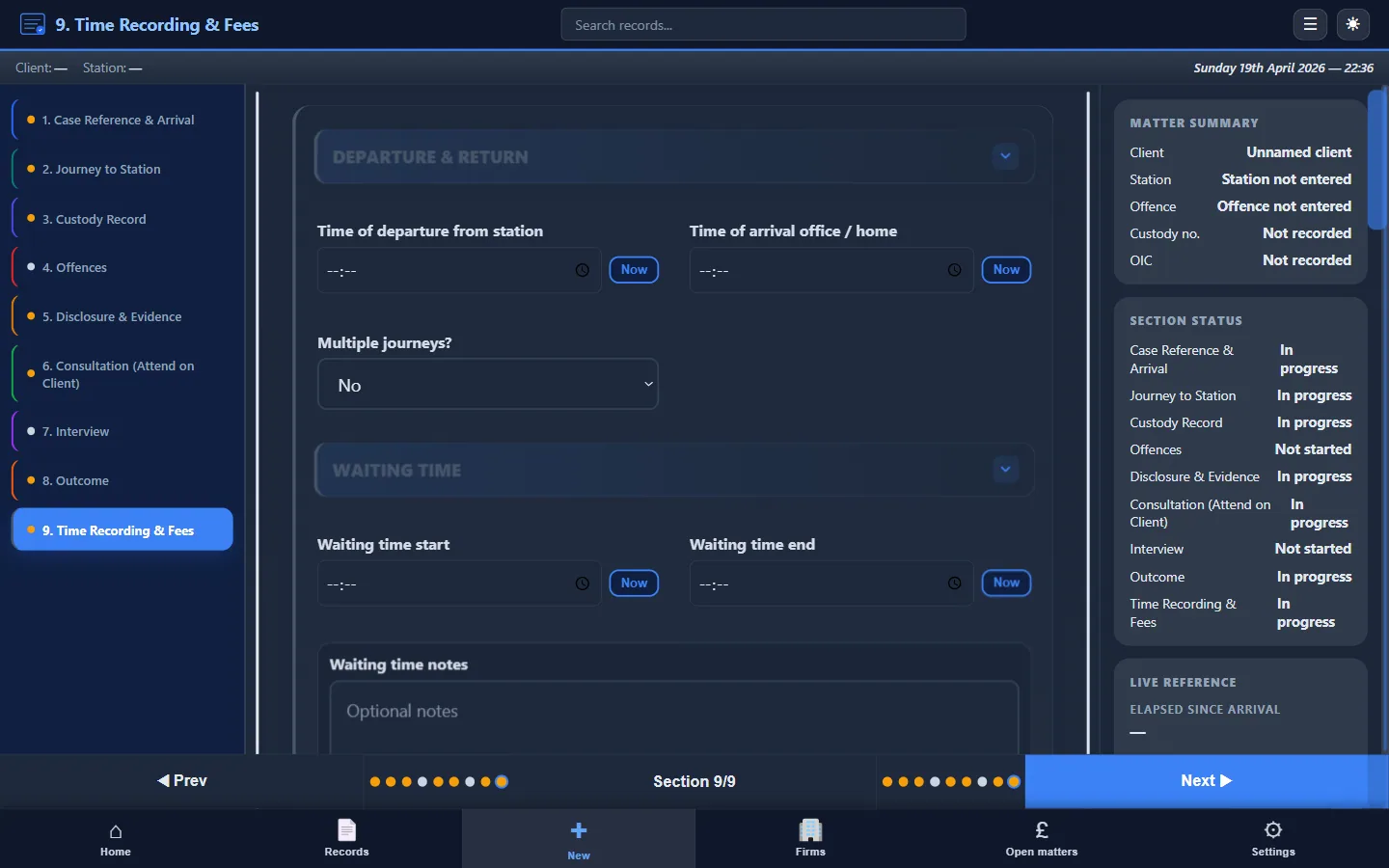
Custody Note's attendance note structure includes vulnerability fields that prompt for the type of vulnerability, appropriate adult details, fitness assessments, communication needs, and safeguarding observations at each stage. These fields are integrated into the natural chronological flow of the attendance, so the additional data is captured as part of the standard workflow rather than being an afterthought or a separate form.
For practitioners who regularly represent vulnerable clients, which in busy duty work is a significant proportion of attendances, having these prompts built into the software reduces the risk of missing a critical entry.
Summary
Vulnerable clients at the police station require attendance notes that go significantly beyond the standard structure. Record the nature of the vulnerability, the appropriate adult's identity and effectiveness, fitness-to-interview assessments, communication adaptations, mental health considerations, and safeguarding representations at every stage. These entries protect the client (by evidencing that safeguards were in place), protect the solicitor (by recording professional compliance), and support the billing claim (by evidencing the additional complexity of the attendance). For further guidance on the underpinning framework, see our guides on police station attendance notes and PACE custody note requirements.
Frequently asked questions
What if I suspect vulnerability but the custody officer hasn't flagged it?
Record your observations and concerns. If you believe the client may be vulnerable and should have an appropriate adult, make representations to the custody officer and record the conversation, including their response. Your professional duty to the client requires you to raise the issue even if the custody officer hasn't identified the vulnerability themselves. The contemporaneous record of your concern and the officer's response is important evidence.
How does vulnerability affect billing?
Representing a vulnerable client typically takes longer and involves more complex work: additional consultations, communication adaptations, welfare representations, and liaison with appropriate adults and healthcare professionals. All of this should be reflected in your time recording. A detailed attendance note that captures the additional work supports both the standard fee claim and any escape fee application by evidencing the complexity and time involved.
Can the interview be challenged if safeguards weren't in place?
Yes. Under section 76 of PACE, a confession may be excluded if it was obtained by oppression or in circumstances that render it unreliable. Under section 78, any evidence (including interview content) may be excluded if its admission would have an adverse effect on the fairness of proceedings. The absence of an appropriate adult, an unfit-for- interview detainee, or a failure to accommodate communication needs can all support an exclusion application. Your attendance note is the primary evidence for such a challenge. For more, see Download free to explore how Custody Note supports vulnerable client attendances.
Vulnerability safeguards built into every attendance
Custody Note prompts for appropriate adult details, fitness assessments, communication needs, and welfare observations at each stage, so you're less likely to miss something. Free during beta.
Download freeRelated articles from the blog
Attendance Notes
The Real Cost of Handwritten Attendance NotesAttendance Notes
Attendance Notes for Juvenile Clients: Extra RequirementsAttendance Notes
What Makes a Good Police Station Attendance Note?