The Real Cost of Handwritten Attendance Notes
A handwritten note looks free, but it isn't. You pay for it in write-up time, in billing errors, in audit risk and sometimes in professional liability.

Pen and paper have been the default in criminal defence for decades, and it's easy to see why. They cost next to nothing. But the stationery is the cheap part. The cost comes later: the hour spent writing the note up, the time you can't claim because you didn't record it, and the file that won't stand up when someone reads it months on. You rarely notice any of that until something goes wrong.
Below are five of those costs, each compared with a structured digital note. Then you can decide whether the pad and pen really is the cheap option.
Cost 1: Time spent writing up from memory
The most significant hidden cost of handwritten notes is the write-up time. At the police station, most practitioners jot down fragments: times, names, a few words about the interview. The full attendance note is then written up later: in the car, back at the office, or the next morning.
This reconstruction process typically takes between 30 and 60 minutes per attendance. For a busy duty solicitor handling three or four attendances per week, that's two to four hours of unbillable administrative time, every week. Over a year, the total easily exceeds 100 hours.
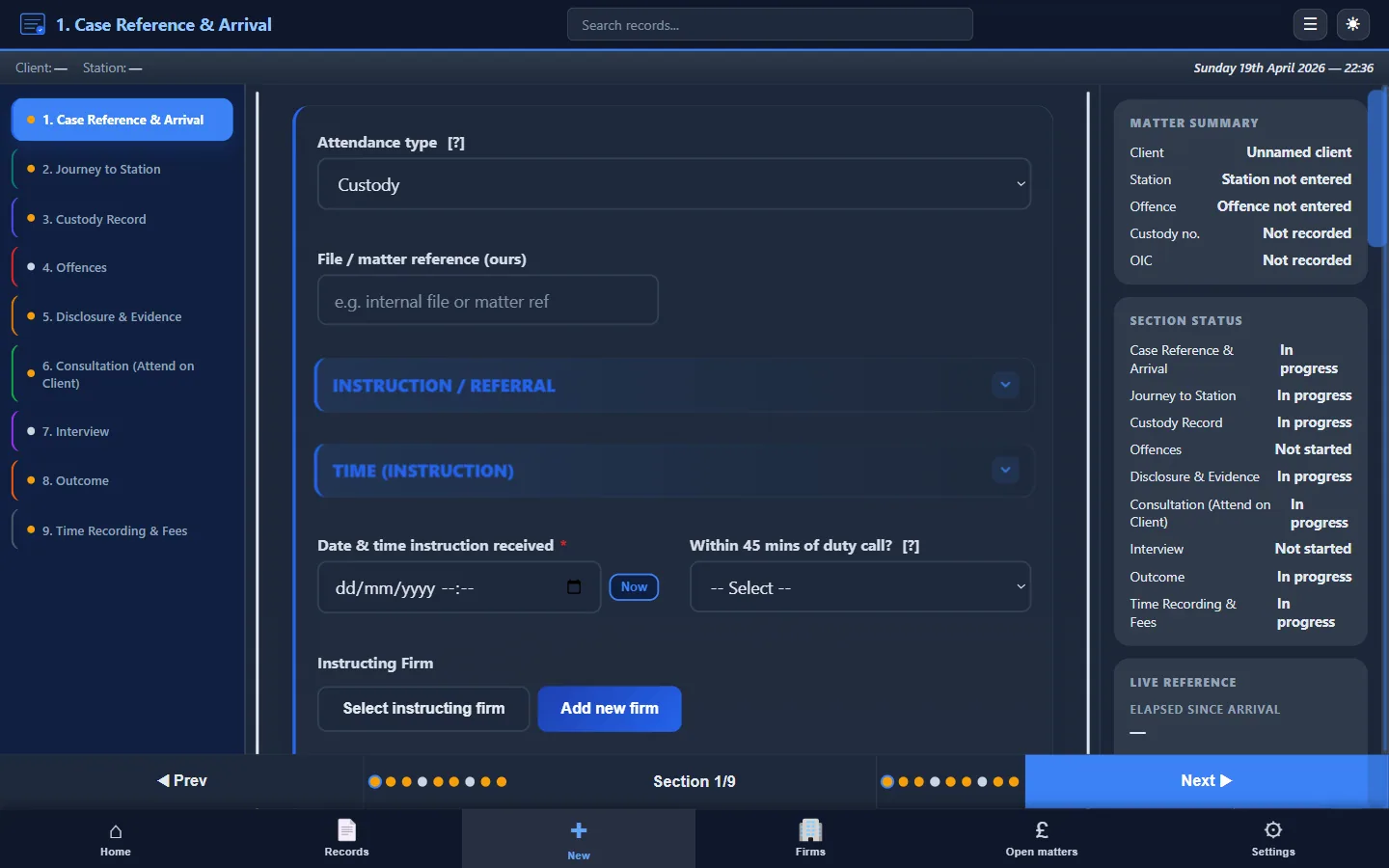
Structured digital entry changes this equation. Because the note is built in sections as the attendance progresses (notification details entered when the call comes in, arrival time recorded on site, consultation and interview sections completed at the station) there's little or nothing to “write up” afterwards. The note is mostly done by the time you leave the station. In my experience, once you switch to structured software the write-up afterwards takes under ten minutes.
For a detailed comparison of workflows, see Digital vs Paper Attendance Notes.
Cost 2: Billing errors from incomplete time records
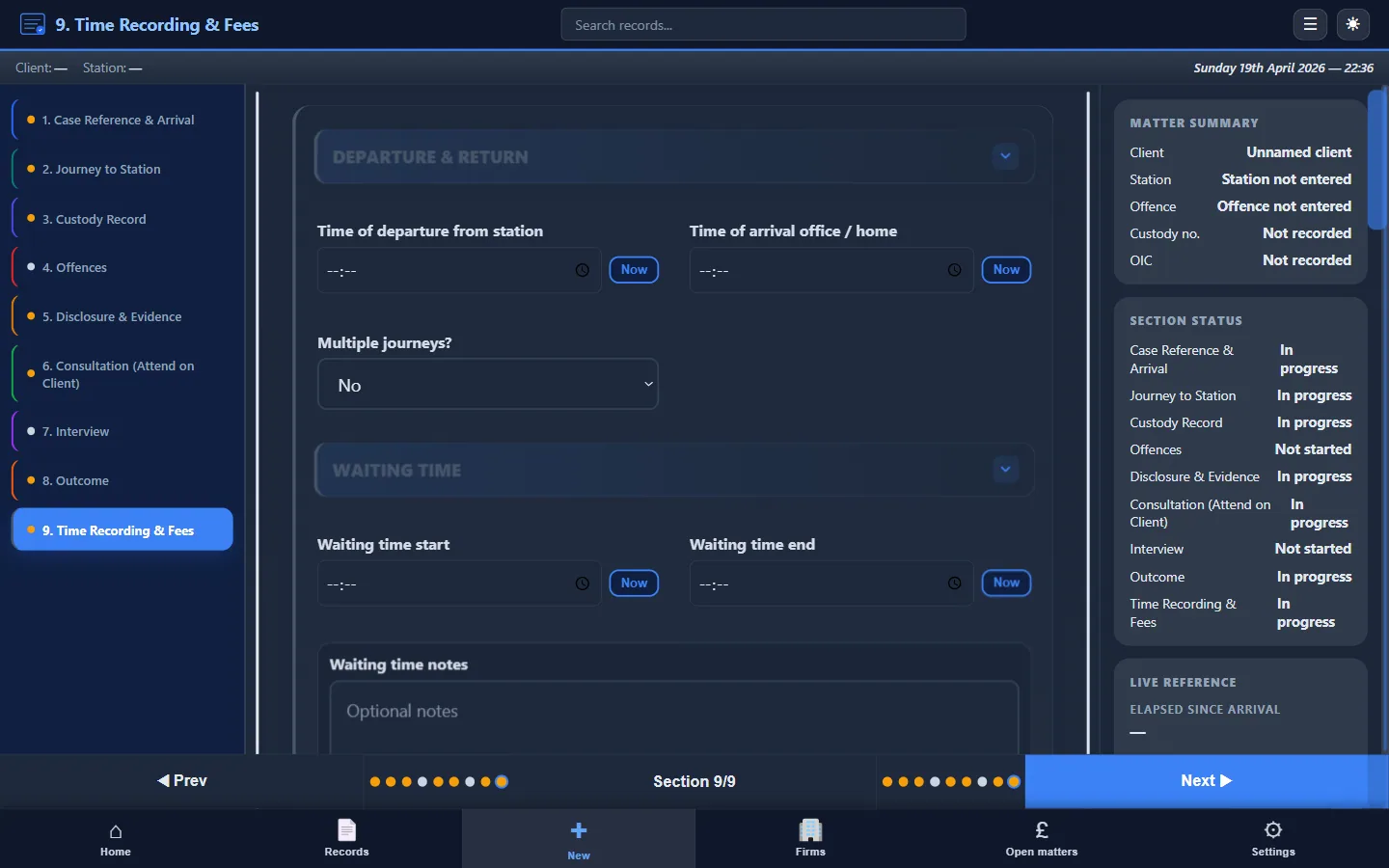
Handwritten notes frequently lack precise time entries. A typical handwritten note might record “arrived approx 2pm” and “left around 5.30” with no breakdown in between. When the bill is prepared, often days or weeks later, the fee earner or billing clerk must estimate the time breakdown, because the note doesn't contain it.
This creates two types of billing error. The first is under-claiming: time that was genuinely spent but not recorded isn't billed, because there's no evidence to support it. The second is inaccurate apportionment: without a breakdown, time is allocated to categories (travel, waiting, work) based on guesswork rather than records.
Under-claiming is particularly damaging in escape fee cases, where the total claimed time determines whether the case qualifies for the higher fee. If 30 minutes of genuine waiting time isn't recorded because the handwritten note didn't capture it, the claim may fall below the escape threshold: costing the firm hundreds of pounds on a single case.
Multiply this across dozens of cases per year and the financial impact is significant. In my experience, it saves somewhere between 20 and 45 minutes of write-up time per case.

Cost 3: Audit risk from illegible or incomplete notes
Handwritten notes are the most common source of audit problems. The issues are well-documented: illegible handwriting that the auditor can't read, missing time entries that can't be verified, abbreviated descriptions that don't demonstrate substantive work, and inconsistent formats that make it difficult for the auditor to find the information they need.
When an LAA auditor encounters a handwritten note that's difficult to read or missing key information, they have two options: request clarification (which costs the firm time to respond) or reduce the claim. Neither outcome is desirable. Across multiple files, a pattern of incomplete handwritten notes can trigger enhanced scrutiny, peer review referrals, or contract compliance action.
The audit risk is real. In my experience of LAA audits, the handwritten notes are usually the weakest part of the file. The notes that hold up best have clear time breakdowns, specific descriptions of work done, and complete billing reference data: precisely the areas where handwritten notes tend to fall short.
Cost 4: Professional liability from poor records
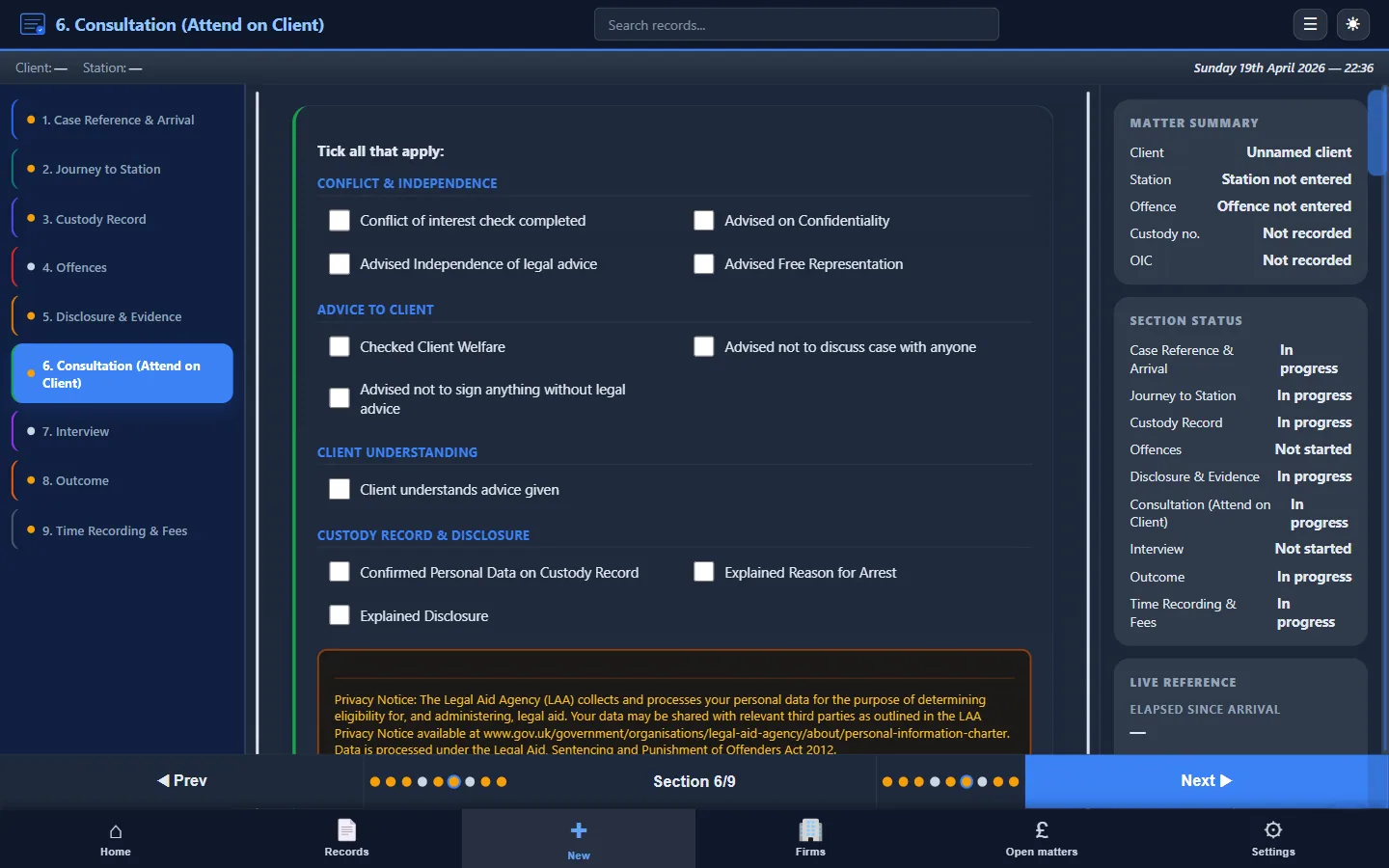
Your attendance note isn't just a billing document. It's the contemporaneous record of your professional involvement in the case. If a complaint is made, whether by the client, the Solicitors Regulation Authority, or the Legal Aid Agency, your note is the primary evidence of what you did, what advice you gave, and why.
A handwritten note that's fragmentary, illegible, or vague provides weak evidence of competent practice. If the note doesn't record the advice given before interview, the reasons for recommending a particular strategy, or the representations made to the custody officer, you're relying on memory to defend your professional conduct, potentially months or years after the event.
If the matter proceeds to trial, the same problem arises. Defence counsel preparing for trial will rely on your attendance note to understand what happened at the police station. A note that records “consulted with client, interview conducted, NFA” gives counsel nothing to work with. A structured note that records the disclosure received, the advice given, the interview topics, and the client's responses provides a foundation for effective trial preparation.

Cost 5: File quality and firm reputation
File quality counts beyond individual audits. Firms seeking to maintain or obtain legal aid contracts, pass peer reviews, or demonstrate competence to the SRA need files that reflect systematic, professional practice. Handwritten attendance notes (inconsistent across fee earners, varying in quality and completeness) undermine the impression of a well-run practice.
Conversely, consistently structured attendance notes, with clear headers, chronological entries, time breakdowns, and complete billing data, demonstrate that the firm has robust processes. That counts at tender, at audit, and whenever external scrutiny is applied to the firm's criminal defence work.
A practical cost comparison
Consider a firm with two fee earners each handling three police station attendances per week. With handwritten notes:
- Write-up time: 2 fee earners x 3 attendances x 45 minutes = 4.5 hours per week, or roughly 230 hours per year
- Under-claimed billing: if each attendance under-claims by an average of 10 minutes at the applicable rate, the annual revenue loss runs into thousands of pounds
- Audit risk: even one claim reduction or repayment demand can cost more than a year of software licensing
- Professional liability: the cost of defending a complaint with inadequate records is incalculable but potentially career-defining
Structured attendance note software costs a predictable monthly fee. For a side-by-side comparison, see Custody Note vs Handwritten Notes.
Why practitioners stick with handwriting
Despite these costs, many practitioners continue to use handwritten notes. The reasons are understandable: familiarity, perceived speed at the station, a reluctance to carry a laptop, and the assumption that “it has always worked.” Some practitioners also worry about technology failure: a dead battery or a software crash at a critical moment.
These concerns are legitimate but increasingly outweighed by the costs described above. Modern attendance note software runs offline, so Wi-Fi isn't required. Laptops are lighter and more portable than they were a decade ago. And the time saved on post-attendance write-up more than compensates for any initial learning curve.
The question isn't whether handwriting works. It does, after a fashion. The question is whether it works well enough to justify the ongoing costs in time, money, and risk.
Summary
Handwritten attendance notes carry hidden costs across five dimensions: write-up time (30-60 minutes per attendance), billing errors (under-claimed time and missed escape fees), audit risk (illegible or incomplete records), professional liability (weak evidence of advice given), and file quality (inconsistent formats across the firm). Each of these costs is avoidable with a structured approach to note-taking, whether using software or a consistent paper template, though software makes compliance significantly easier.
Frequently asked questions
How much time does structured software actually save per attendance?
In my experience, it saves somewhere between 20 and 45 minutes of write-up time per case. The saving comes from completing the note in sections at the station instead of reconstructing it from memory afterwards. Over a year of regular duty work, that can add up to well over 100 hours.
What if I prefer writing by hand at the station?
Some practitioners jot handwritten notes at the station and then transfer the data into structured software afterwards. This captures the comfort of pen and paper while ensuring the final note is legible, complete, and consistently formatted. However, the greatest time saving comes from entering data directly into the software at the station, eliminating the transfer step entirely.
Does Custody Note work without internet access at the police station?
Yes. Custody Note is a desktop application that runs entirely on your laptop. It doesn't require Wi-Fi, mobile signal, or any internet connection to create, edit, or export attendance notes. You can complete the entire note at the station and export to PDF when convenient. For more on offline capability, see Download free.
See what structured notes look like in practice
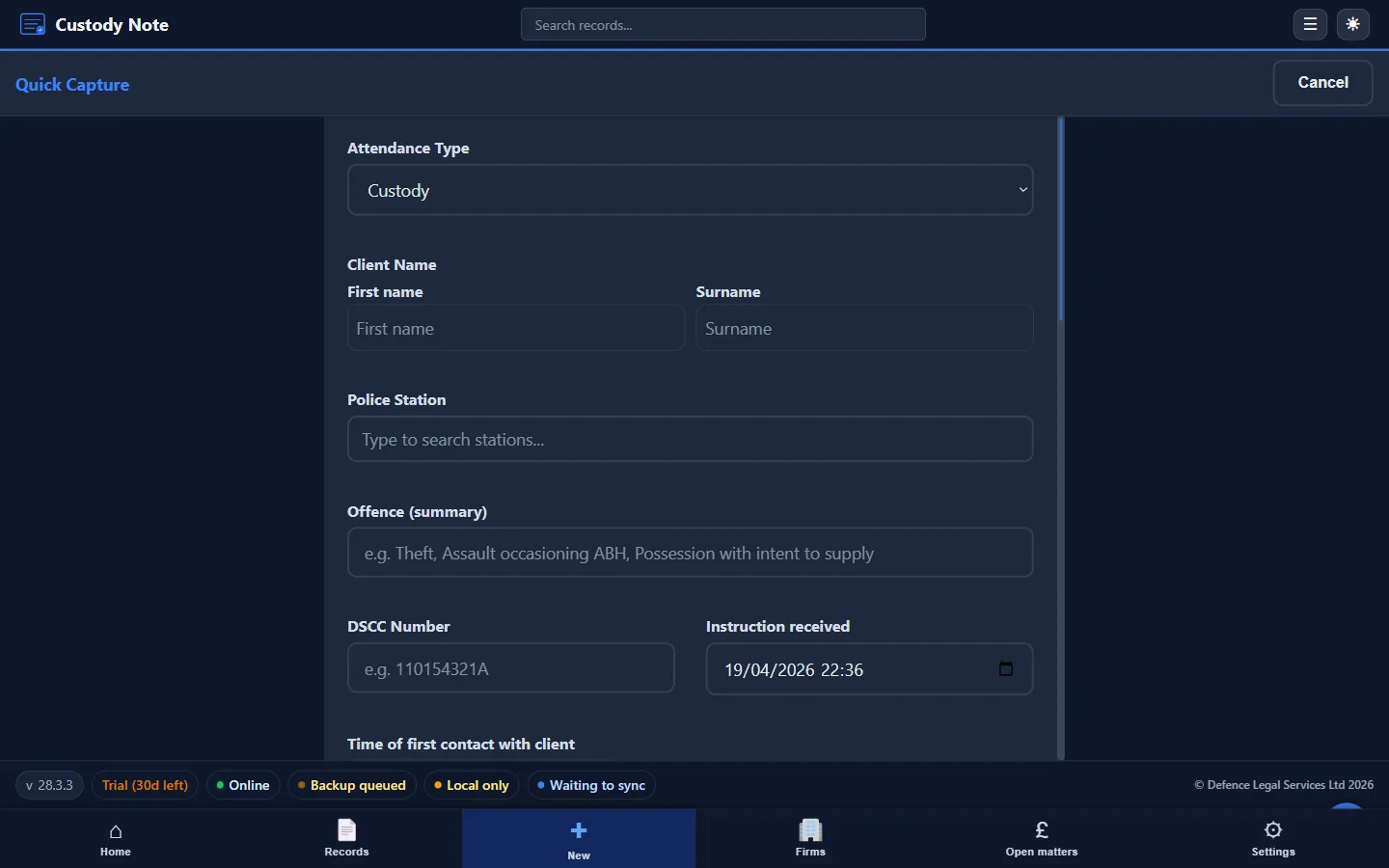
Custody Note replaces the blank page with a guided structure that captures everything, times, advice, billing data, as you go. Free during beta, no card needed.
Download freeRelated articles from the blog
Attendance Notes
Attendance Notes for Juvenile Clients: Extra RequirementsAttendance Notes
Vulnerable Clients at the Police Station: Note-Taking EssentialsAttendance Notes
What Makes a Good Police Station Attendance Note?