PACE Code C and Attendance Notes: What Solicitors Must Record
PACE Code C doesn't prescribe a template for solicitors' notes, but it creates the factual framework your attendance note must capture. If you miss a PACE-relevant detail at the station, you can't reconstruct it later.
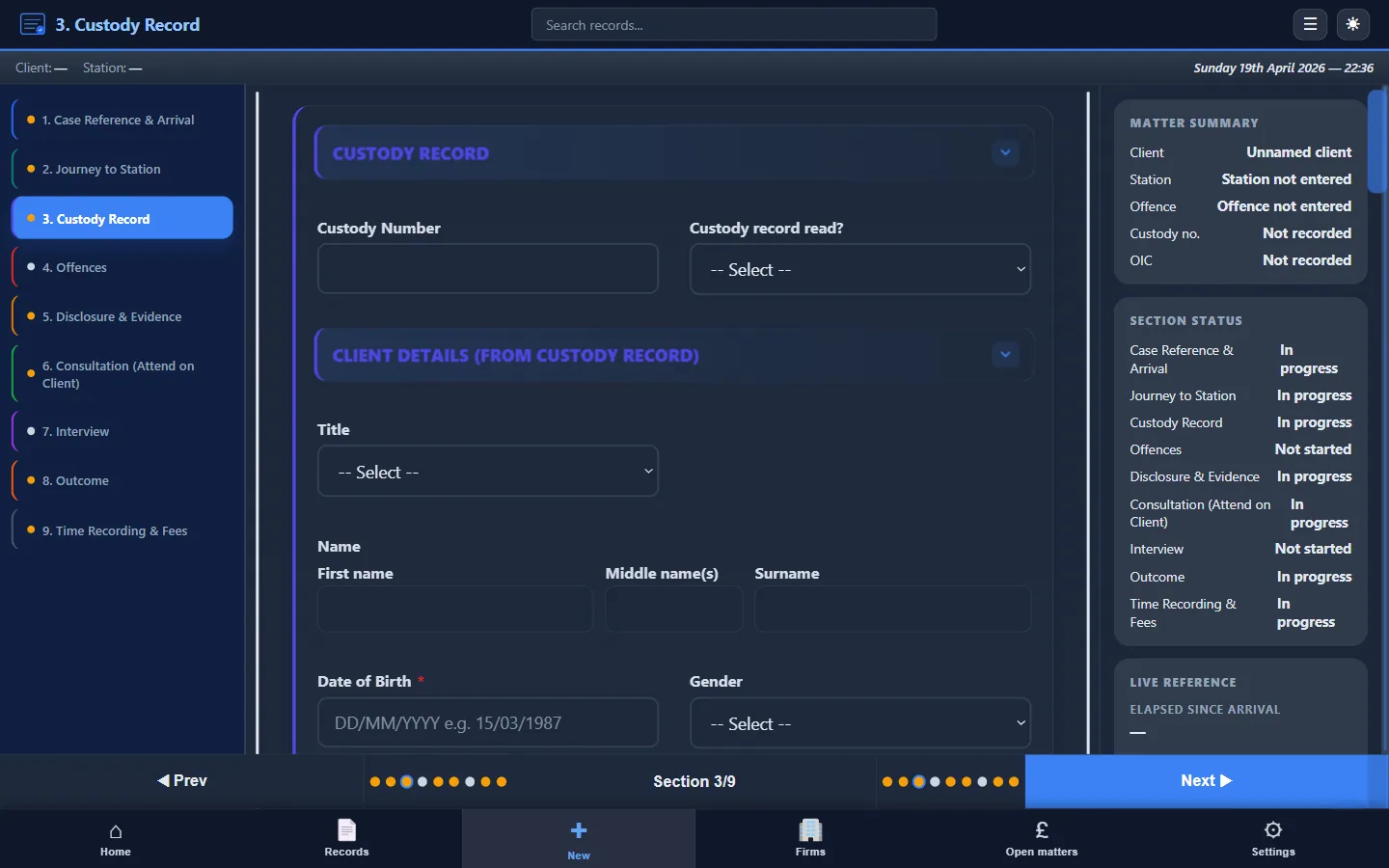
Below are the Code C provisions that affect your attendance note, a checklist of what every note has to record, and the reasons PACE gaps cause trouble at trial and at billing.
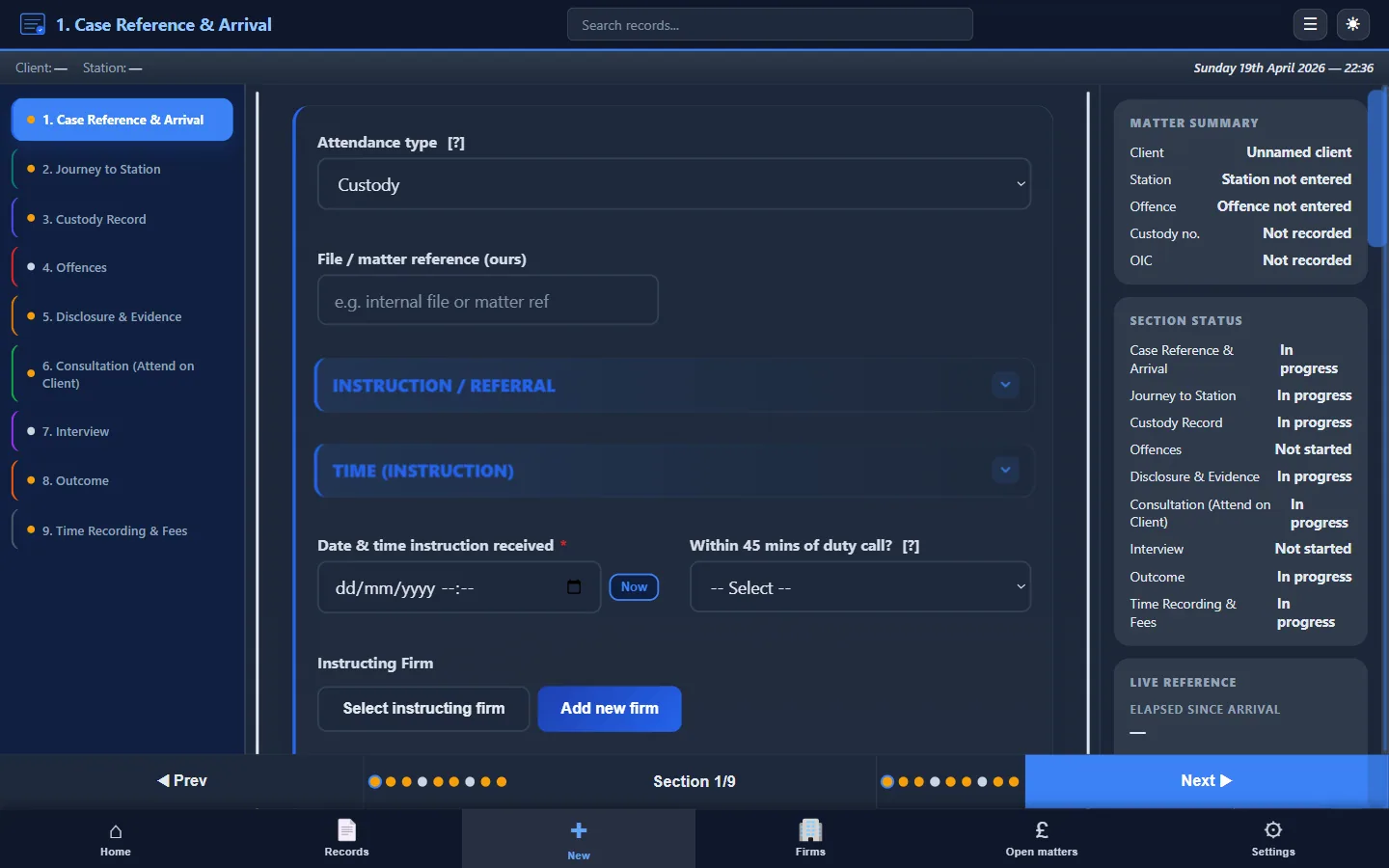
PACE Code C overview for attending solicitors
The Police and Criminal Evidence Act 1984 and its associated Code of Practice C govern the detention, treatment, and questioning of persons at police stations. As the attending solicitor or accredited representative, you aren't responsible for the custody record. That's the custody officer's duty under Code C paragraph 2. But you're responsible for creating your own contemporaneous record of the attendance, and that record must capture the PACE-relevant events as they happen.
The key Code C provisions that directly affect your note-taking are:
- Section 6: Right to legal advice: PACE s.58(1) and Code C section 6 (Note 6J) confirm the right to consult a solicitor privately at any time. Your note should record when you were notified, when you arrived, when private consultation took place, and when you were given access to the client.
- Code C 3: Custody officer duties: the custody officer must inform the detained person of their rights. Record whether the rights were given and whether the client confirmed they wanted legal advice.
- Code C 11: Interviews: 11.1A requires the interviewer to provide sufficient pre-interview disclosure for the solicitor to give informed advice. Record what disclosure was provided, when, and your assessment of its adequacy.
- Code C 6.8: Solicitor present at interview: a detainee who has been permitted to consult a solicitor is entitled to have the solicitor present when interviewed (subject to paragraph 6.6). Record attendance at interview and any representations made. Private consultation itself is section 6 / Note 6J, not paragraph 6.8.
- Code C 12.8: Interview breaks: interviews should be conducted with appropriate breaks. Record start and end times of each interview segment and any breaks taken.
- Code C 15: Detention reviews: regular reviews of detention must be carried out by an inspector. Record if a review took place during your attendance and any representations you made.
Custody record vs your attendance note
The custody record is the police's document. It records operational events: booking-in, rights given, meals offered, medical assessments, interview times, and detention reviews. You're entitled to inspect it under Code C 2.4, and you should. It's one of the first things to review on arrival.
Your attendance note is different. It records your professional involvement: what you were told, what you observed, what advice you gave, what instructions you received, and what representations you made. The custody record won't record the substance of your private consultation with the client, your assessment of the disclosure, or your reasons for recommending a particular interview strategy. Only your note captures those.
In practice, the two documents should be broadly consistent on times and events. If there's a discrepancy, for example, the custody record says you arrived at 14:20 but your note records arrival at 14:05, that creates a problem you may need to explain at trial.
What PACE requires you to record: the practical checklist
PACE doesn't hand solicitors a checklist. But the Code C framework, combined with your professional obligations and billing requirements, means every attendance note should capture at least these ten things:
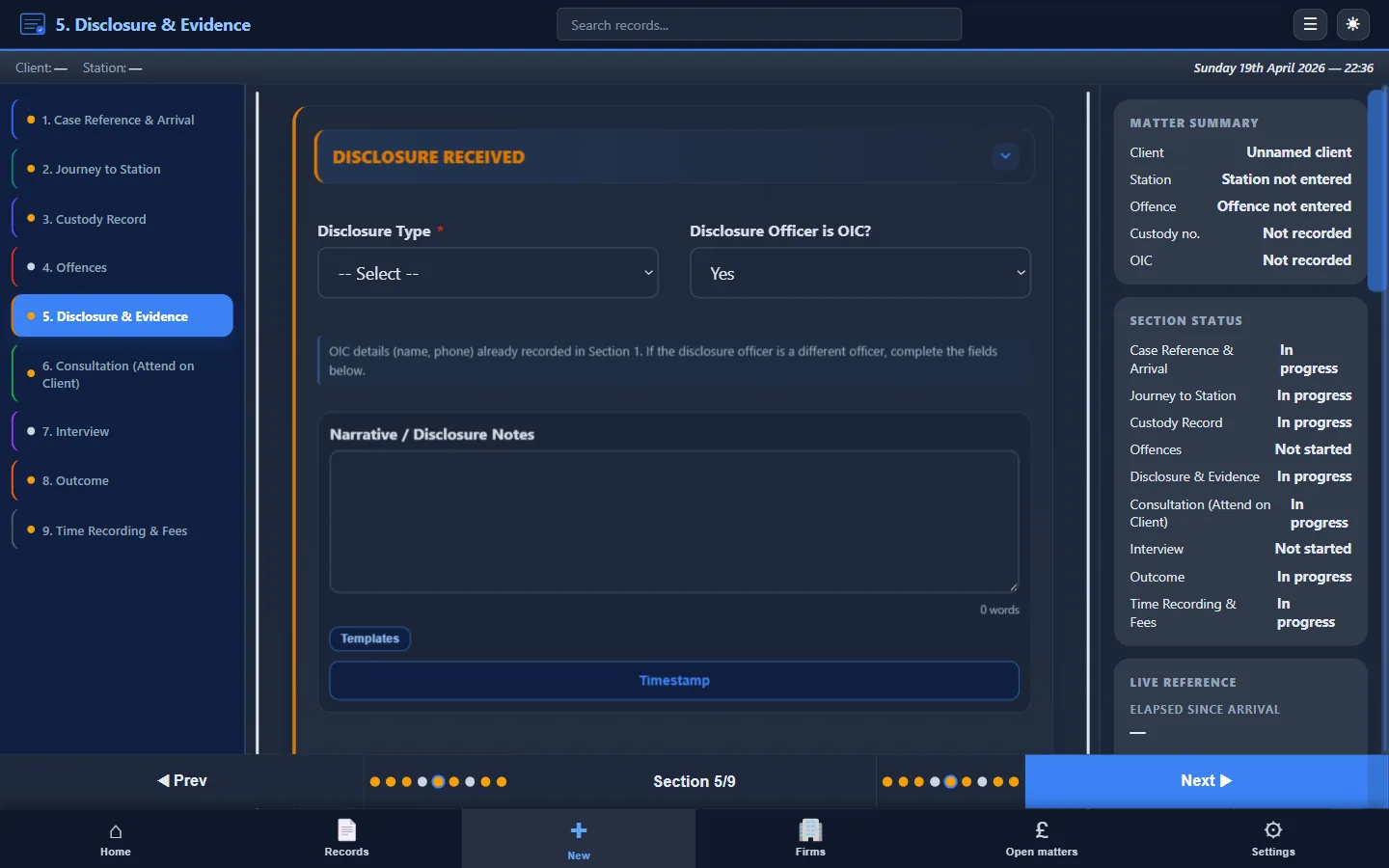
- 1. Time of notification: when you received the DSCC call or direct instruction, and the source (duty referral, own client, or police request)
- 2. Time of arrival at the station: when you physically arrived and booked in at the custody desk
- 3. Custody record review: what you noted from the custody record: offence, detention authority, rights given, any vulnerable-person flags, appropriate adult requirements
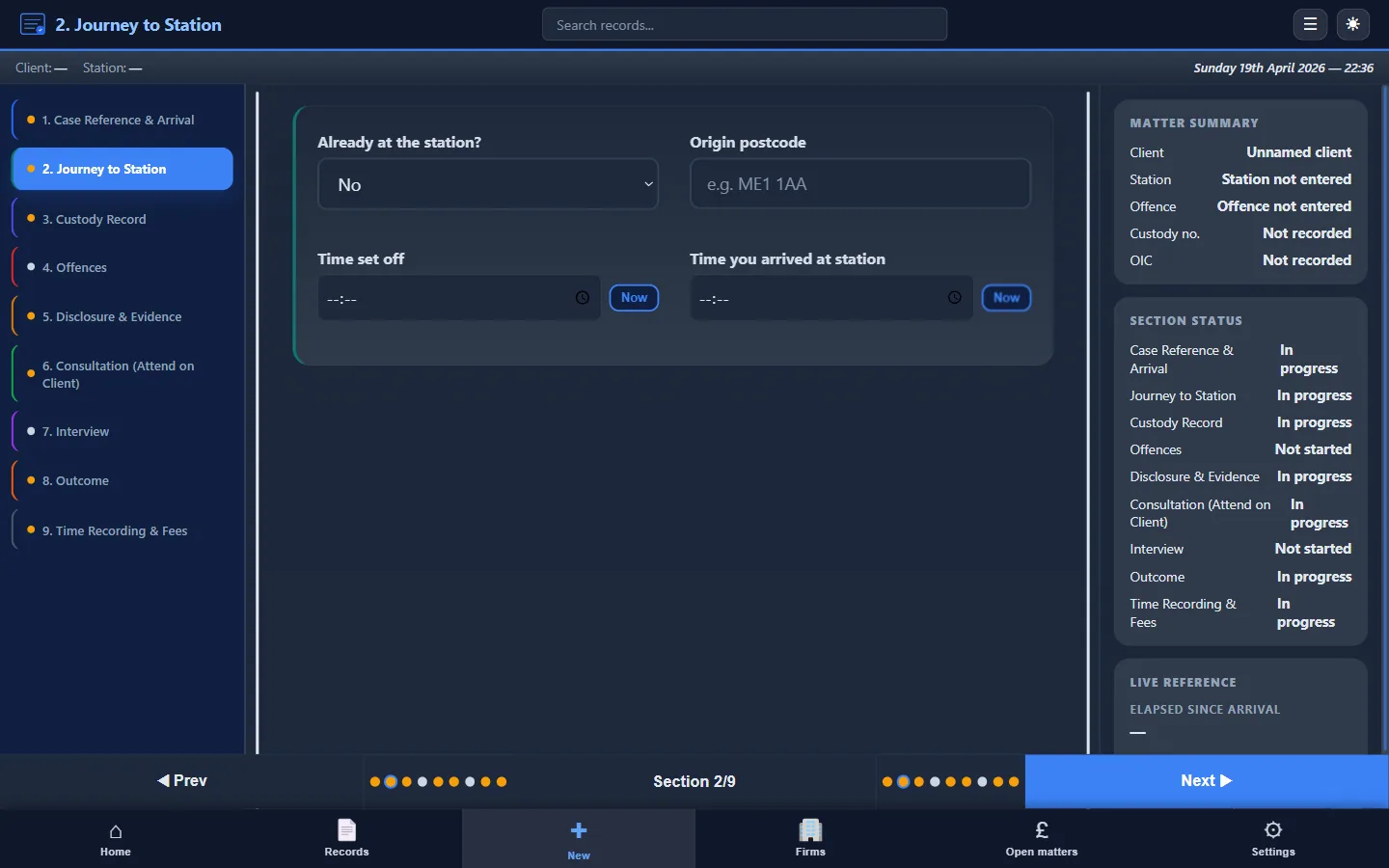
- 4. Disclosure received: what the officer disclosed before interview, whether you considered it adequate, and any requests for further disclosure
- 5. Private consultation: content and timing: when the consultation started and ended, the advice you gave, the client's instructions, and the agreed interview strategy (no comment, prepared statement, or full account)
- 6. Who was present at interview: the interviewing officer(s), any appropriate adult, interpreter, or other third party
- 7. Interview start and end times: for each interview segment, with breaks recorded
- 8. Summary of interview content: the topics covered, key questions, the client's responses (or silence), and any interventions you made
- 9. Post-interview events: any further consultation, representations to the custody officer, charge or bail decision, conditions imposed
- 10. Time of departure: when you left the station, plus a summary of time spent broken down by travel, waiting, consultation, and interview
For a broader look at what must be in every attendance note, see What Must Be Included in Attendance Notes.
Why gaps in PACE-required data create problems
At trial
If the case proceeds to court, the prosecution or defence may rely on your attendance note to establish what happened at the station. Common scenarios include:
- The defendant says they were denied access to a solicitor. Your note should record when access was granted and any delays
- A “no comment” interview is challenged under s.34 CJPOA 1994: your note should show the basis for that advice and that a prepared statement was considered
- Disclosure adequacy is disputed. Your note should record what was disclosed and your contemporaneous assessment of it
- Interview conditions are challenged. Your note should record any concerns about Code C compliance you raised at the time
If your note is silent on any of these points, you're relying on memory, which is rarely credible months or years after the event.
At billing
The LAA expects your file to evidence the work done. PACE-relevant details directly support billing: the time breakdown justifies the claim, the complexity of the matter (multiple interviews, vulnerable client, interpreter required) may support an escape fee, and the DSCC reference ties the claim to the referral. Missing any of these can trigger an assessor query or claim rejection.
For the full picture of how attendance notes support legal aid claims, see Attendance Notes for Legal Aid Billing.
Mapping PACE requirements to structured notes
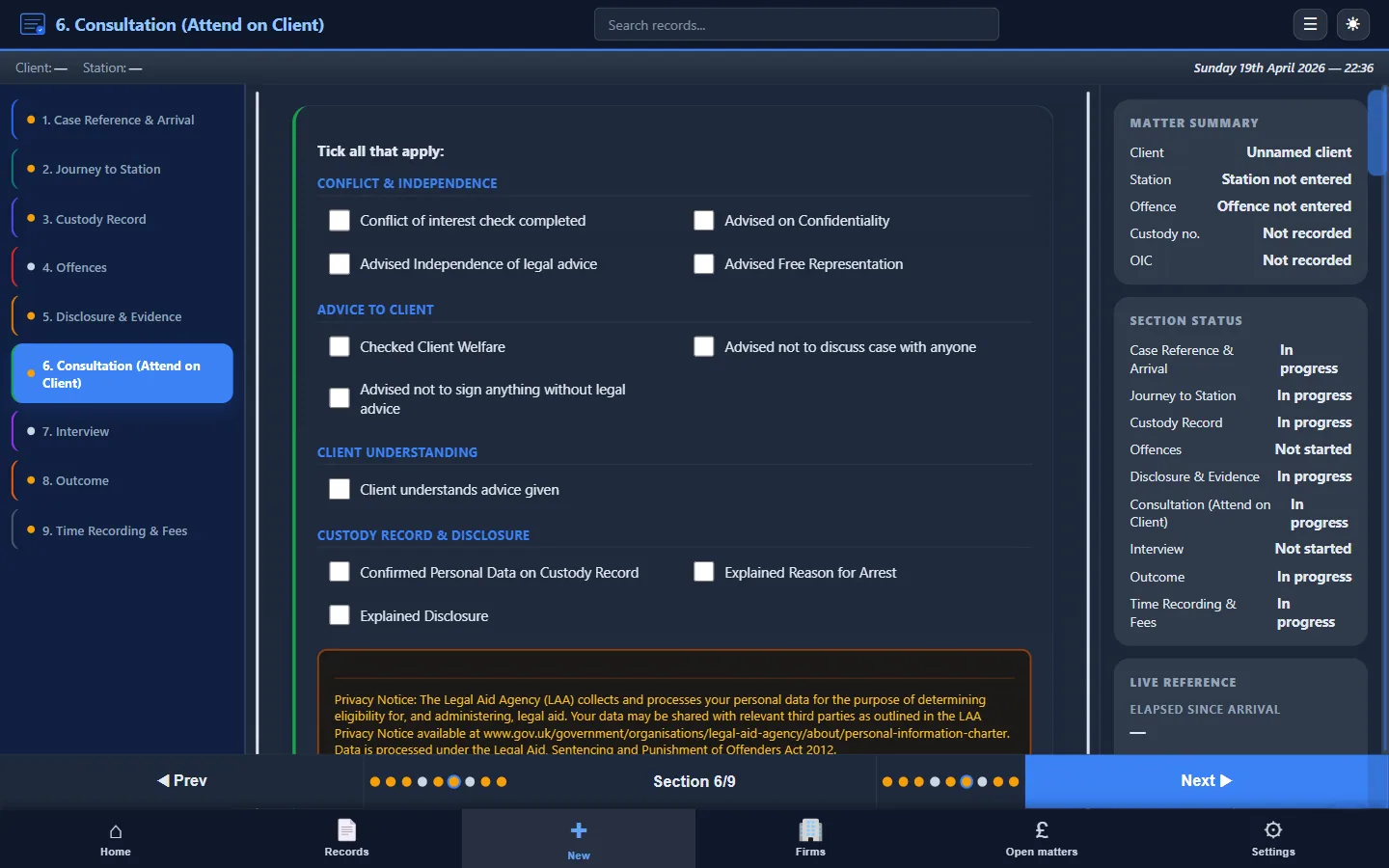
The simplest way to ensure your note captures every PACE-relevant detail is to use a structure that mirrors the chronology of a custody attendance. Rather than writing a free-text narrative after the event, work through dedicated sections as the attendance progresses:
- Notification and instruction details
- Arrival and custody record review
- Disclosure
- Private consultation
- Interview (per segment)
- Post-interview representations and outcome
- Departure and time summary
This approach means you're capturing PACE data in real time rather than trying to remember it afterwards. Custody Note follows exactly this structure: each section corresponds to a stage of the attendance and prompts for the PACE-relevant information automatically. But even if you use Word or paper, adopting this sequential structure will improve your PACE compliance significantly.
For detailed PACE requirements for attendance notes, see our dedicated guide: PACE Custody Note Requirements.
Summary
PACE Code C creates the factual framework for every police station attendance note. You don't need to memorise every paragraph number, but you do need a system that captures times, people, disclosure, consultations, interview content, and outcomes as they happen. A structured, chronological approach covers the PACE requirements automatically and creates a note that serves you at trial, at audit, and on file review.
Want PACE-compliant structure built into your workflow?
Custody Note guides you through each stage of the attendance with sections that map directly to Code C requirements. Free during beta.
Download free